Keystone Boiler Pros

Best boiler temperature for a Pennsylvania winter

Send the form and the boiler tune-up stops being something to remember.

Step 1 of 3: Equipment

Set the thermostat between 68 and 70 degrees during the day and let it drop to around 62 overnight. That range keeps the boiler cycling at a steady pace instead of shutting off and firing back up over and over, which is what actually drives up gas use. Pennsylvania winters run cold enough, January and February especially, that pushing the temperature much lower overnight can let pipes near outside walls get too cold. A boiler holding a steady, moderate setting runs more efficiently than one bouncing between a low night setting and a high morning recovery, because that recovery period makes it work harder than steady cycling would. If a room still feels cold at 68, the problem usually isn't the thermostat setting. It's the radiator, the zone valve, or the boiler itself needing a look before the real cold sets in.

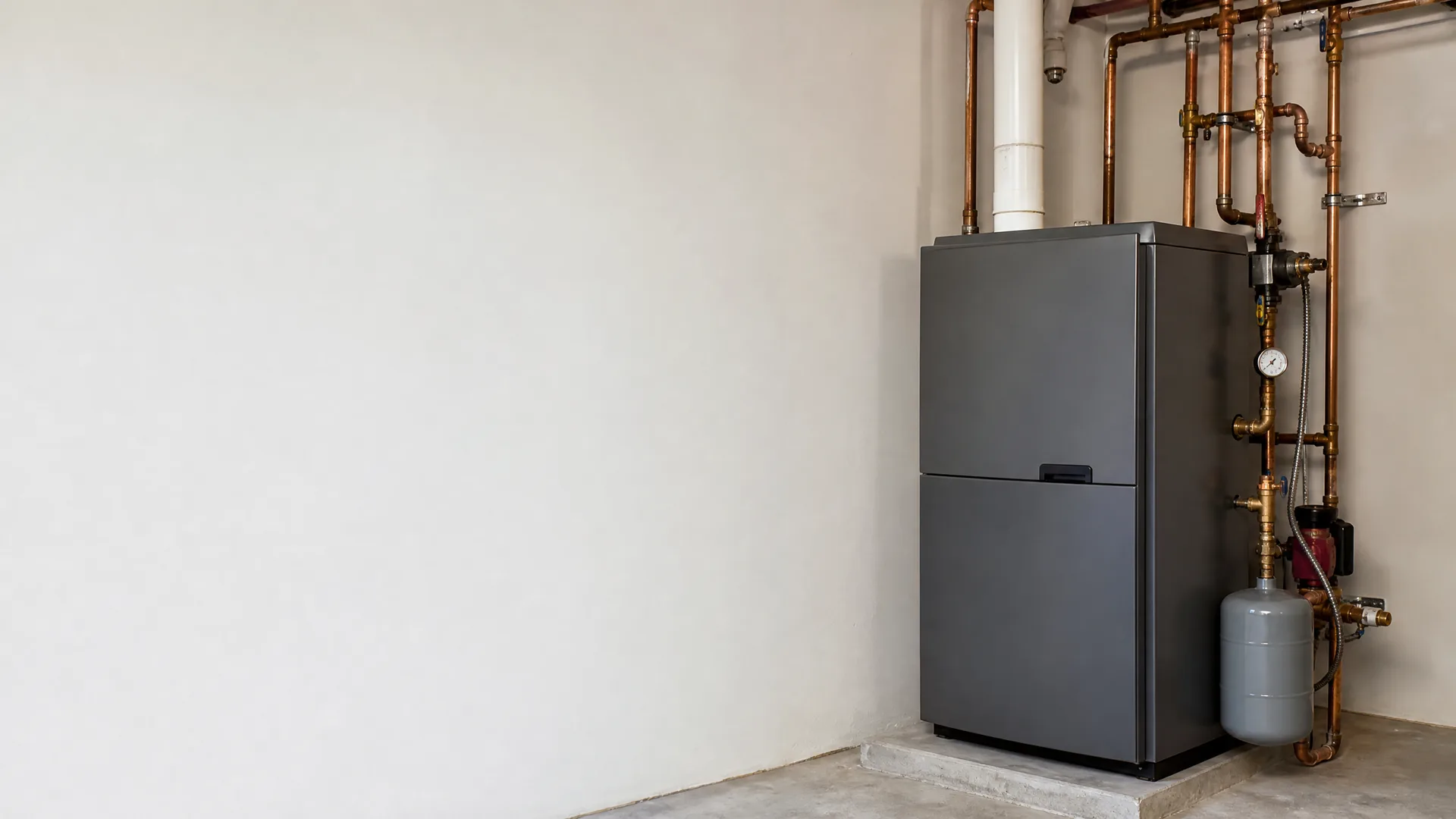
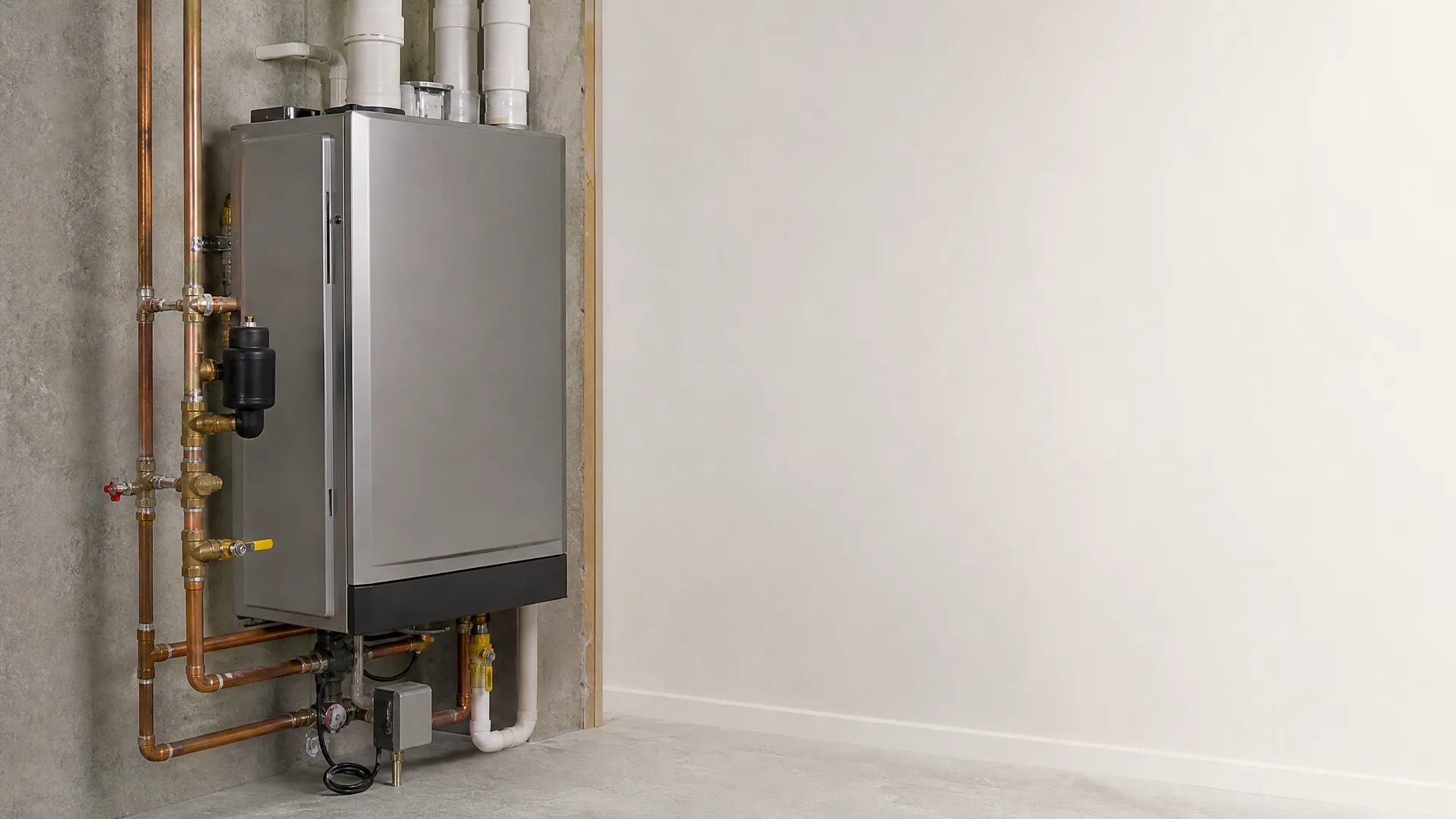
A wall-mounted grey boiler with copper pipework and white flue pipes installed against a concrete wall in an empty room with a plain pale wall to the right.

Why steady beats high

A boiler set high and left to swing wide works harder than one held steady. Every time the water drops and the burner fires back up, it has to reheat the whole loop before any radiator or baseboard actually feels warm. Holding a narrow range means the burner runs in shorter, steadier stretches instead of long catch-up cycles. That pattern matters more to your gas bill than the number on the dial.

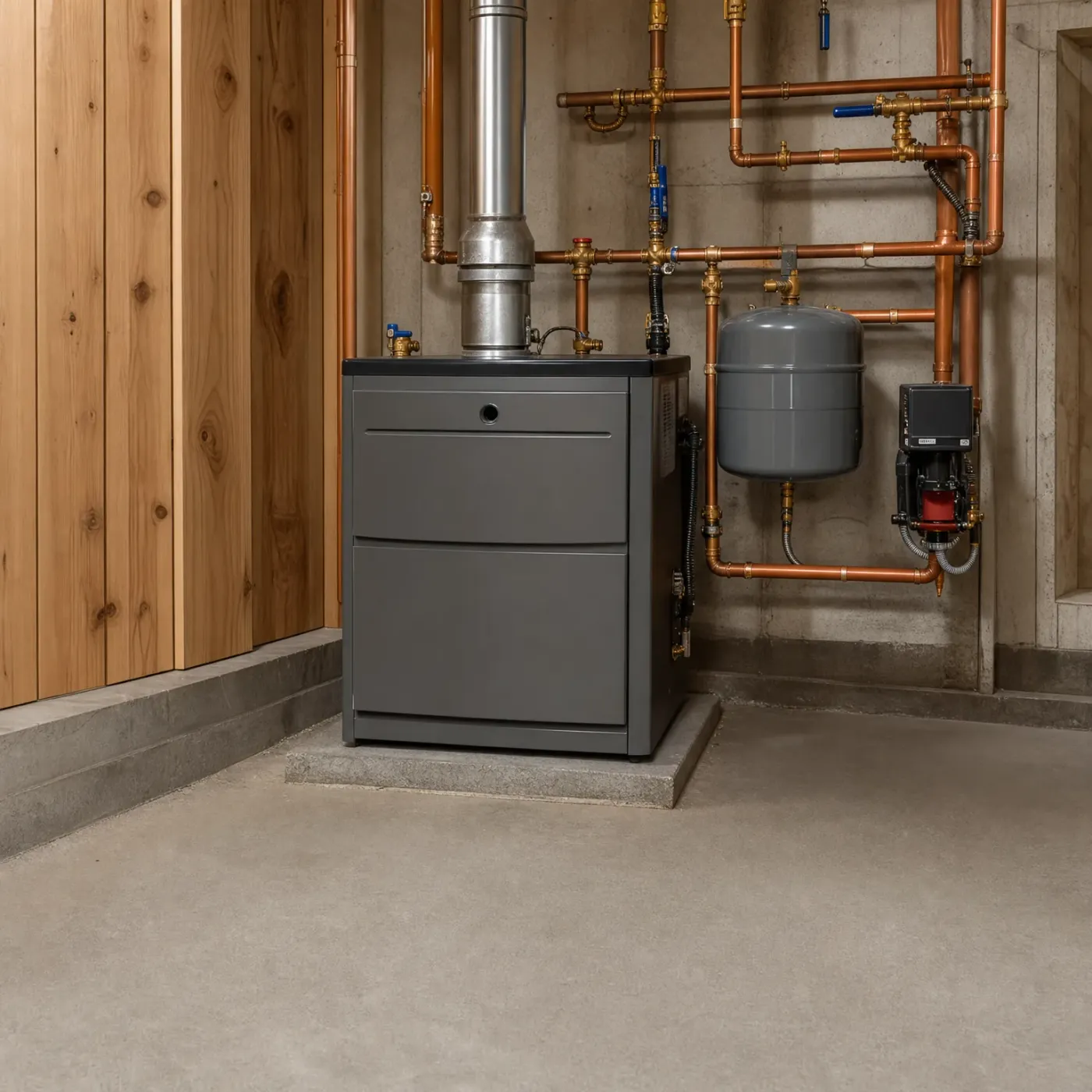
A dark grey boiler unit stands on a concrete pad against a plain light wall, connected to copper pipes, a pressure gauge, a pump and a grey expansion tank.

What the thermostat can't see

A thermostat reads air temperature in one room, not the water temperature inside the boiler. If the aquastat is set too high, the boiler keeps water hotter than the house actually needs, which wastes gas even if the thermostat setting looks reasonable. A technician checking your aquastat alongside the thermostat during a maintenance visit can catch a mismatch that no amount of thermostat adjusting will fix on its own.

Setback size: narrow or wide

Steady setback

  • You set it once in October and leave the two temperatures alone through March.
  • The boiler cycles at a predictable pace, so you stop noticing the burner firing.
  • Rooms stay within a degree or two of where you set them, day to night.
  • A seven degree drop overnight is small enough that the system recovers without a long reheat.
  • Gas use tracks the weather outside instead of swinging with what you did to the dial.

Wide swings

  • You drop it further overnight or when you leave, thinking the boiler rests while it's off.
  • Recovery takes longer, because the whole loop of water has to come back up to temperature, not just the air in the room.
  • Rooms feel cold for a stretch each morning until the radiators or baseboards catch up.
  • The burner fires harder and longer to close a bigger gap, which is the part that costs you.
  • A boiler that's always chasing a big swing shows wear sooner than one held in a narrow band.
A gray boiler on a concrete pad in a basement, with a metal flue pipe and copper piping, brass valves, a gray expansion tank and a circulator pump mounted on the concrete wall beside wood paneling.

Running the way it should

This is a boiler that gets looked at once a year. The pump runs quiet, the pipes hold pressure, and the burner fires clean. Nothing here is a surprise, because a contractor who knows this system caught the small stuff before January asked it to work for a living.

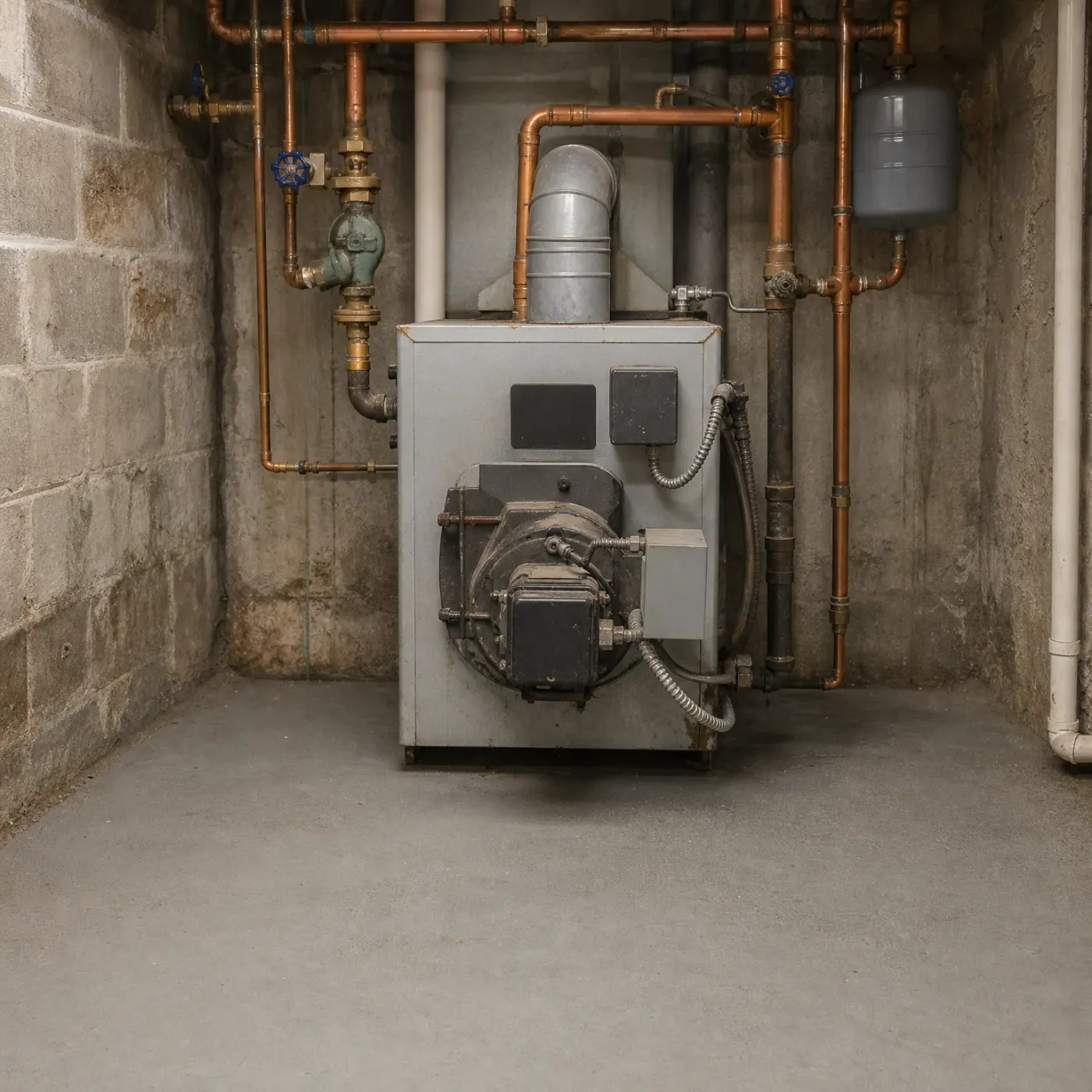
A gray boiler with a flue pipe and burner unit stands against a concrete block basement wall, surrounded by copper and steel piping, valves, and a gray expansion tank, on a bare concrete floor.

Left on its own

No one's opened this one up in years. Valves corrode, pressure drifts, and the flue can carry soot it shouldn't. It'll still heat the house on a mild day, but the first hard cold snap is when you find out what's actually wrong with it.

Why does my boiler take so long to heat up when I raise the thermostat?

You bump the thermostat up a few degrees and then wait. Ten minutes, twenty minutes, and the radiators are still barely warm. It feels like the boiler is struggling or undersized, especially on a cold Pennsylvania night when you just want the house to catch up fast.

It has to reheat the whole loop of water before any room feels it

A boiler doesn't send heat straight to a room. It heats water, and that water has to circulate through every pipe and radiator or baseboard in the loop before you feel a difference. Raising the thermostat five degrees doesn't make the burner work harder in that moment, it just means the burner stays on longer to bring that whole volume of water up to temperature. The bigger the swing you ask for, the longer that takes. This is also why a system left to swing wide feels slower than one held at a steady setback. A contractor who services the system can check that the pump is moving water at the rate it should, since a weak pump stretches that wait out even further.

A man in a blue sweatshirt reclines with closed eyes in a brown leather armchair in a living room with a bookshelf, houseplant, sofa, window, and a side table holding newspapers and a dark mug.
A bearded man in a gray pullover reclines with closed eyes on a brown leather sofa in a sunlit room with a window, framed picture, potted plant, and a wooden cabinet holding papers and a dark mug.
A man in a gray sweater leans back with closed eyes in a brown leather armchair beside a wooden side table holding a dark mug and a folded newspaper, with bookshelves and a window seat behind him.
A man in a green sweater reclines in an armchair with his eyes closed and a slight smile, beside a window with plants, a small table holding a mug and folded newspaper, and bookshelves behind him.

Stop chasing a boiler pro

A licensed local pro takes the request for your boiler tune-up.

It costs nothing to send, and you don't have to hire anyone.

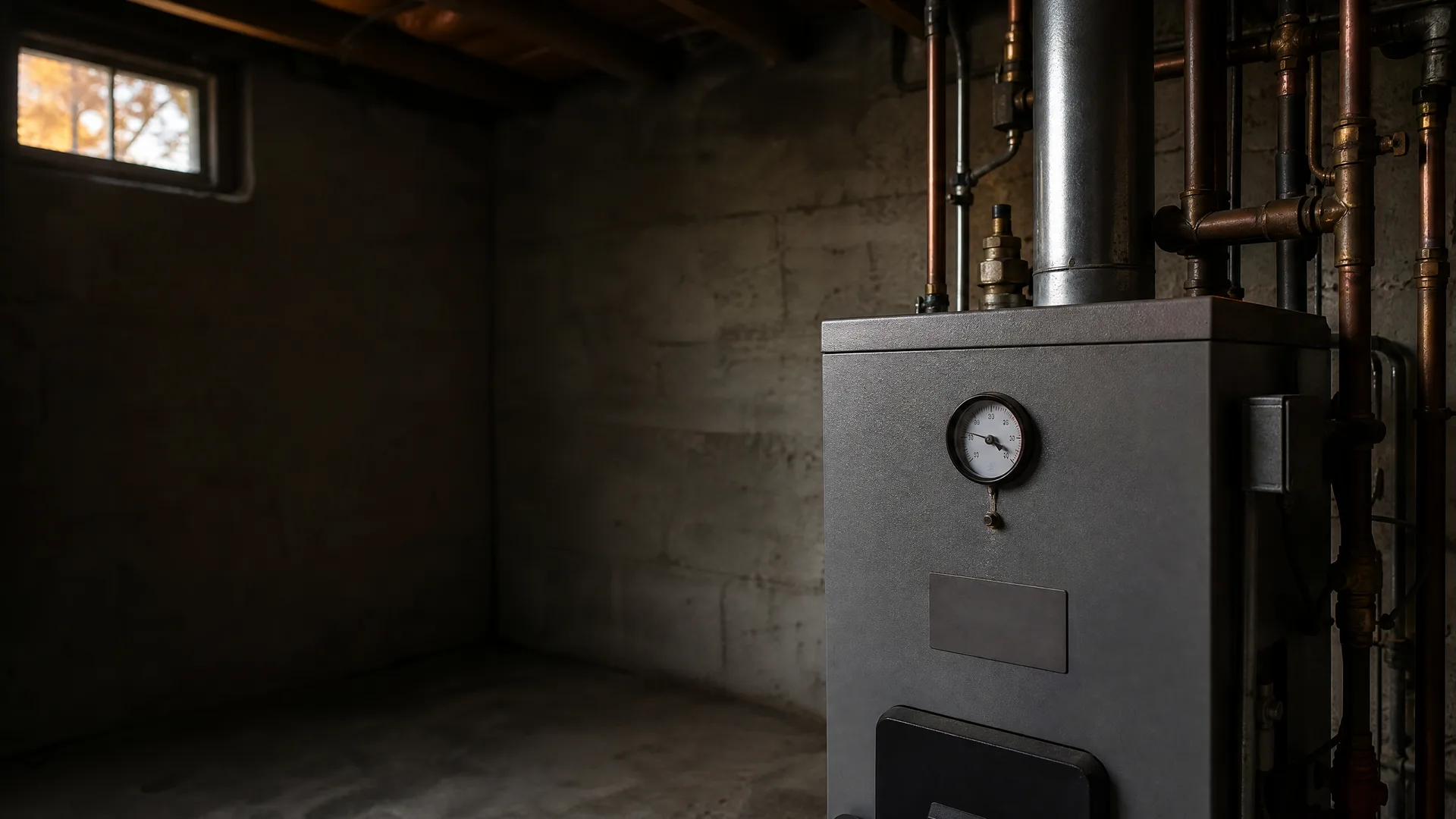
A gray boiler with a round pressure gauge and copper piping stands in a dim concrete basement lit by a small window showing yellow foliage.

You're down there Sunday afternoon switching the storm windows out, that first cold snap of the year having just come through Pennsylvania overnight. The dehumidifier's still running from summer, unplugged now, pushed into the corner. You walk past the boiler and catch the pressure gauge out of the corner of your eye. The needle's sitting under 12, closer to the bottom of the dial than you remember it being in the spring. Nothing's hissing, no puddle on the floor, just that low needle. You make a mental note to call someone before the cold really sets in, then go back to the windows.
Winter nights average 23°F statewide

A 23°F night means your boiler's not shutting off for long once the sun goes down. At a steady 62, it can hold that line without much strain. Push the thermostat up and down instead, and it has to fight back from that cold a lot harder.

NOAA nClimDiv 1991-2020 county normals weighted by homes

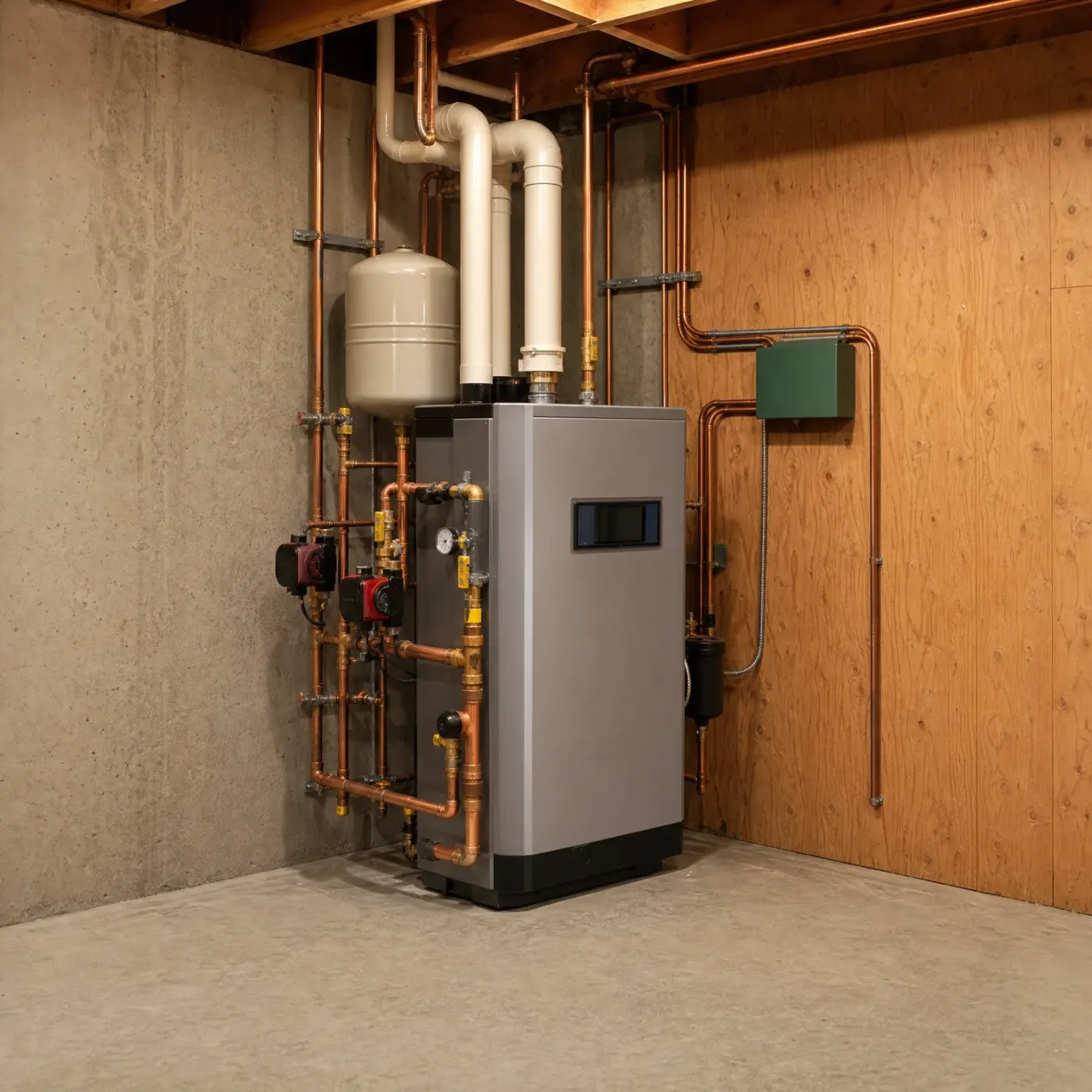
A gray floor-standing boiler in a basement corner with copper piping, two red circulator pumps, a beige expansion tank, white PVC vent pipes, concrete and plywood walls.
A boiler like this gets checked once a season, so the pump, the gauge, and every fitting on that copper run stay doing their job.
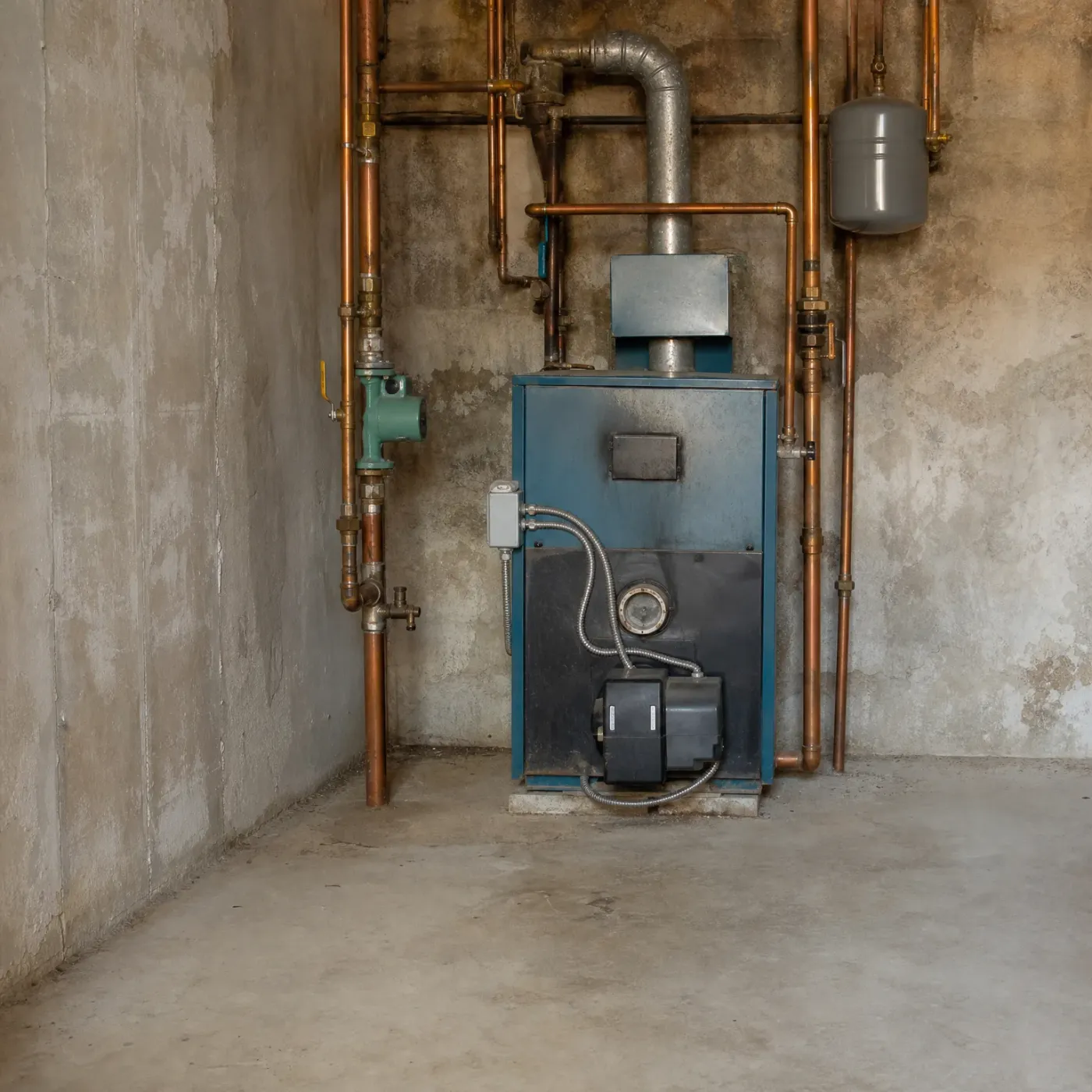
A blue residential boiler with a metal flue, pressure gauge and burner unit stands against a stained concrete basement wall, surrounded by copper pipes, a green circulator pump and a gray expansion tank.
Skip the yearly look and a basement like this is what's left: a bare wall, a corroding flue, and a burner nobody's checked since last winter.
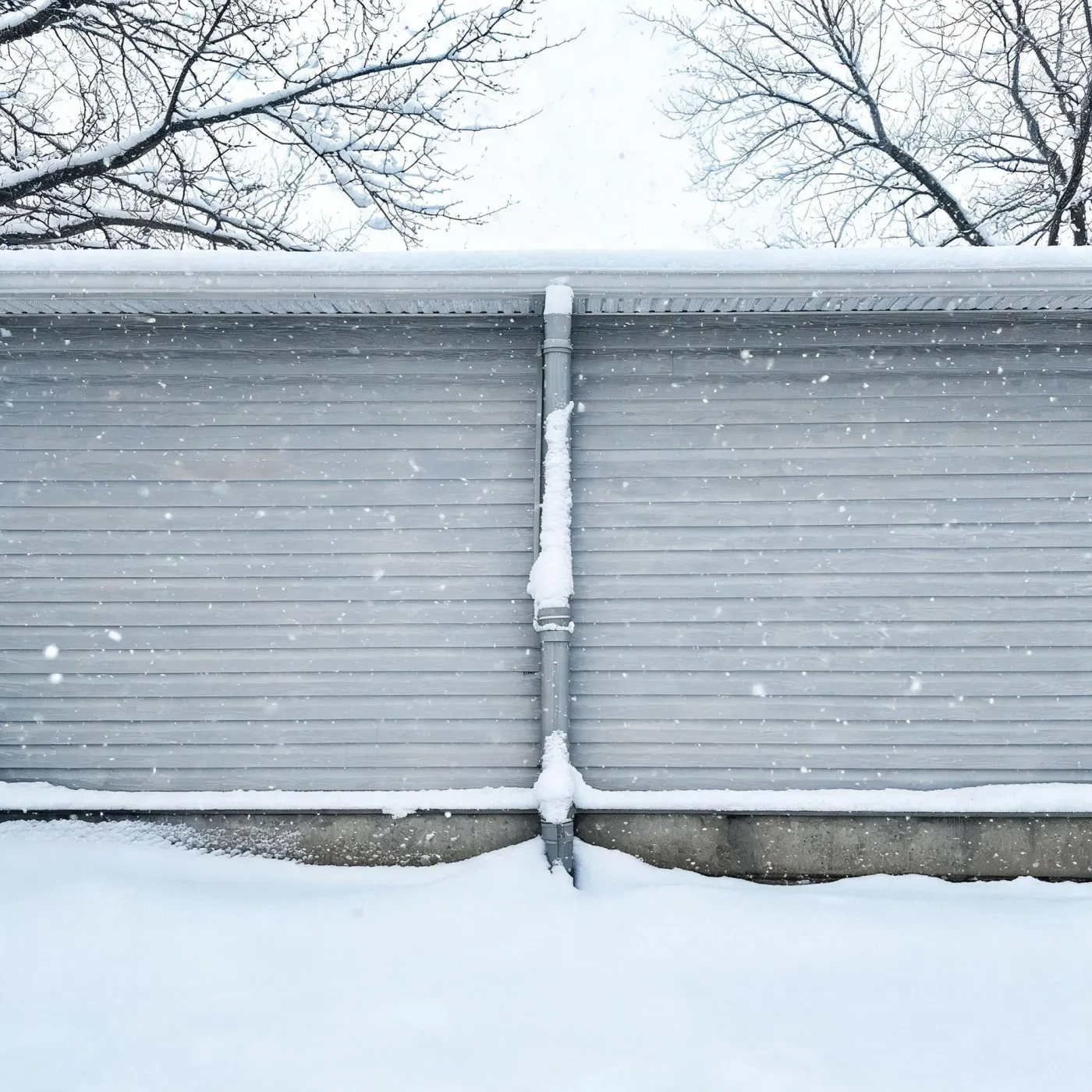
Exterior of a gray horizontal-lap-sided building with a snow-covered roof edge and a central downspout, seen during falling snow with deep snow on the ground and bare tree branches above.

Statewide, winter nights average 23°F, according to NOAA. That's cold enough that your boiler is firing on and off most of the night just to hold the line, not to push the house warmer. Each time it kicks on, it's pulling the water temperature back up from a real deficit, not a small dip. A boiler that's overdue for a look will show it here first: a longer wait before the radiators feel warm, or a burner that seems to run longer than it used to on a night like this. That's the pump, the pressure, or the burner itself losing a step, and it shows up on the cold nights before it shows up anywhere else.

NOAA nClimDiv 1991-2020 county normals weighted by homes

Why does the basement feel different lately?

Stand near the boiler and listen. If the burner is kicking on every few minutes instead of settling into a steady rhythm, that's the swing between a high daytime setting and a cold overnight drop doing its work. You might notice the gauge glass creeping up and down more than it used to, or a faint metallic ticking from the pipes as they heat and cool faster than they're built for. Some rooms run warm while others lag behind, because the system never gets the chance to settle before it's asked to climb again. Left alone through a full Pennsylvania winter, that constant cycling wears on the burner and the pump harder than a steady load would, and it's usually the fitting or seal that was already weak that gives out first, often on the coldest night of the year.

  1. The thermostat calls for heat and opens the zone valve.

  2. The burner ignites and starts heating water in the boiler.

  3. A circulator pump pushes hot water out through the pipes.

  4. Radiators or baseboards release that heat into each room.

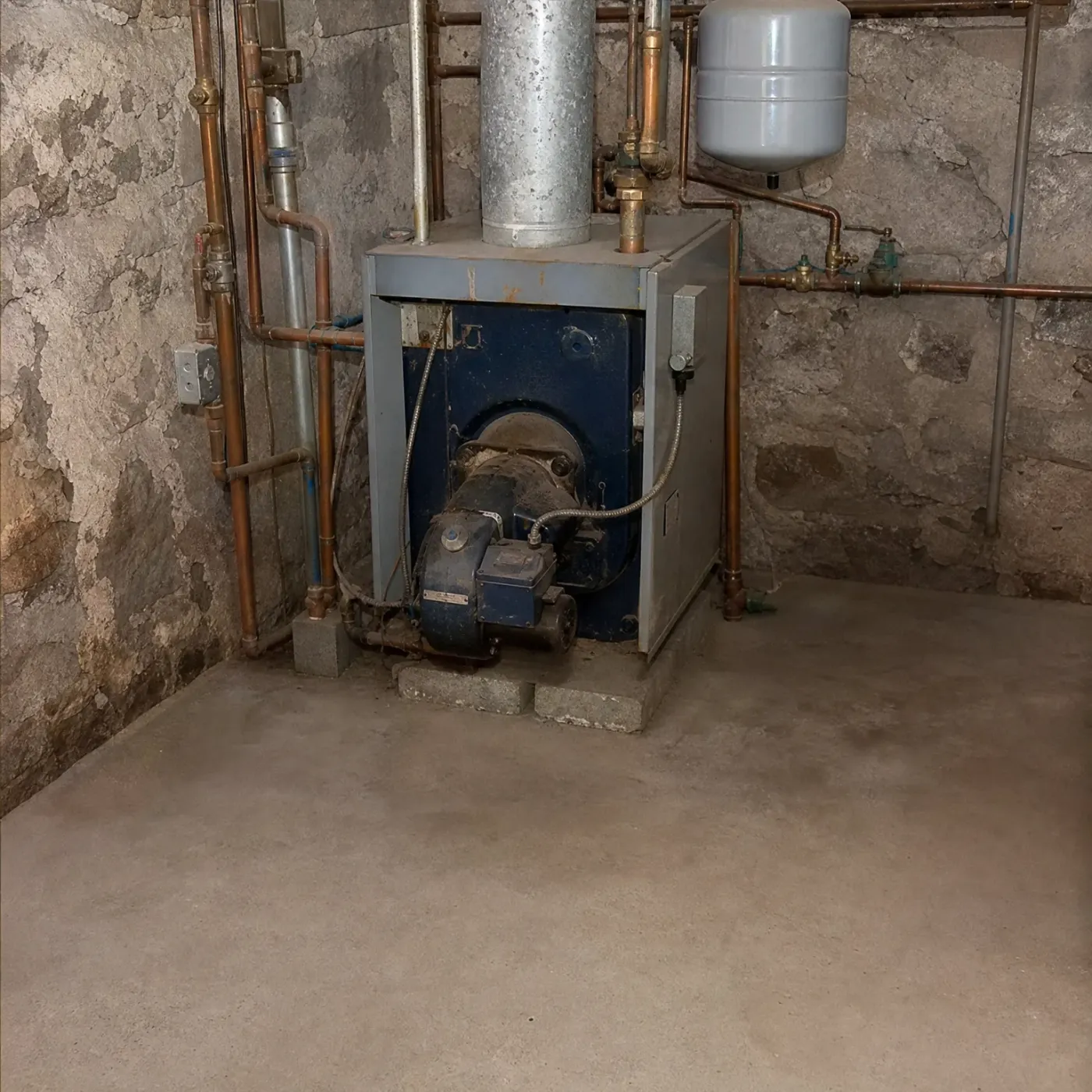
An oil-fired boiler with a blue and gray cabinet and burner sits on concrete blocks in a basement corner with stone walls, connected to copper pipes, a metal flue, and a wall-mounted expansion tank.
Before you get your boiler maintenance
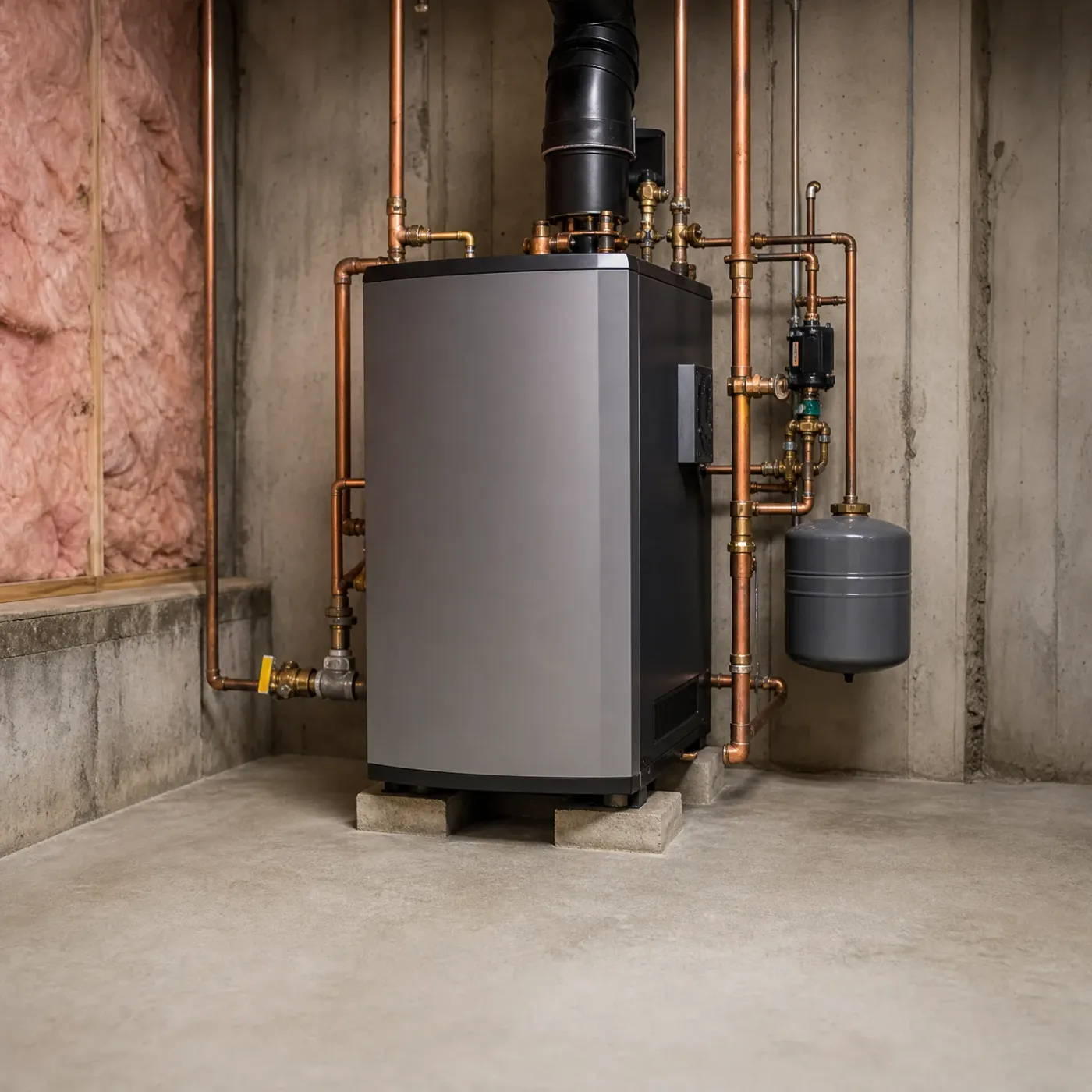
A gray and black boiler unit sits on concrete blocks in a basement corner, connected to copper piping, valves, a black flue duct, and a gray expansion tank, with bare concrete walls and exposed pink insulation at left.
After you get your boiler maintenance

The range that gets you through

  • 68 to 70 during the day and 62 overnight keeps your boiler's burner cycling at a steady pace instead of fighting its way back from cold.
  • A steady setback through October to March means fewer burner cycles than a thermostat pushed up and down by hand.
  • Pennsylvania winter nights average 23°F, cold enough that the boiler is cycling most of the night just to hold steady, not to push the house hotter.
  • A boiler checked once a season by someone who knows this equipment is the one that holds that range without extra strain on the pump or burner.
  • The swing between a high daytime setting and a deep overnight drop is what shows up as a burner firing every few minutes instead of settling into rhythm.
  • Set it once this fall and the only other thing worth doing before the cold settles in is having the system looked at.

68 to 70 by day, 62 at night. That's the whole answer, and it holds from the first cold snap in October through whatever March still has left to throw at Pennsylvania. The reason it works comes down to what the burner is actually doing on a cold night. Outside, the air's sitting around 23 degrees most nights this winter, and your boiler is already working to hold the line at that gap. Ask it to also climb back up from a deep overnight drop, or chase a thermostat someone's been bumping up and down by hand, and every one of those recoveries means the burner firing longer and more often than it needs to. A steady setback skips that. The water temperature stays in a narrow enough band that the burner settles into a rhythm instead of lurching between cold starts. You'll hear the difference in the basement, less firing, more quiet. The other half of this is the once-a-season look from someone who knows this kind of system, because a boiler that's been checked holds a setback like this without the pump or burner straining to keep up. Set the two temperatures once this fall, leave them alone, and the only other thing on your list before the real cold sets in is getting it looked at.

A gray-haired man with a beard in a blue button-placket shirt reclines on a couch with his eyes closed, beside a sunlit window with a green plant.
A woman in a cream knit sweater sits in an armchair with her eyes closed near a window showing yellow autumn foliage, with a mug on a round wooden side table beside her.

Send one request and you're done looking

A steady 68 to 70 during the day and 62 overnight keeps your boiler's burner from fighting its way back from cold all winter. That's the setting worth keeping, and a yearly look from someone who services boilers in Pennsylvania all season is what keeps it worth keeping. They know which pumps run loud before they fail and which gauges drift. Send the request and the search for a contractor is off your plate. One licensed local contractor gets it, not five.

Find a licensed boiler pro

The pro who reaches out is licensed in Pennsylvania.

No charge to send it. You decide if you hire them.