Tell us about the job
Takes about a minute. No obligation.
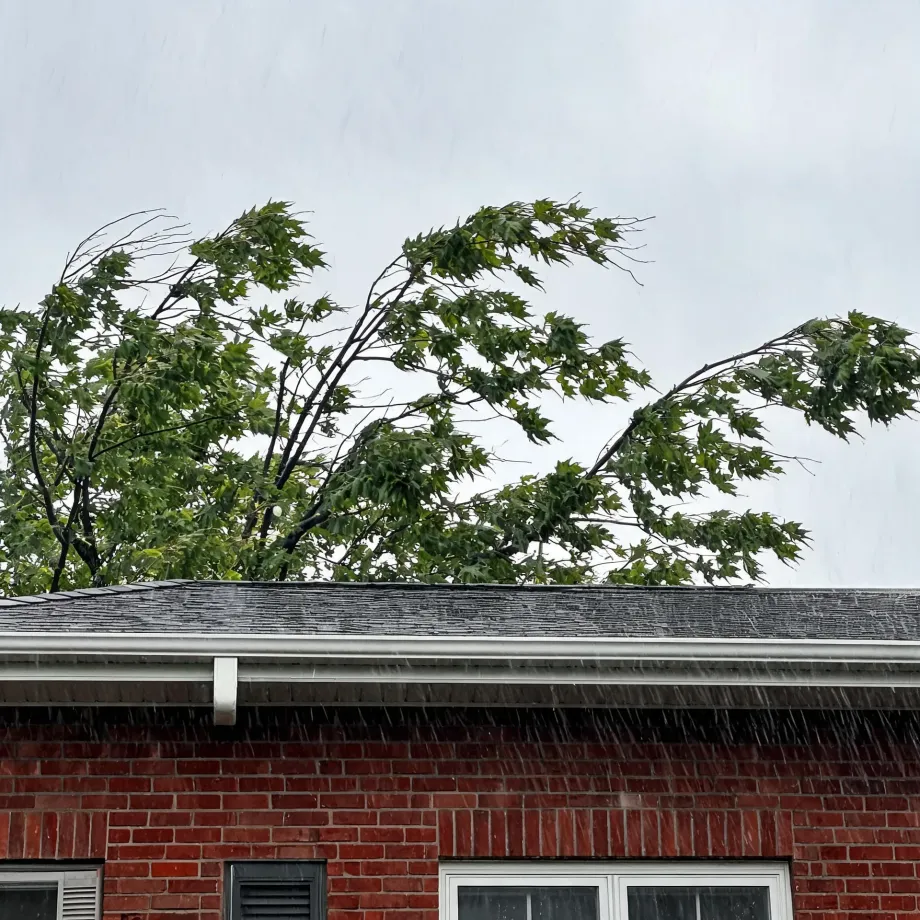
A boiler installation in this county starts with what the equipment will actually face, not what a product sheet assumes. 546 severe weather events were recorded in Westmoreland County, Pennsylvania between 2015 and 2024. At that rate, severe weather is part of the normal year, not an exception to it, and a contractor who ignores that when sizing a system leaves the homeowner with a boiler that was never matched to where it lives. Flue routing, heat exchanger selection, and system capacity all get decided against the real climate here.
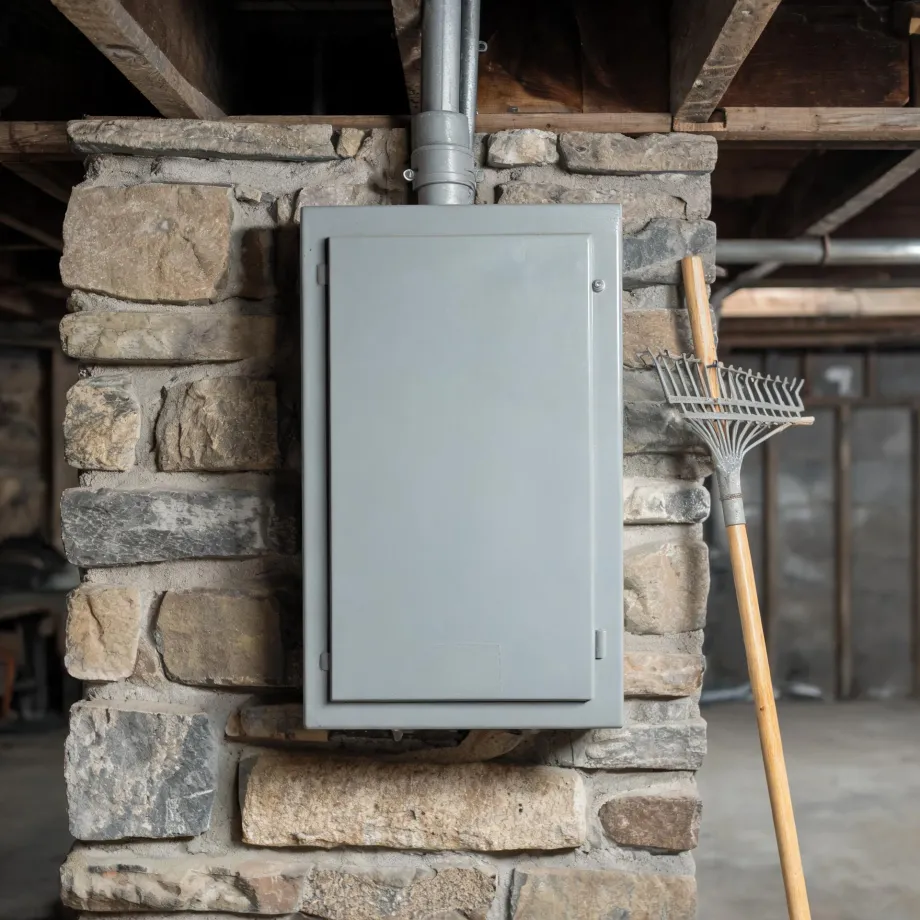
Ductwork laid down for a mid-century gravity furnace or a cast-iron steam system was not sized, routed, or sealed to carry what a modern boiler installation demands. Half the homes in Westmoreland County, Pennsylvania were built in 1964 or earlier (2020-2024 ACS 5-year). A contractor quoting a new boiler in a house from that era opens walls and crawl spaces to find runs that have been patched, rerouted, or simply left as they were when the original system went in. The distribution side of the job, not the boiler itself, is where the scope expands and where the final price gets set.
What a Boiler Installation Puts in Your Home
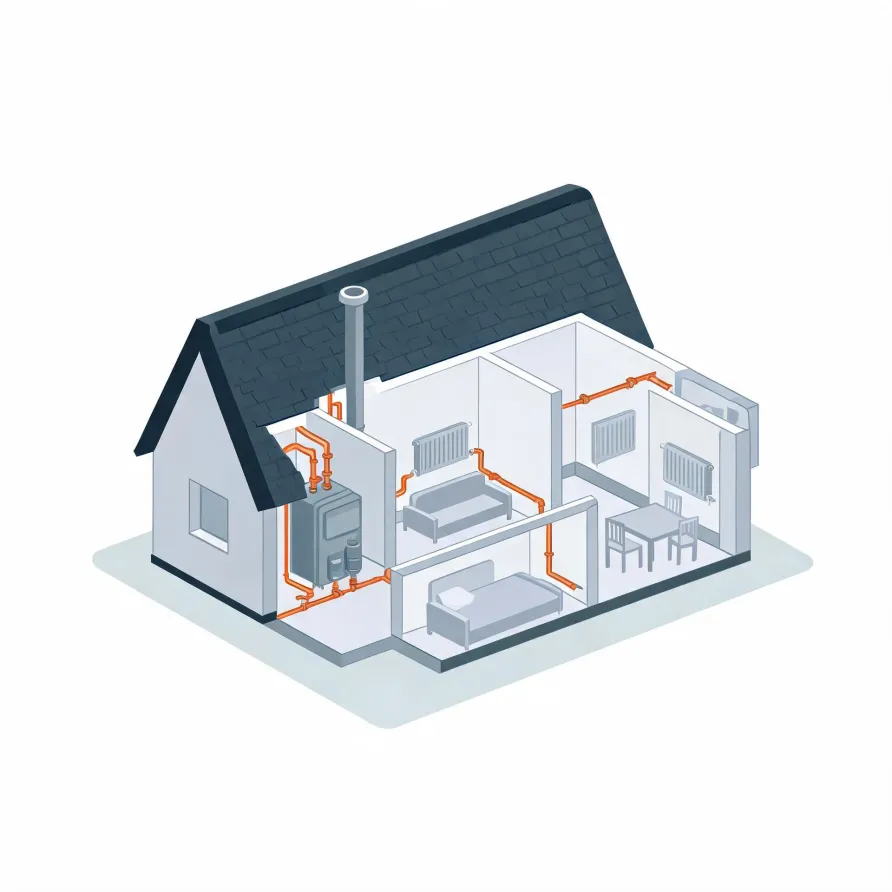
The boiler itself sits in the basement or a utility room and is the heart of the system. A contractor sets it in place, connects it to the gas or oil supply, and ties it into the home's plumbing. The expansion tank mounts nearby, holding the pressure in the closed water circuit at a stable level.
Radiators or baseboard units occupy each room that needs heat, fastened to walls or set along baseboards where the hot water arrives and gives off warmth before returning. The circulator pump, mounted close to the boiler, moves that water through the pipes. A thermostat goes on an interior wall and tells the whole system when to run.
The drawing shows a representative layout, and a licensed contractor determines exactly what the installation involves for this particular house.
Find a contractor in Westmoreland CountyWestmoreland County, by the numbers
546 severe weather events were recorded in Westmoreland County, Pennsylvania between 2015 and 2024.
NOAA National Centers for Environmental Information, Storm Events Database, bulk CSV export, events 2015-01-01 through 2024-12-31.Half the homes in Westmoreland County, Pennsylvania were built in 1964 or earlier (2020-2024 ACS 5-year).
U.S. Census Bureau, 2020-2024 American Community Survey 5-Year EstimatesWestmoreland County, Pennsylvania holds 168,812 housing units (2020-2024 ACS 5-year).
U.S. Census Bureau, 2020-2024 American Community Survey 5-Year EstimatesOwners occupy 78.4% of the occupied homes in Westmoreland County, Pennsylvania (2020-2024 ACS 5-year).
U.S. Census Bureau, 2020-2024 American Community Survey 5-Year EstimatesBoiler Installation Rules on the Books for Westmoreland County, Pennsylvania3 codes, standards, and statutes
Contractor Rules in Westmoreland County, Pennsylvania
Pennsylvania names the trade in its own definition: installing central heating or air conditioning is a home improvement under the Act, whether or not the equipment is affixed — so an HVAC installation is work the registration requirement reaches.
A Pennsylvania registration displaces the local one: no political subdivision may require a home improvement contractor to register, license or pay a fee on top of it, though building permits and local code enforcement still apply.
Pennsylvania requires home improvement contractor registration rather than a licence: nobody may hold themselves out as a contractor, or perform any home improvement, without first registering with the Bureau of Consumer Protection.
Severe Weather Events in Westmoreland County
Heating equipment in Westmoreland County works against whatever the local climate throws at it, and weather stress is a real factor in how hard a boiler has to work and how long it holds up. That load is local, which is why installation decisions here call for contractors who know this area.
546 severe weather events, 2015–2024. Source: NOAA National Centers for Environmental Information, Storm Events Database.