Tell us about the job
Takes about a minute. No obligation.
A contractor quoting a boiler installation in Montgomery County has to account for what the local climate asks of heating equipment over its working life, not just what a catalog spec sheet suggests. 458 severe weather events were recorded in Montgomery County, Pennsylvania between 2015 and 2024. At that rate, severe weather is a standing condition here, and it bears directly on how a contractor sizes a boiler, seals penetrations, and selects components rated to handle sustained thermal and pressure load. A unit that fits the math on paper but ignores what the weather here routinely does to a structure's heat loss will run short.
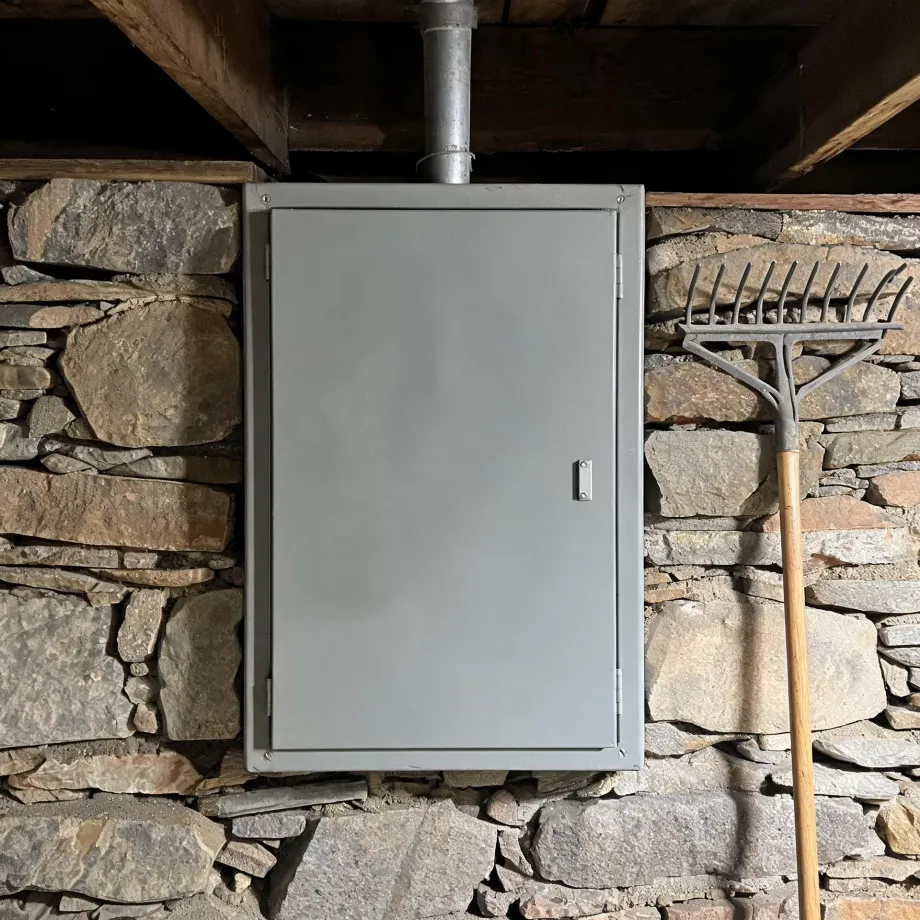
Older ductwork and piping were sized and laid out for whatever equipment the original builder chose, and a new boiler has to work with what is already there or require changes that add scope and cost before the unit itself is even priced. Half the homes in Montgomery County, Pennsylvania were built in 1971 or earlier (2020-2024 ACS 5-year). A contractor installing a boiler in stock this age spends real time on the distribution side: whether existing piping runs are adequate, whether zone controls are compatible, and what the existing system actually hands them at the connection points. The equipment selection comes after that assessment, not before.
What Gets Installed With a New Boiler
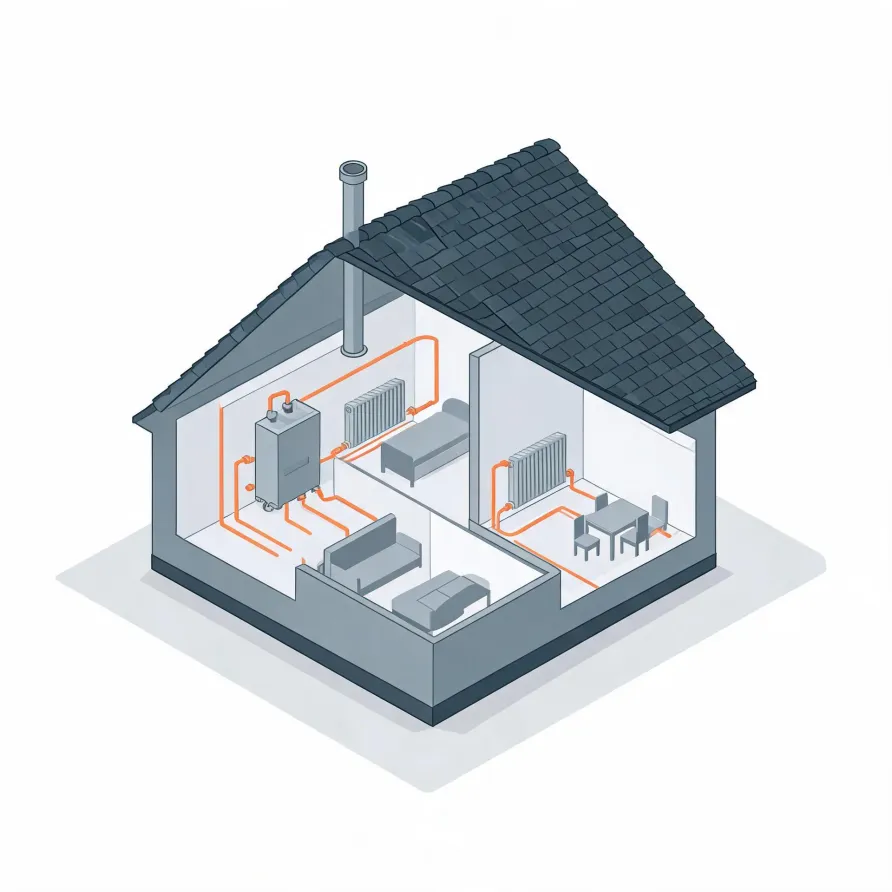
The boiler itself sits in a mechanical room, basement, or utility closet and is the heat source for the whole system. A contractor mounts the unit, connects it to the fuel supply, and ties it into the home's plumbing. The expansion tank, usually hung near the boiler, absorbs pressure changes as water heats and cools.
Radiators or radiant floor loops spread through the living spaces are where the heat actually enters the rooms. Each radiator or zone valve gets plumbed into a supply and return line that runs back to the boiler. A thermostat or zone controller goes on the wall and tells the system when to fire.
The drawing shows a typical boiler layout, and a licensed contractor determines exactly what applies to this house.
Find a contractor in Montgomery CountyMontgomery County, PA, by the numbers
458 severe weather events were recorded in Montgomery County, Pennsylvania between 2015 and 2024.
NOAA National Centers for Environmental Information, Storm Events Database, bulk CSV export, events 2015-01-01 through 2024-12-31.Half the homes in Montgomery County, Pennsylvania were built in 1971 or earlier (2020-2024 ACS 5-year).
U.S. Census Bureau, 2020-2024 American Community Survey 5-Year EstimatesMontgomery County, Pennsylvania holds 350,351 housing units (2020-2024 ACS 5-year).
U.S. Census Bureau, 2020-2024 American Community Survey 5-Year EstimatesOwners occupy 71.4% of the occupied homes in Montgomery County, Pennsylvania (2020-2024 ACS 5-year).
U.S. Census Bureau, 2020-2024 American Community Survey 5-Year EstimatesBoiler Installation Rules & Code in Montgomery County, Pennsylvania3 sourced standards and laws
Licensing and Legal Requirements in Montgomery County, Pennsylvania
Pennsylvania names the trade in its own definition: installing central heating or air conditioning is a home improvement under the Act, whether or not the equipment is affixed — so an HVAC installation is work the registration requirement reaches.
A Pennsylvania registration displaces the local one: no political subdivision may require a home improvement contractor to register, license or pay a fee on top of it, though building permits and local code enforcement still apply.
Pennsylvania requires home improvement contractor registration rather than a licence: nobody may hold themselves out as a contractor, or perform any home improvement, without first registering with the Bureau of Consumer Protection.
Severe Weather Events in Montgomery County
Weather in this region puts real demand on heating equipment, and boilers that cycle through hard conditions need to be sized and installed for the work they will actually face. That makes local weather history a practical reference, not a backdrop.
458 severe weather events, 2015–2024. Source: NOAA National Centers for Environmental Information, Storm Events Database.