







Repair or replace an old boiler in Pennsylvania

Send the form and the search for an installer is over.

Let a pro reach out

A boiler past 15 years old, especially one that's starting to leak at fittings, short-cycle, or need a new part every winter, usually makes more sense to replace than repair. Boilers run long and hard through Pennsylvania winters, and once the heat exchanger or circulator pump starts failing, repairs tend to stack up fast without actually fixing the underlying wear. A cracked heat exchanger is a safety issue on its own and isn't something to patch and wait on. If your boiler is under 10 years old and the problem is a single part, like a zone valve or an igniter, repair usually gets you through. Most Pennsylvania homes run gas heat, and a properly sized replacement boiler installed by someone who works on this equipment all winter will run more efficiently than an aging one, which matters with power costs here as high as they are.

A man with grey hair and stubble in a dark sweater sits on a grey sofa indoors, looking off to the side, with a potted plant and a sunlit window behind him.
A man with gray hair, a beard and glasses, wearing a dark green sweater, sits on a gray sofa in a sunlit living room with a potted plant, table lamp and wooden sideboard behind him.
A middle-aged man with graying hair and a short beard sits on a blue sofa in a living room, looking toward a window, with a bookshelf, lamp and framed picture in the background.
A man with graying curly hair and a dark green sweater sits on a gray sofa in a sunlit living room, looking off to the side, with a framed picture, shelving, an armchair and a window with sheer curtains behind him.

Repair the Boiler or Replace It

Repair

  • A cracked circulator pump, a failed zone valve, or a bad aquastat can usually be fixed in one visit without touching the rest of the system.
  • If the boiler is under 15 years old and this is the first real problem it's had, repair is the honest answer.
  • Cast iron sections and heat exchangers are the expensive parts; if those are sound, the rest is usually worth fixing.
  • A repair buys time if you're not ready to take on an installation mid-winter.
  • Pennsylvania winters are long, and a working boiler with one bad part doesn't need to come out over that part.

Replace

  • Once the heat exchanger itself is cracked or leaking, there's no part to swap in; the whole unit has to go.
  • A boiler that needs a new part most winters is costing you in repair visits on top of whatever it's costing you in gas.
  • Newer boilers condense exhaust heat instead of venting it, which matters with gas prices and Pennsylvania's long heating months.
  • If the boiler is original to the house and past 15 years, replacement means you stop gambling on which part fails next.
  • A new install is sized and set up for your house now, not for whatever the builder put in decades ago.
  • Short-cycling wears out every part faster, so a boiler already doing that is also wearing out its replacement parts faster.
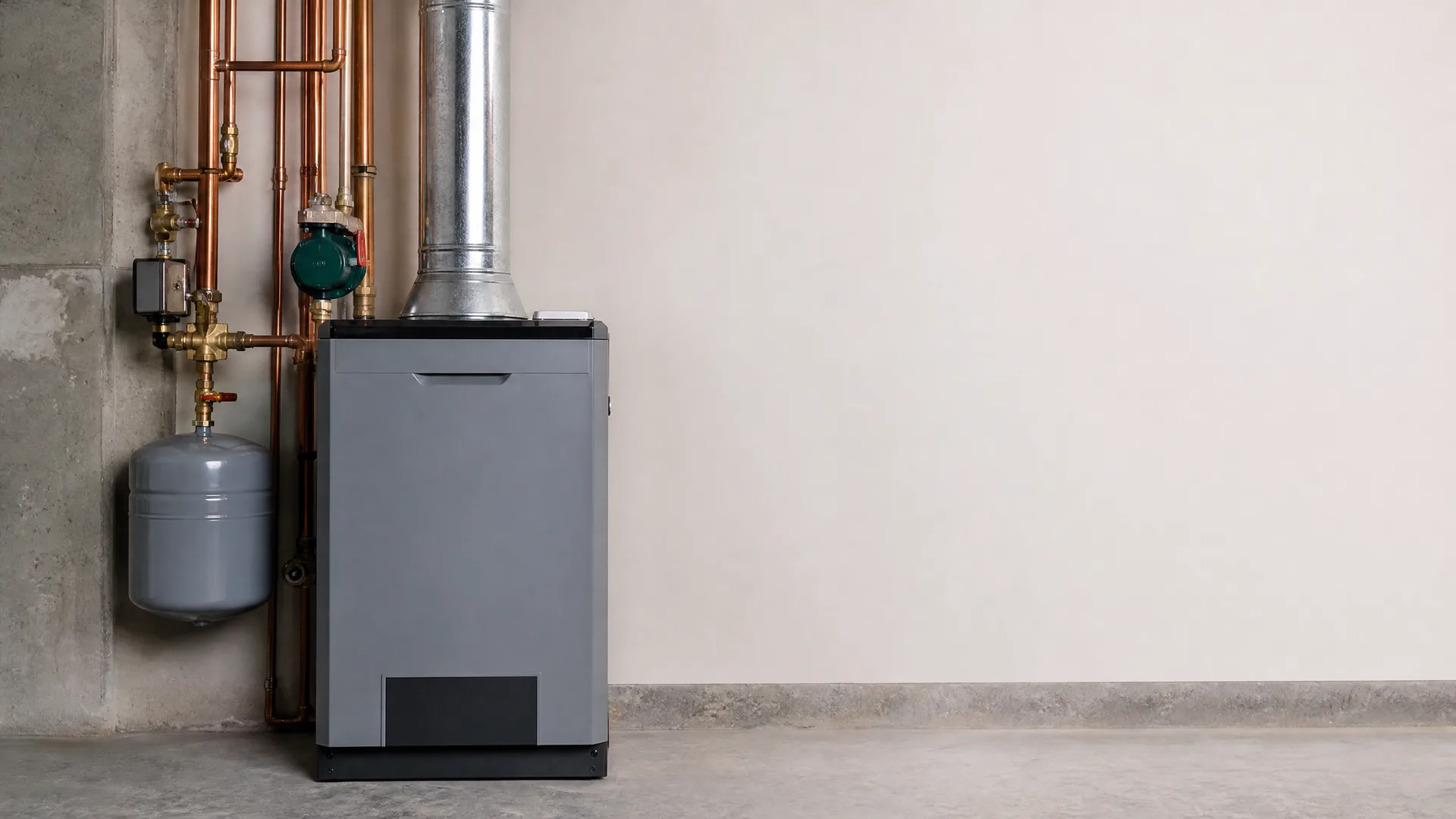
A gray floor-standing boiler with a metal flue pipe, copper piping, a circulator pump and a gray expansion tank, installed against a concrete wall.

Why old boilers crack at fittings

Cast iron and steel expand and contract every time the burner fires. Over enough winters, that constant movement works the joints loose at the fittings, and the gaskets lose their seal. Once a boiler starts weeping water there, the leak doesn't heal itself. It gets worse the next time the system heats up, and the next, until a fitting lets go outright.

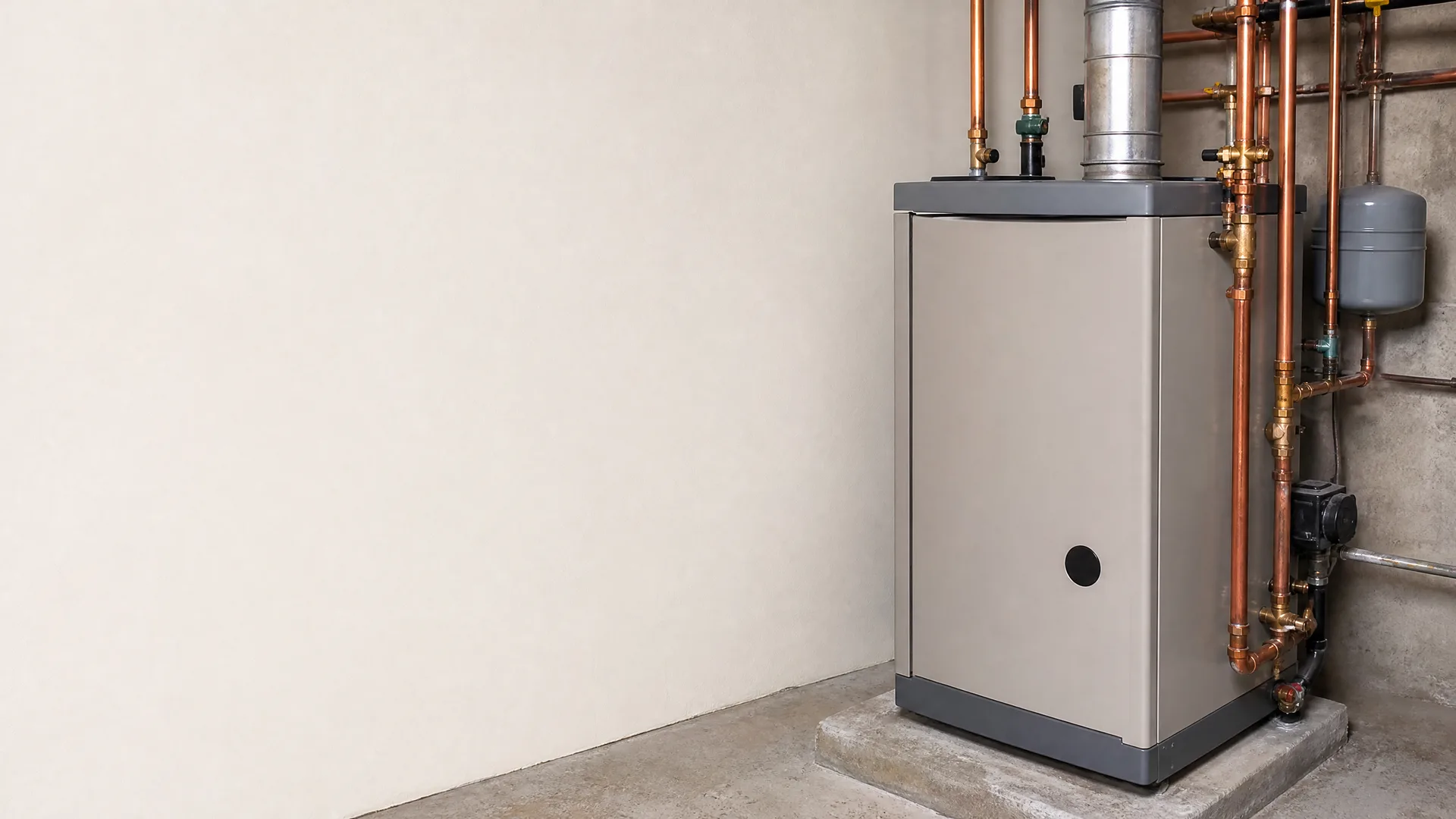
A tall grey floor-standing boiler on a concrete plinth in a corner of a room, with copper pipework, a flue, a circulator pump and an expansion vessel to its right, beside a plain cream wall.

What short-cycling does to the heat exchanger

A boiler that fires, shuts off, then fires again within a few minutes isn't meeting the thermostat's call before it gives up. That pattern puts more stress on the heat exchanger than a normal run would, since the metal heats and cools faster than it's built for. Over a winter of that, the cracks that cause leaks start where the stress concentrates.

How do I know if my boiler is actually dying or just needs a part?

You've already had one or two repairs this winter and you're starting to wonder if you're throwing money at a boiler that's not going to make it anyway. The trouble is nobody's told you what separates a boiler that's actually failing from one that just needs attention. You want to know what a tech actually looks at before deciding, not a guess.

Look at the heat exchanger, not the part that just failed

A tech checks the heat exchanger first, because that's the part that can't be swapped out without replacing the whole boiler. Rust-colored water at the base, a hairline crack along a seam, or soot buildup around the burner chamber all point to the exchanger itself failing, not a part feeding it. A circulator pump or zone valve dying is routine wear, the kind every boiler goes through. An exchanger that's cracked or corroding means the boiler is burning fuel it can't fully convert to heat anymore, and no replacement part fixes that. If what failed sits outside the exchanger, repair holds. If the exchanger is the problem, nothing short of a new unit solves it.

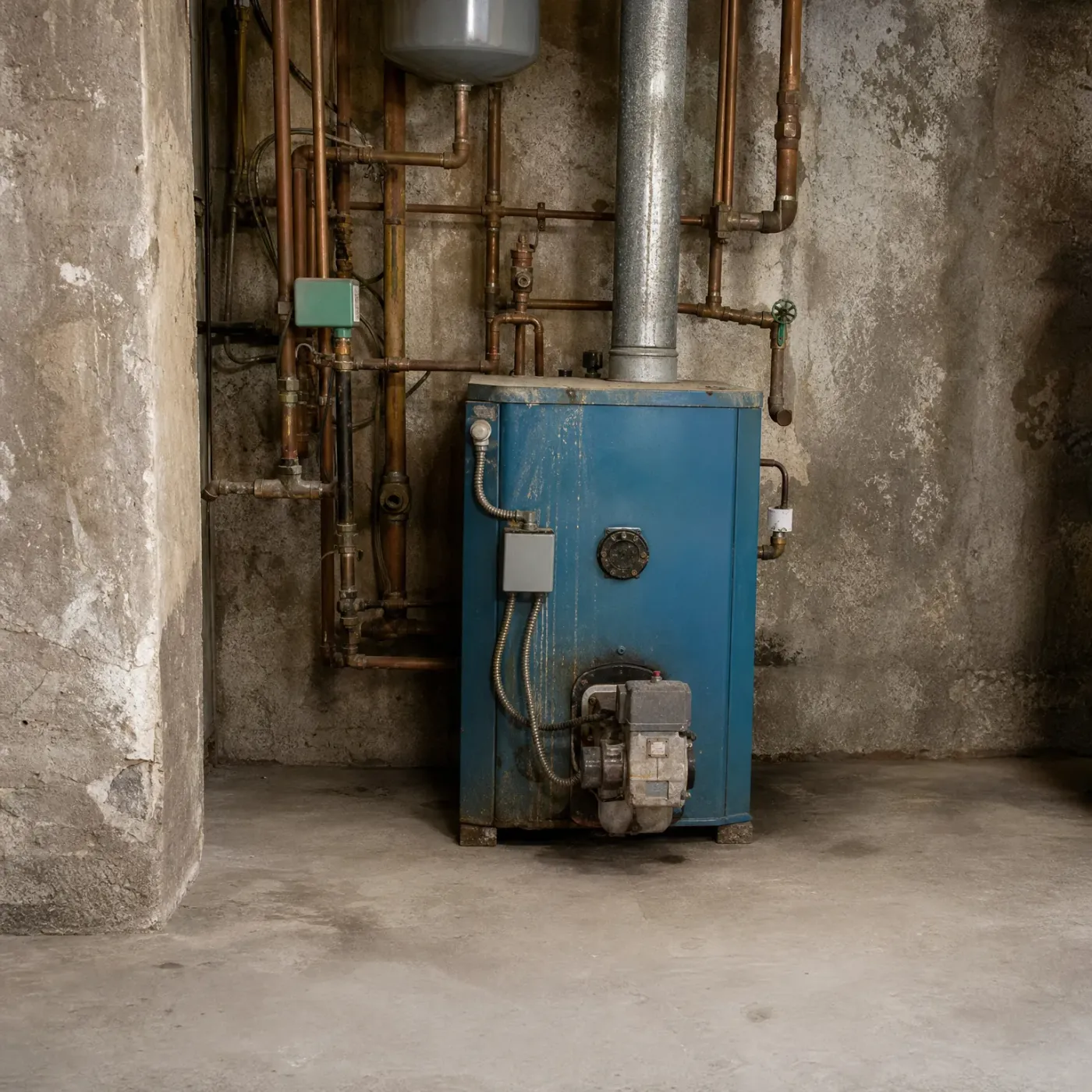
A blue cabinet boiler with a metal flue pipe and copper piping stands against a bare concrete wall in a basement with a concrete floor.
Before you get your boiler installation
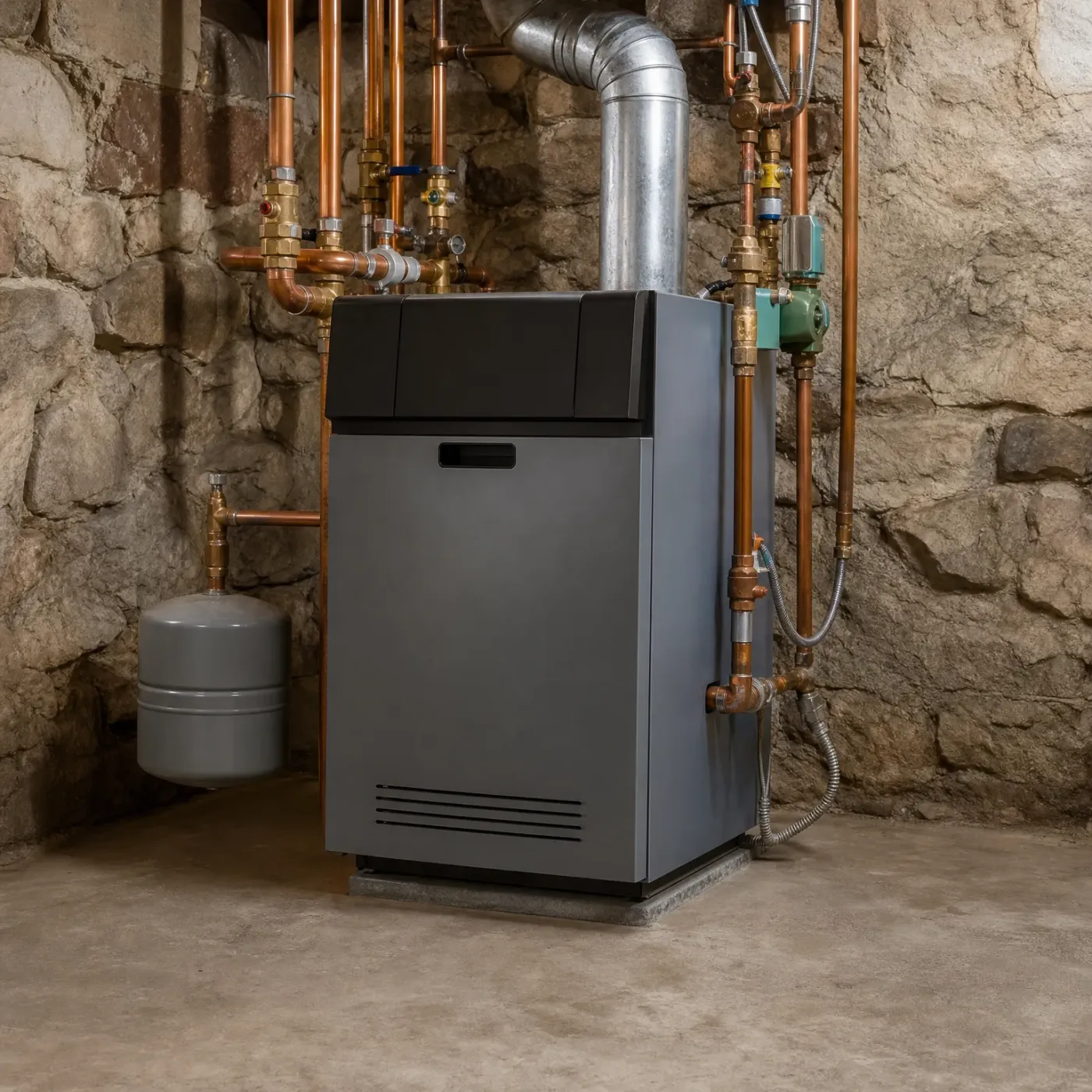
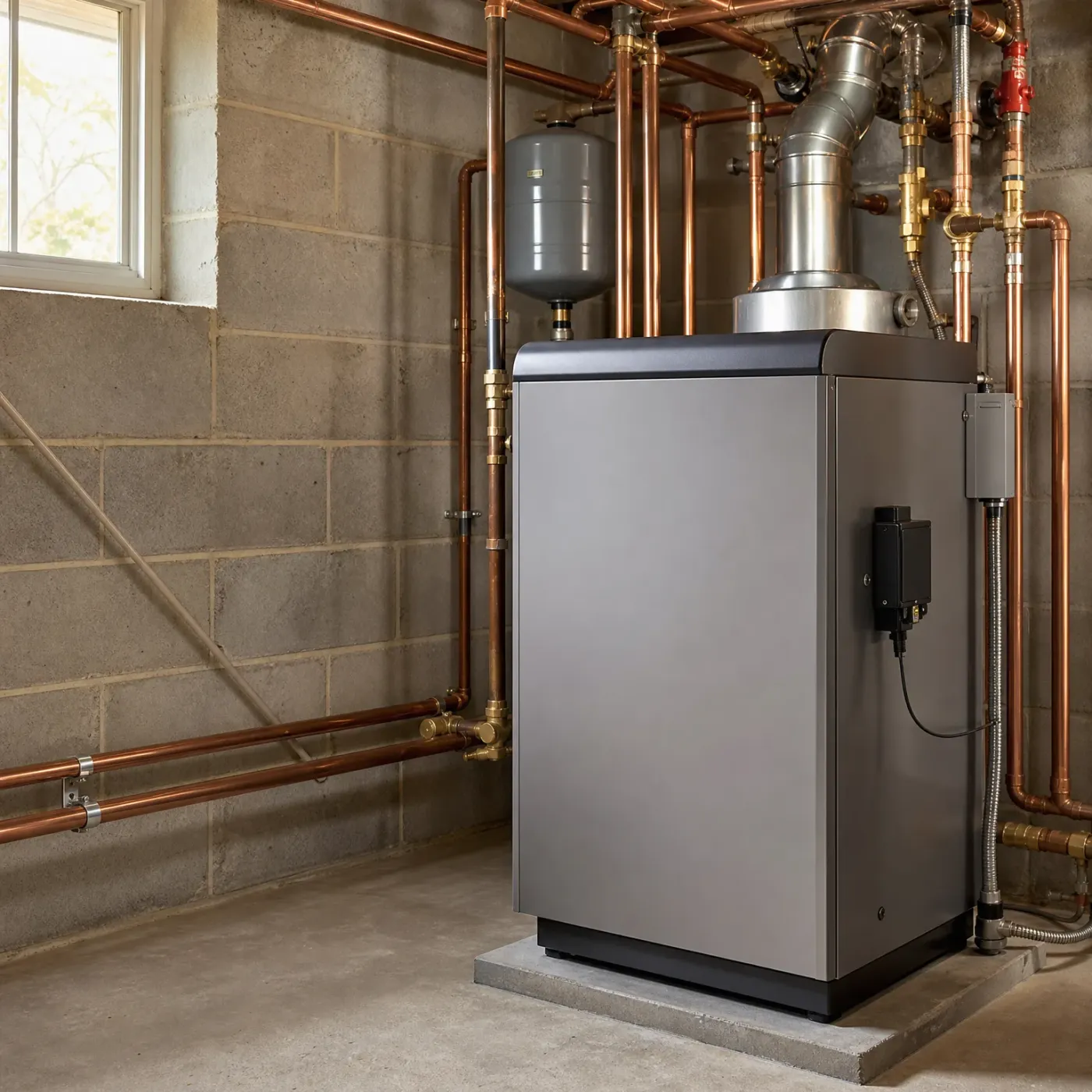
A gray residential boiler on a concrete pad in a basement with stone walls, connected to copper piping, brass valves, a circulator pump, an expansion tank, and a metal flue duct.
After you get your boiler installation
A gray floor-standing boiler on a concrete pad in a basement with concrete block walls, connected to copper piping, a flue vent, and an expansion tank.

Let someone else find the pro

One installer gets your project, so there's no bidding war over it.

One request and the search for a pro is handled.

Find a licensed pro

It costs nothing to send, and you don't have to hire anyone.

A woman with shoulder-length brown hair wearing a beige knit cardigan sits in a gray upholstered armchair near a window, looking off to the side with a slight smile, with bookshelves blurred in the background.
A woman and a sleeping child wrapped together in a cream knitted blanket on a couch, with a potted plant, framed photo and lit lamp in the background.

What an aging boiler costs you

A boiler that's working harder than it should shows up on the gas bill before it shows up anywhere else. Short cycling burns more fuel to produce less heat, and a cracked heat exchanger means some of what you're paying for is leaking out instead of warming the house. With power this expensive in Pennsylvania, a lot of homeowners end up running space heaters to cover cold rooms, which adds electric cost on top of the gas you're already losing. None of that shows up as one bill you can point to. It just adds up.
What happens if it fails in January

A boiler that quits in the middle of a Pennsylvania winter doesn't give you time to shop around. You're stuck heating with whatever you have on hand while you try to find someone to look at it, and pipes that go unheated for too long are a real risk in a cold snap. Replacing a boiler on your own schedule means picking the unit and the install date. Replacing one because it died means taking whatever's available, on whatever day someone can get to the house.

Winter nights average 23°F statewide

23°F is the average overnight low across a Pennsylvania winter, and your boiler is what stands between that and a warm house at two in the morning. That's the load it's built for. A unit past 15 years old doing it night after night is why fittings start to weep and parts start to fail.

NOAA nClimDiv 1991-2020 county normals weighted by homes

Where this leaves you

  • A boiler past 15 years old with leaking fittings or repeat repairs costs more to keep running than to replace.
  • A boiler under 15 years old with one isolated problem, like a bad aquastat or zone valve, is still worth fixing.
  • A licensed local contractor who services boilers all winter knows which parts fail first in Pennsylvania cold.
  • Sending one request means one contractor working your case, not a string of calls from companies competing for the job.
  • Getting the right call made now means a working boiler before the next cold snap, not a guessing game through winter.

The age and the pattern tell you most of what you need to know. A boiler past 15 years old that's leaking at the fittings or needs a new part every winter is past the point where repair makes sense. One that's younger with a single clear problem, a bad aquastat or a stuck zone valve, is usually still worth fixing. You don't need to guess at which one you've got. What you do need is someone who can look at your boiler and tell you straight, and that's where a lot of people get stuck, because the next step is finding somebody who actually knows this equipment and isn't just guessing along with you.

That's the part this page hands off. The request goes to one licensed contractor working in your area, someone who's in Pennsylvania basements all winter and knows which fittings crack first, which aquastats fail, what a boiler running through a Pennsylvania winter actually goes through. Not a list of companies bidding for your attention, just the one who's going to look at your system and tell you what it needs. Once you send it, the job of tracking down the right person stops being yours. You've done the hard part already, working out that it's time to call someone. The rest is a matter of getting the right person into your basement before the next cold night makes the decision for you.

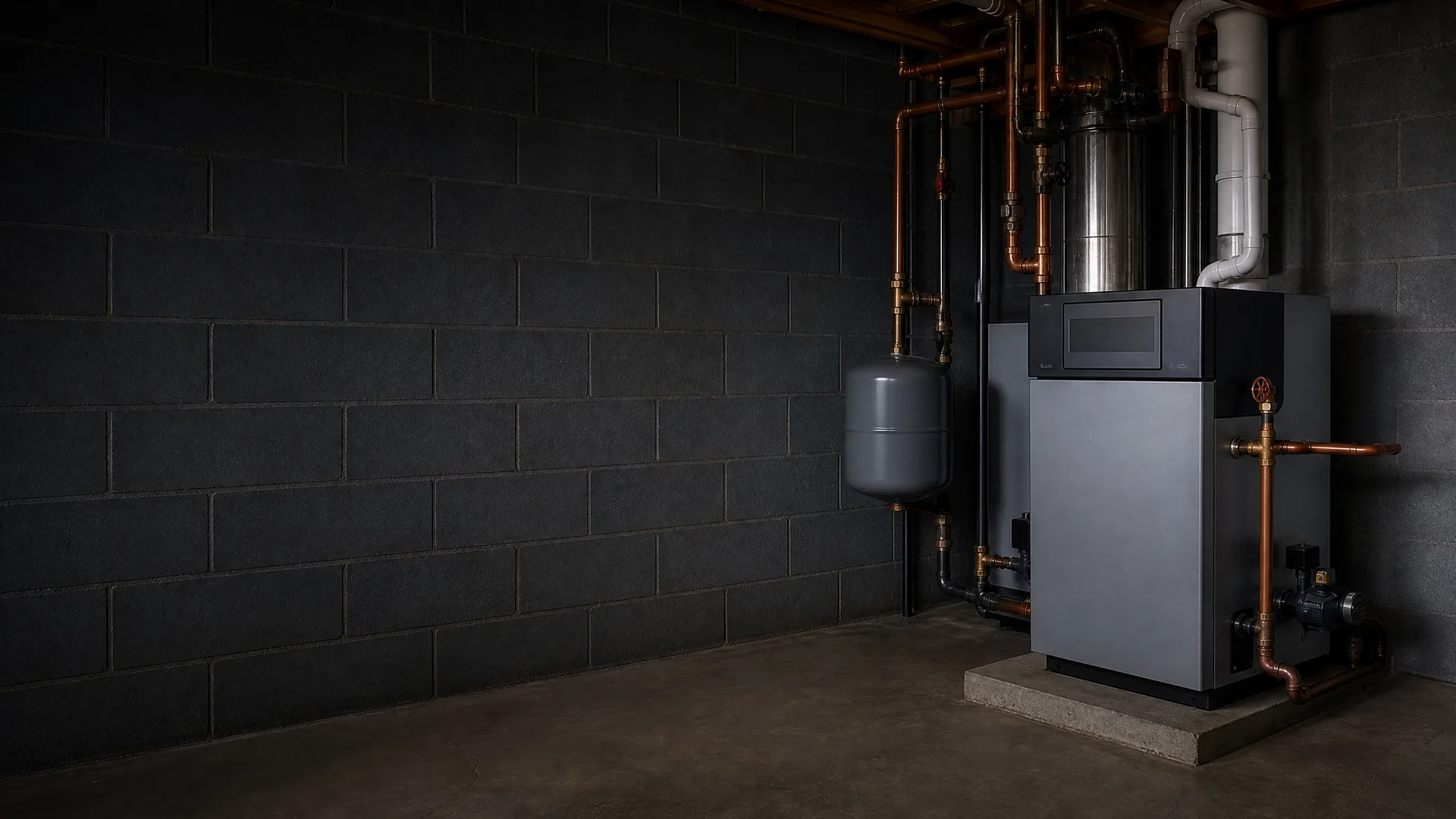
A gray boiler unit with a control panel sits on a concrete pad in a basement room with dark concrete block walls, connected to copper and metal piping, a gray expansion tank, and an insulated flue.

One request and it's handed off

Only one pro gets your request, so you hear from one company.

Step 1 of 3: Equipment