





Signs your boiler won't last a Pennsylvania winter

Send the request today and let a boiler pro reach out to you.

Let a pro reach out

A boiler that won't make it through a Pennsylvania winter usually tells you before it quits. Watch for banging or kettling sounds from the heat exchanger, a pilot or igniter that won't hold, radiators or baseboards that stay lukewarm while the boiler runs nonstop, water leaking at the base, or soot around the burner. Rising gas bills with no change in how you live matter too, since a boiler losing efficiency burns more to do the same job. Short cycling, where it fires on and off every few minutes instead of running a steady stretch, points to a problem that gets worse under the load of a long cold stretch. Any one of these can hold on through a mild stretch and fail outright once temperatures drop and stay down for weeks. Catching it now, before the hard cold sets in, means a repair instead of a house with no heat in January.

A gray-haired man in a dark long-sleeve shirt sits on a gray sofa in a living room, looking toward a sunlit window with sheer curtains.
A gray-haired man in a dark green sweatshirt sits on a sofa in a living room, looking toward a bright window, with a houseplant, lamp, fireplace and framed art behind him.
A gray-haired bearded man in a dark green collared sweater sits on a sofa in a living room with a window, houseplant, floor lamp and bookshelves, looking off to the side.
A gray-haired man in a dark green sweater sits on a sofa in a sunlit living room, looking off to the side, with a framed landscape painting, dining table and shelving behind him.

Repair It or Replace It

Worth repairing

  • The leak is at a fitting or valve, not inside the boiler block itself.
  • It's held heat evenly all winter until this one problem showed up.
  • A pro who works on your make and model can get parts without a long wait.
  • The heat exchanger is sound, so the banging or kettling traces back to sediment or a circulator, not a crack.
  • It's under ten years old, well inside what a gas boiler is built to handle.

Likely on its way out

  • The heat exchanger itself is cracked or leaking, not a hose or valve around it.
  • It's gone two or three winters now with a repair call each time.
  • The pilot or igniter won't hold no matter how many times it's relit.
  • Rooms stay cold at the far end of the house even with the boiler running constantly.
  • Parts for it are getting hard to find because the model is old.
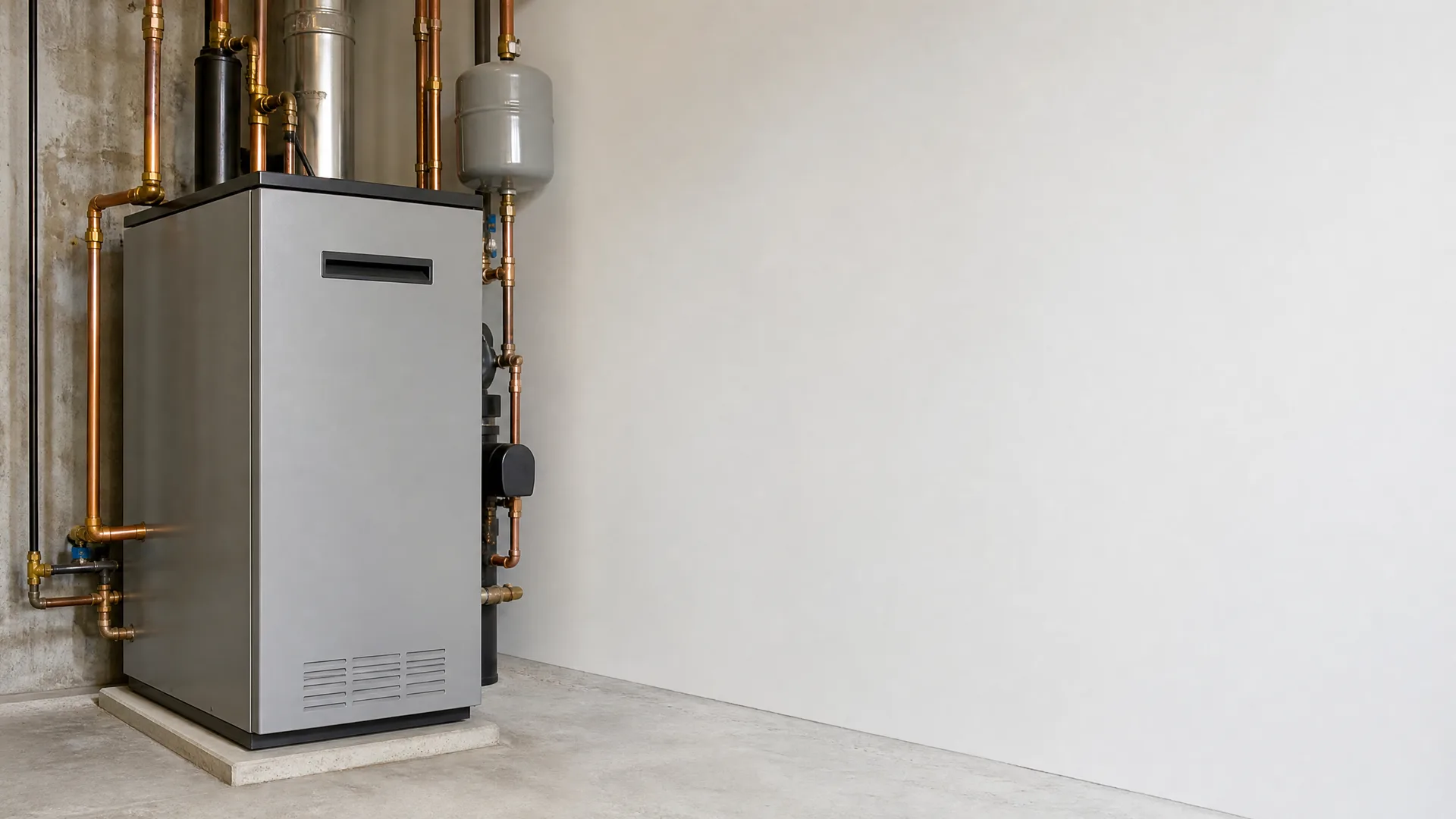
A gray floor-standing boiler on a concrete pad in a bare room, connected to copper pipes and an expansion tank against a plain light wall.

Kettling means scale buildup

That rumbling or banging sound is water hitting scale that's formed on the inside of the heat exchanger. The trapped water flashes to steam under the deposit and that's the noise you hear. Once scale builds up enough, the boiler has to work harder to move heat into your radiators or baseboards, and the metal underneath is taking more stress than it was built for. A contractor can flush it, but if it's gone on for a while the exchanger itself may already be weakened.

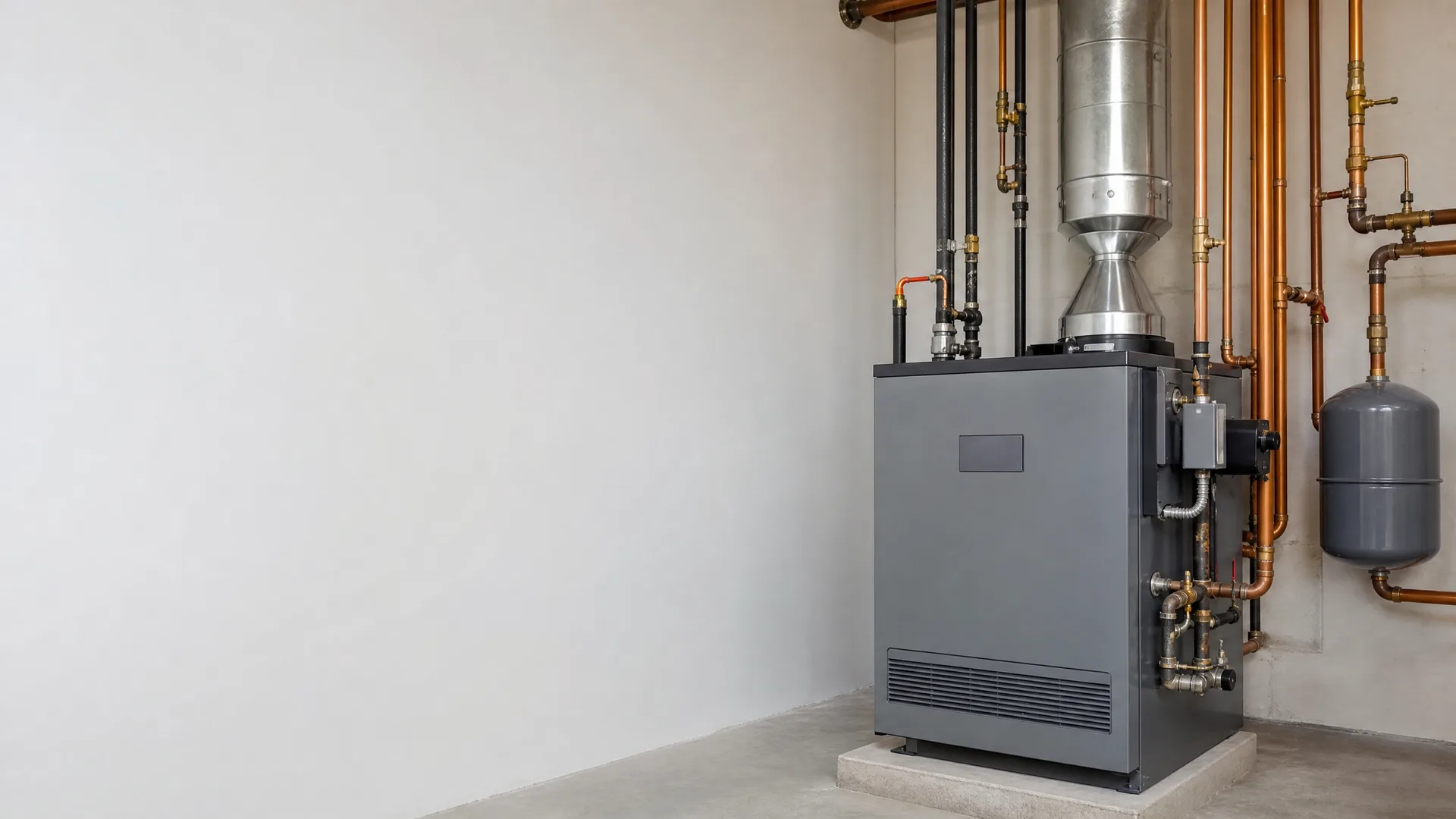
A gray boiler on a concrete pad in a plain room, connected to copper and black pipes and a stainless steel flue.

Cast iron sections crack quietly

Older boilers built with cast iron sections can develop a crack between sections that only leaks when the metal expands at full heat. You might see a damp spot near the boiler only when it's been running a while, then nothing once it cools. That's a section failing, not a loose fitting. Pennsylvania winters push a boiler to run longer stretches than it does the rest of the year, so a crack like this tends to show itself in January, not October.

Why does my boiler smell like it's burning when it kicks on?

A burning smell when the boiler fires is unsettling, especially in a Pennsylvania winter when you're running it for hours at a stretch. You want to know if it's dust burning off from sitting idle or something inside that's actually failing.

Dust burns off in seconds. A smell that lingers past the first few minutes doesn't.

A light smell for the first cycle or two of the season is usually dust on the burner or heat exchanger burning off, and it clears on its own. What's different is a smell that comes back every time the boiler kicks on, or one that smells like hot metal, plastic, or oil rather than dust. That points to something inside running hotter than it should, often a burner that's dirty enough to burn unevenly, or wiring near the control board getting more heat than it's built for. A gas boiler that smells like rotten eggs instead is a gas leak, not a burner issue, and that calls for shutting it off and getting it looked at right away.

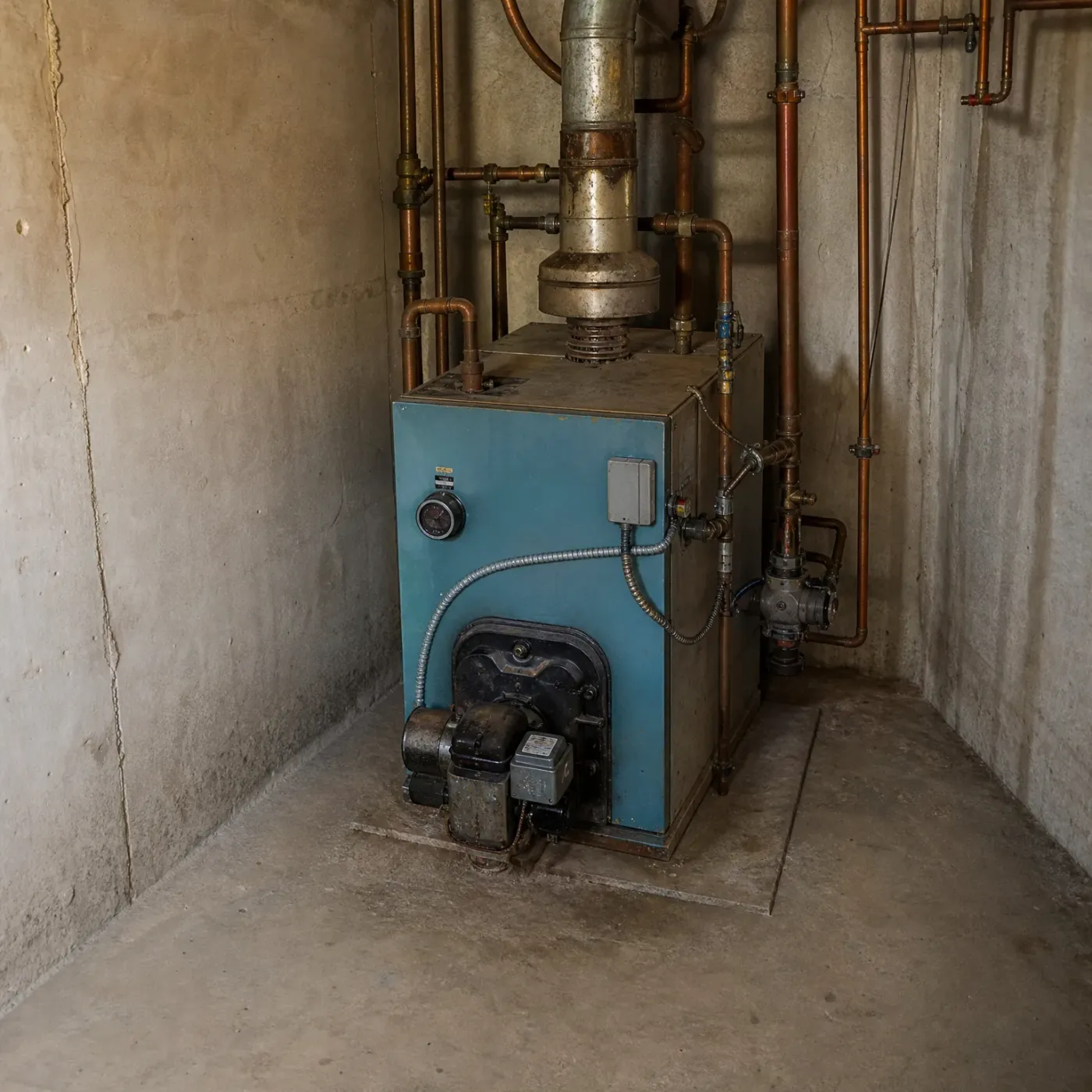
A blue oil-fired boiler with a burner unit and pressure gauge stands in a concrete basement corner, connected to copper pipes and a metal flue.
Before you get your boiler repair
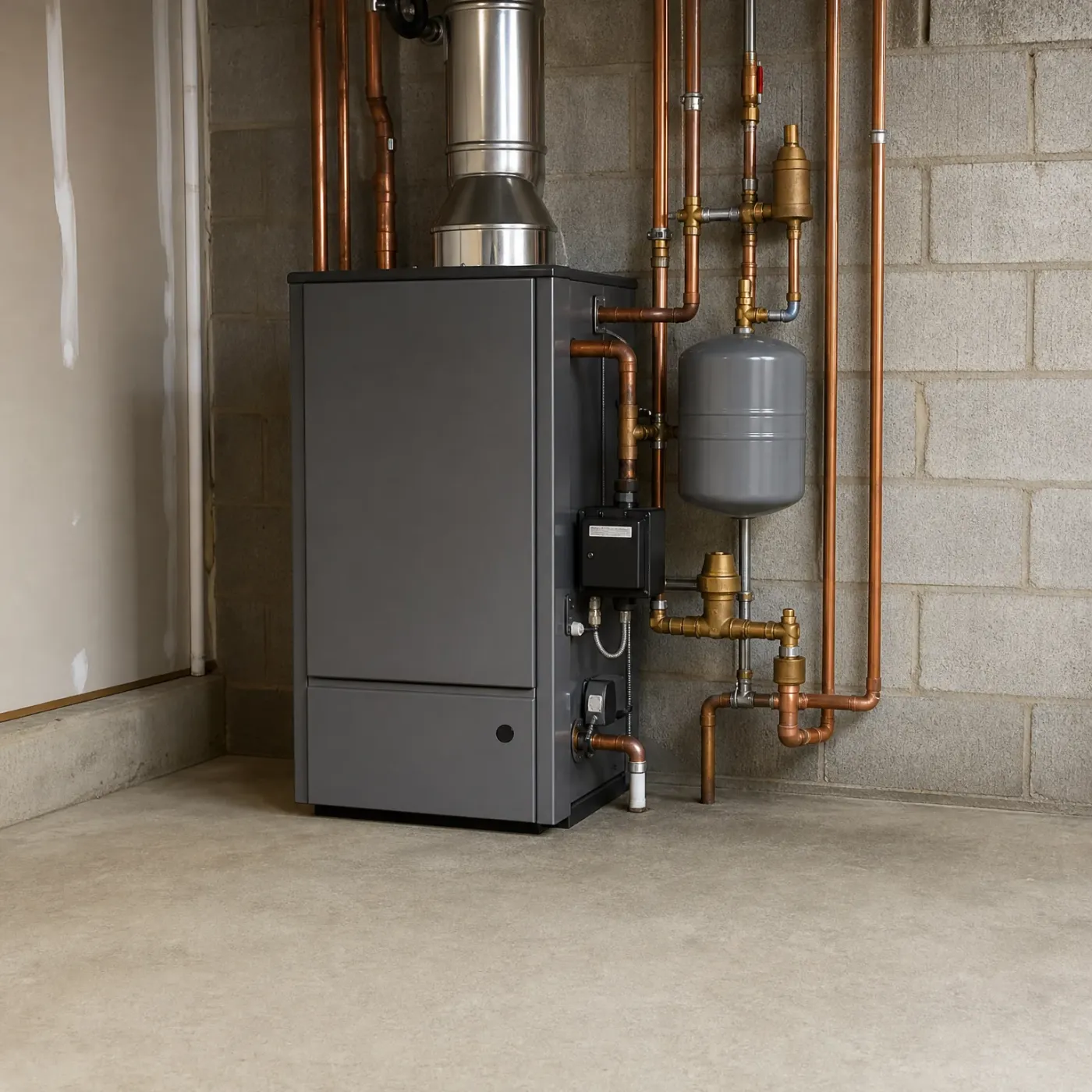
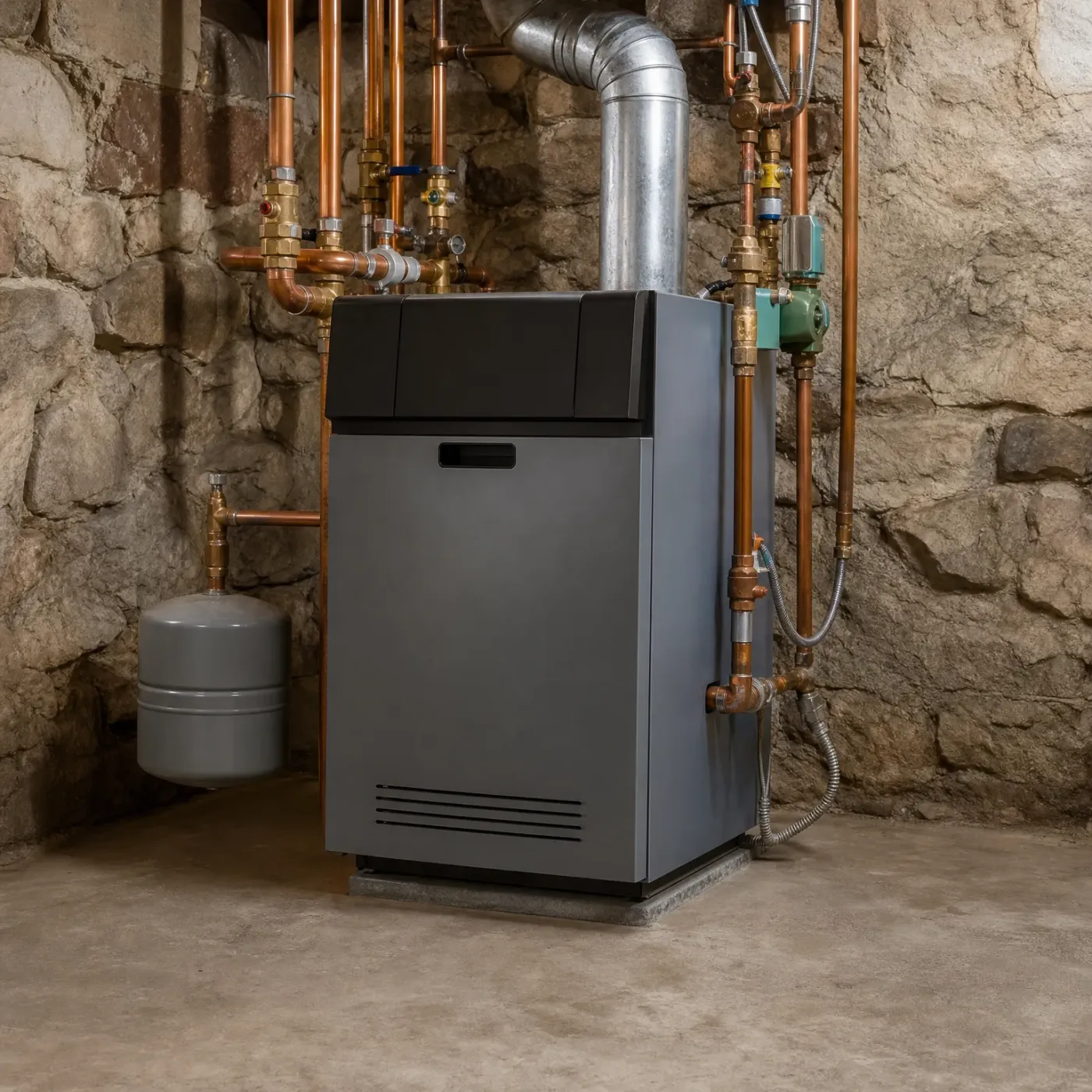
A gray floor-standing boiler with a metal flue stands against a concrete block wall, connected to copper pipes, brass valves and a gray expansion tank, on a bare concrete floor.
After you get your boiler repair
A gray boiler unit with a metal flue stands in a basement beside copper piping, valves and a small expansion tank, against a stone and concrete wall with wooden joists overhead.

Hand off the search today

Your request goes to one pro, not a list of companies.

Get the boiler repair search off your mind today.

Find a licensed pro

There's no charge for the request.

What is your boiler telling you right now

Stand near it and listen. A low rumble or a knock as it fires, water that takes longer to get hot at the tap, a radiator that's warm at the bottom but cold at the top, or a room that used to heat fine and now needs the thermostat pushed higher to feel right. Maybe the boiler short cycles, firing on and off every few minutes instead of running a steady stretch. Maybe you've seen a damp spot on the floor near the base, or caught a metallic smell when it kicks on. None of this means it's done. It means something specific is going wrong inside it, and with January coming, a boiler that's struggling now is the one that leaves you without heat on the coldest night it has to work.

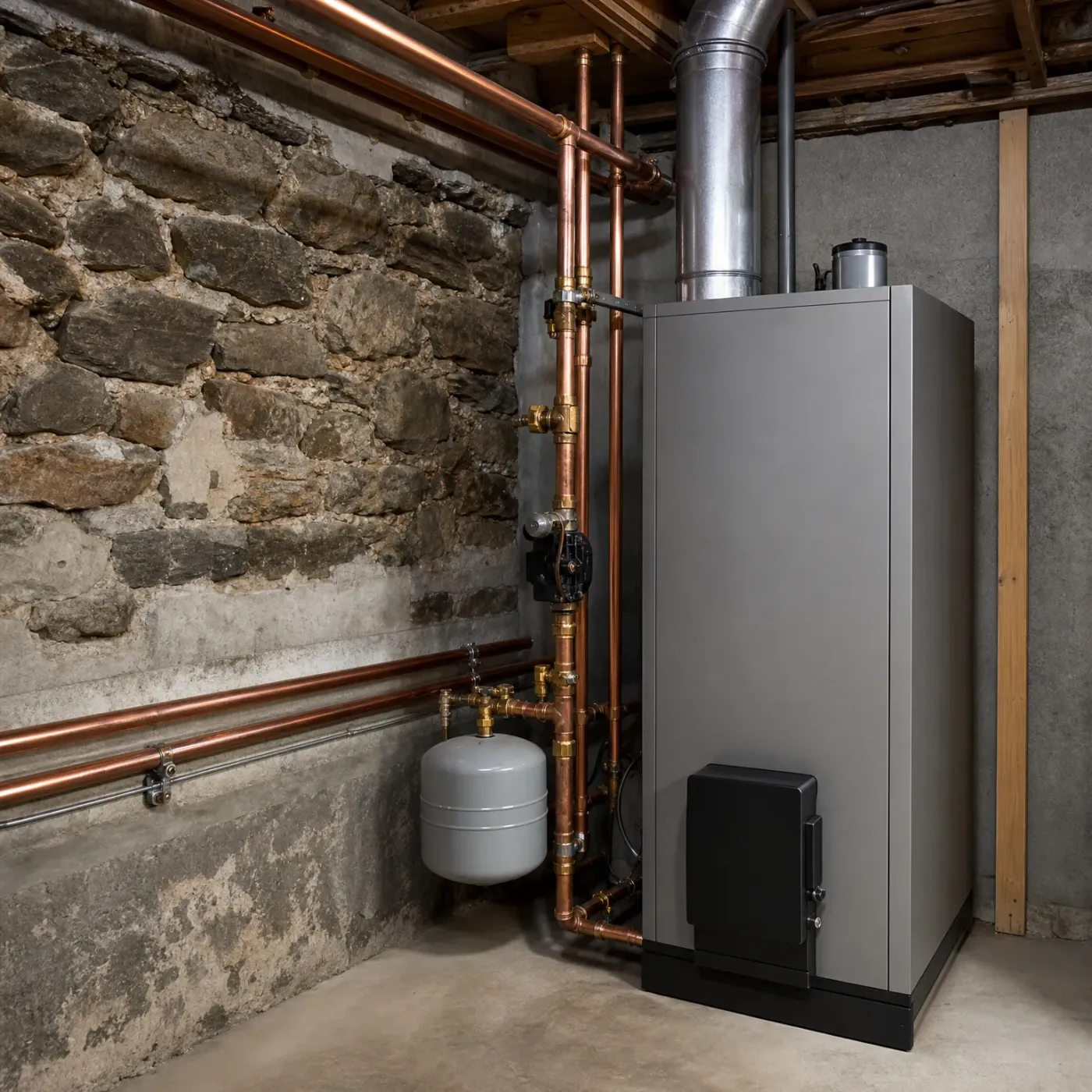
A gray residential boiler on a concrete pad in a basement with stone walls, connected to copper piping, brass valves, a circulator pump, an expansion tank, and a metal flue duct.

Running the way it should

Heat moves out evenly, the pump keeps water circulating, and the exhaust vents clean through the flue. No rumbling when it fires, no cold spots on the radiators. A boiler set up like this on a solid pad, with the expansion tank doing its job, can carry you through a Pennsylvania winter without drama.
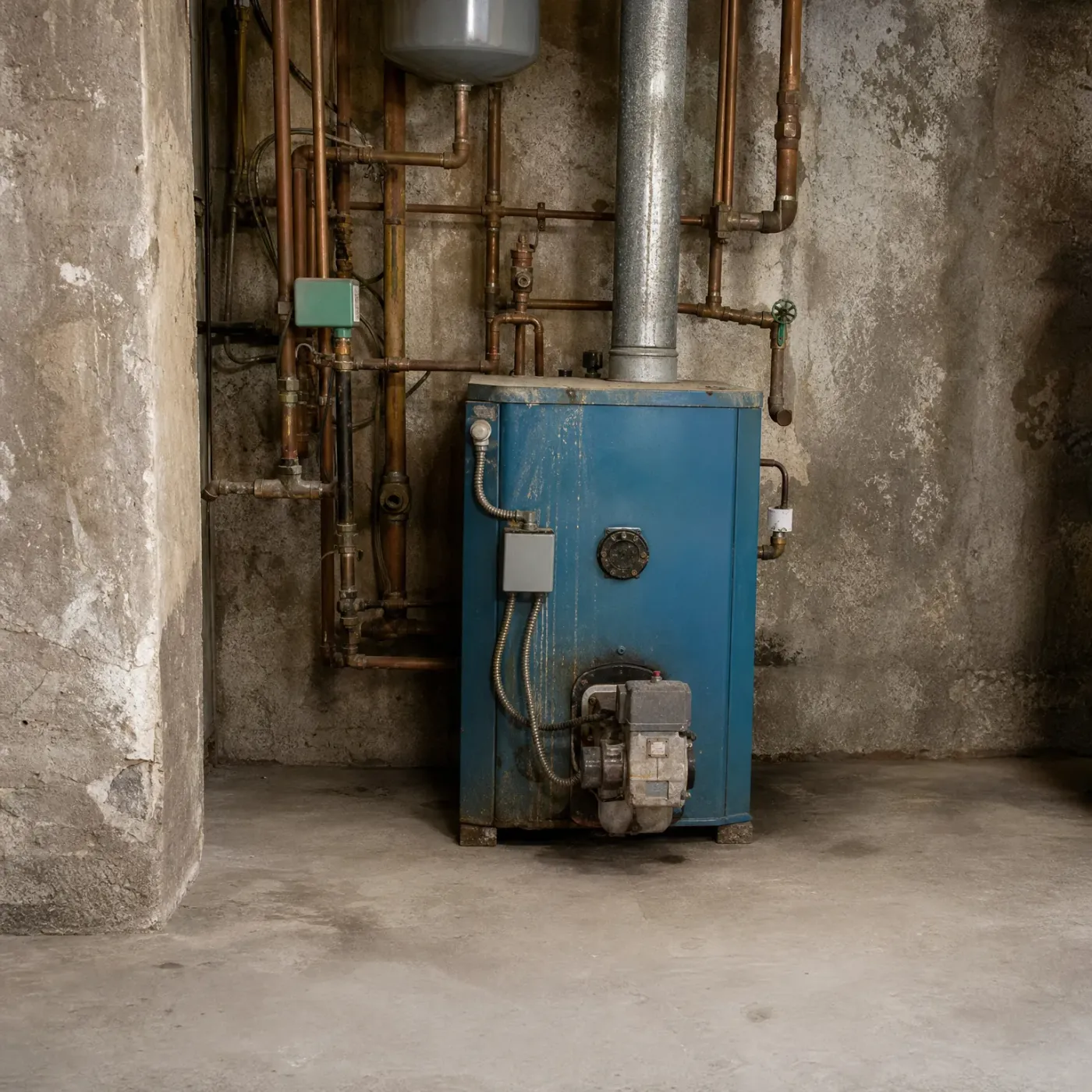
A blue cabinet boiler with a metal flue pipe and copper piping stands against a bare concrete wall in a basement with a concrete floor.

Running into trouble

An older unit like this one often shows its age at the burner and the flue first. Rust on the jacket, a flue pipe that's corroding, or a burner that won't light clean are signs the metal underneath is wearing out too. On a bare basement floor with no pad, that wear tends to show up sooner.

Winter nights average 23°F statewide

At 23°F, your boiler isn't cycling on and off for a few hours a day, it's running most of the night to keep up. A unit with a cracked heat exchanger or a failing pump has no downtime to recover in, and a small problem shows up fast as a cold house.

NOAA nClimDiv 1991-2020 county normals weighted by homes

Where this leaves you

  • A boiler that bangs, won't hold a pilot, or leaves radiators cold at the top is telling you something before it fails outright.
  • Noise from scale buildup and uneven heat are warnings, not quirks to wait out through a Pennsylvania winter.
  • A tech who services boilers all winter in your area has seen which parts on your make tend to go first.
  • Getting one licensed local contractor on the job means a single call back, not a string of competing bids and voicemails.
  • A cracked heat exchanger or a seized pump won't wait for a warmer week to make itself known.
  • Once you know what the boiler is doing and why, the only thing left is getting someone qualified to look at it.

The signs add up to one question: is the boiler telling you about a part that's failed, or about damage that keeps spreading once the cold sets in. Banging from scale, a pilot that won't hold, radiators warm at the bottom and cold at the top, a room that used to heat fine and now doesn't. None of that is the boiler being temperamental. It's the boiler running out of room to compensate. A cracked heat exchanger or a pump on its way out doesn't pick a convenient week to fail, and a Pennsylvania cold snap is exactly when a small problem turns into a cold house overnight.

What you do with that depends on what's actually wrong, and that's a question for someone who looks at boilers like yours all winter, not a guess you make from the basement stairs. A contractor who services this equipment in your area has already seen which parts on your make and model tend to go first, and what a failing one sounds and looks like before it takes the whole system down. You get matched with one licensed local contractor, not a handful of companies calling you back at once. One call, one visit, from someone who knows this equipment because it's what they work on all season.

You've got the signs now. The rest is getting eyes on it before the next cold night makes the decision for you.

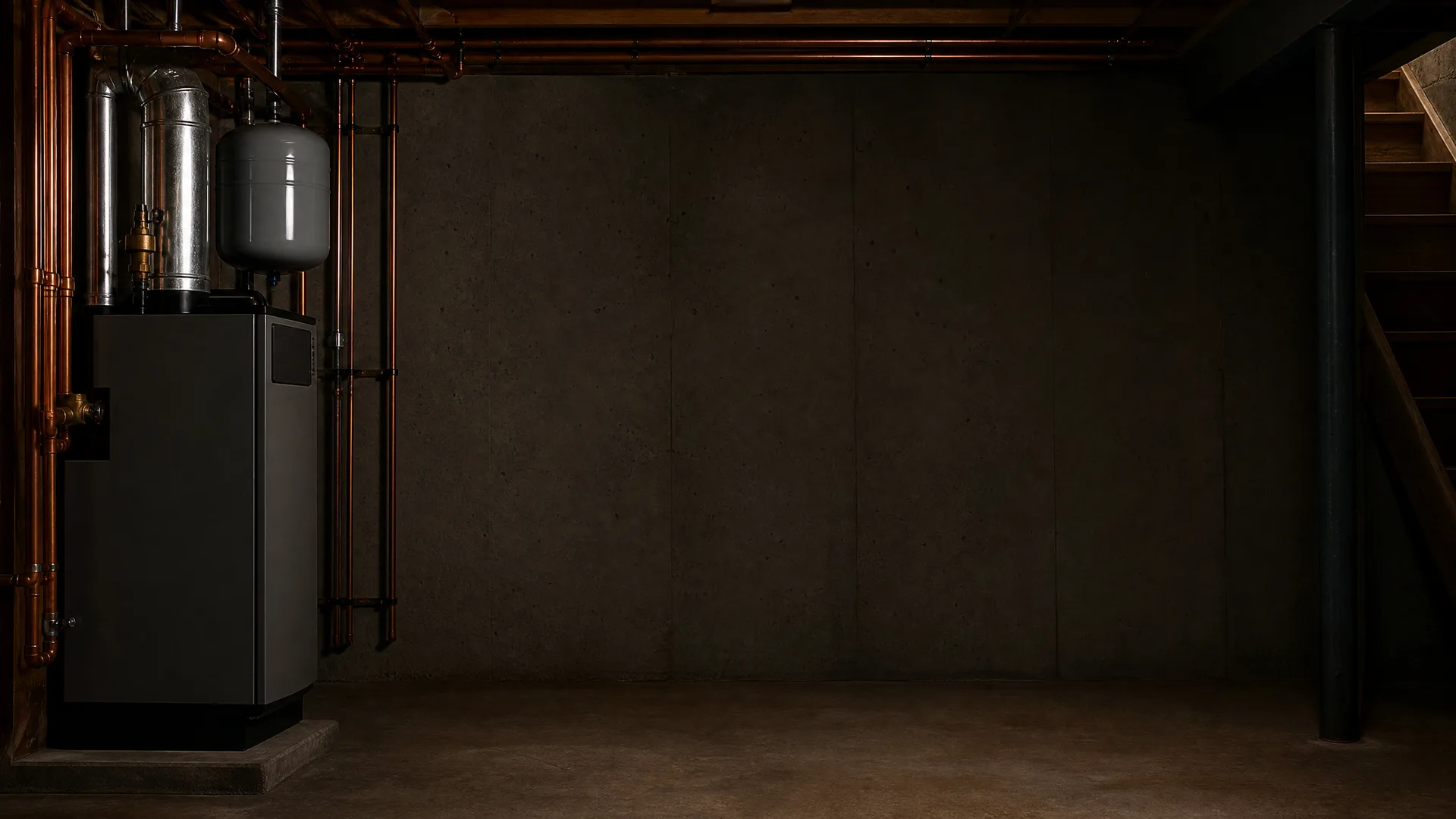
A dark basement with a gray boiler unit, expansion tank, and copper pipes along a concrete wall, with a steel support post and wooden stairs at right.

Hand off the boiler problem

The pro who reaches out is licensed in Pennsylvania.

Step 1 of 3: Equipment