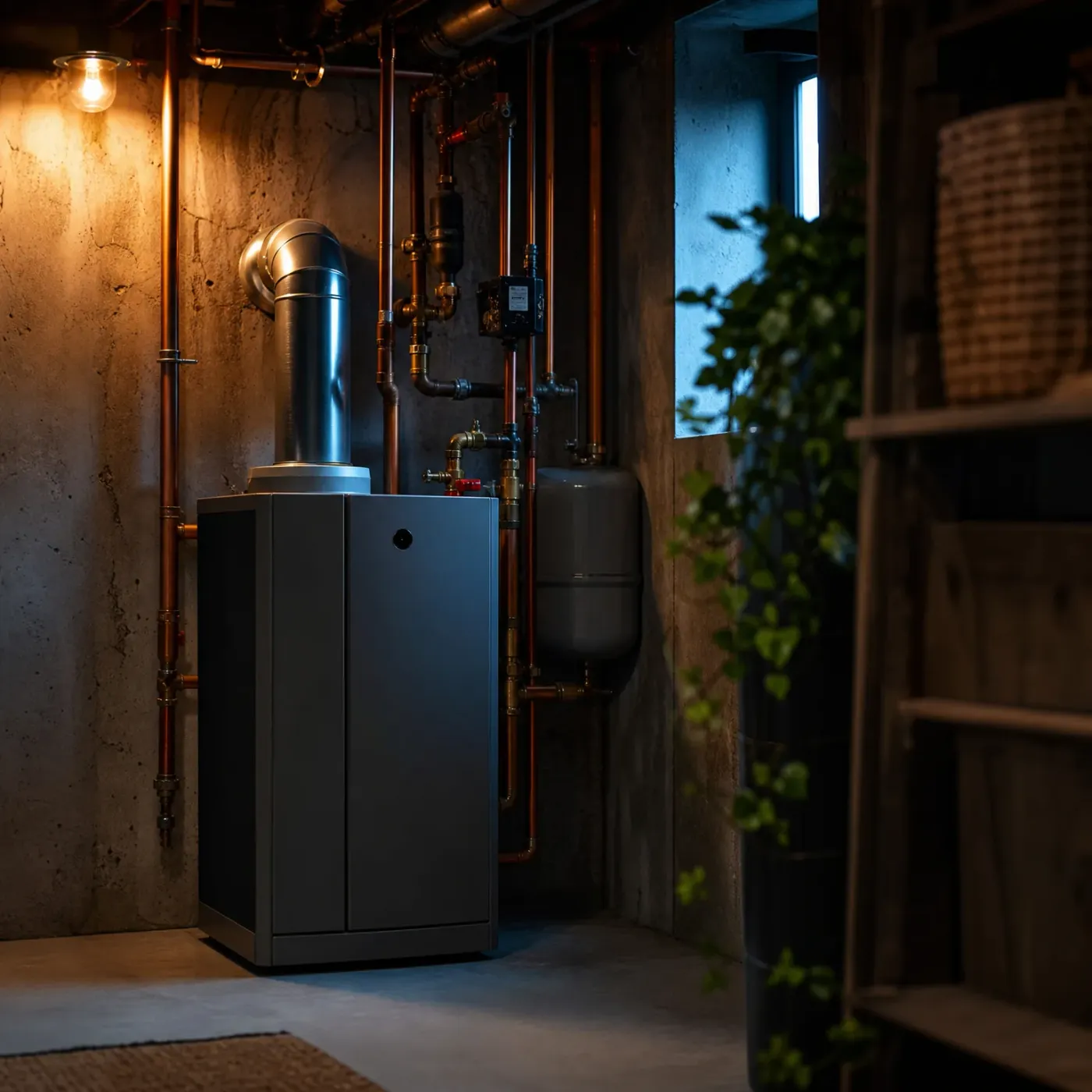
A dark grey floor-standing boiler with a metal flue stands against a concrete basement wall, surrounded by copper pipework, valves and a wall-mounted expansion tank, with ivy and a shelving unit at right.

A local pro for your boiler maintenance

What a boiler tune-up covers before a Pennsylvania winter

You want to know what's actually checked when a boiler gets tuned up before the cold sets in, from the pilot and igniter to the pressure and the vents. Gas heat runs most of the fall and winter in Pennsylvania, and a boiler left alone since spring can fail on the coldest night of the year. Instead of calling around and explaining your setup more than once, answer a few questions here and a contractor who works on boilers in your area will reach out.

Get matched

A boiler tune-up before winter means a technician checks the parts that let it run safely and keep up once you need heat every day. That includes the pilot or ignition system, the burner, the pressure, the water level or feed, and the flue or vent that carries exhaust out of the house. It covers testing safety controls like the pressure relief valve and any low-water cutoff, and bleeding air from radiators or lines so heat reaches every room instead of some staying cold. A boiler that sat idle most of the summer can have a part sticking or a sensor reading wrong, and that tends to show up the first cold morning you need it, not before. Catching that in the fall, while gas heat is just starting to run daily, means it gets fixed on a technician's schedule instead of during a cold snap when you have no heat and have to wait.

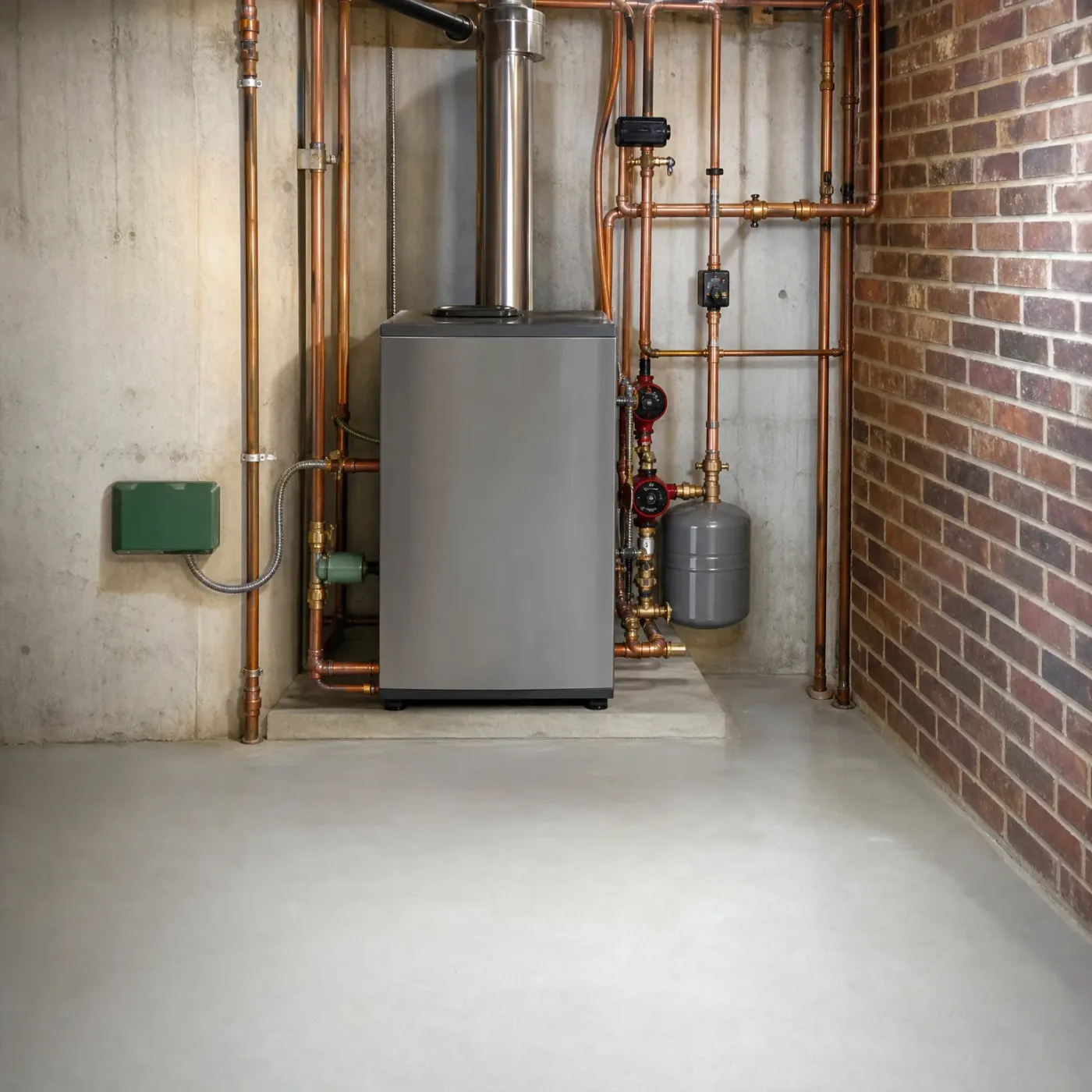
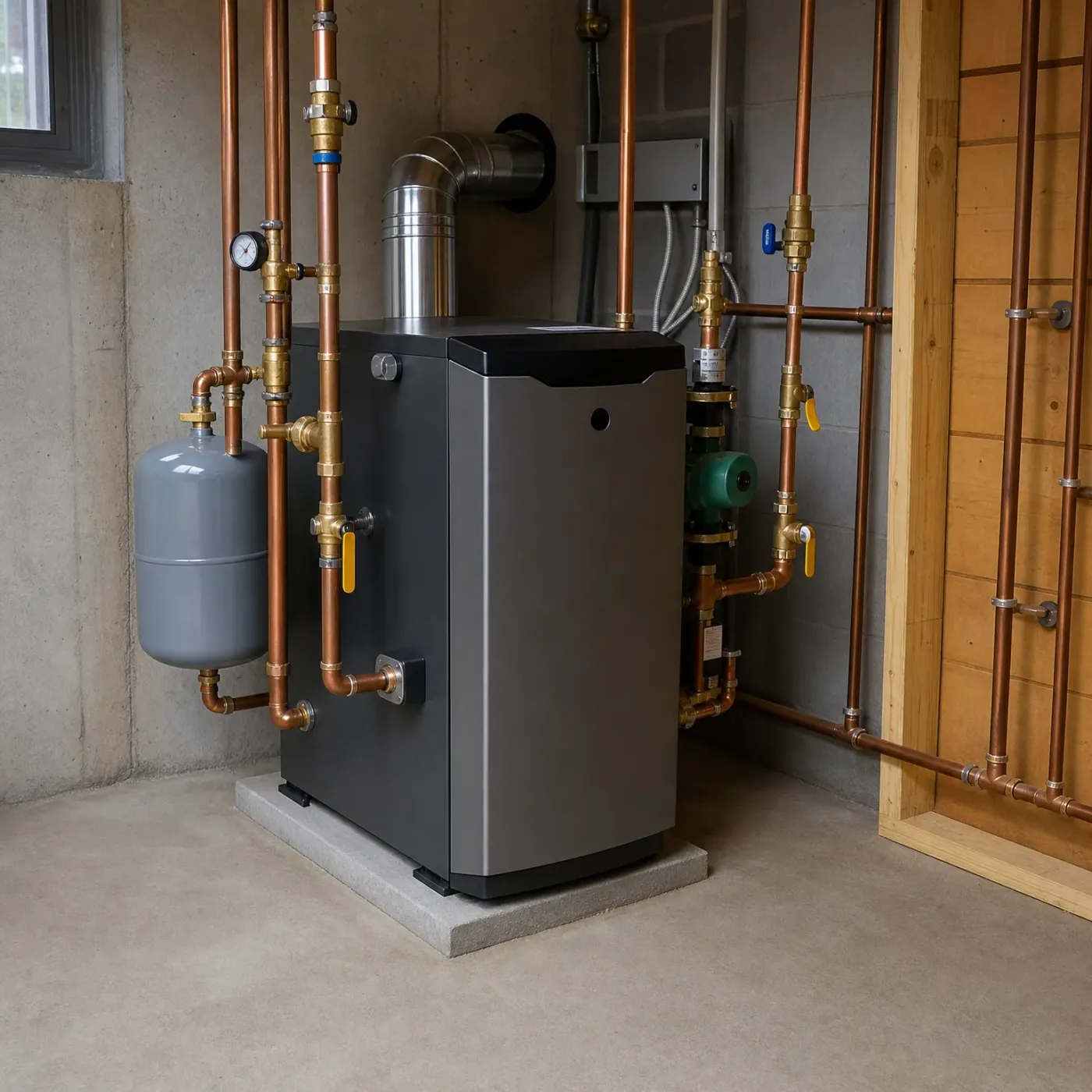
A dark gray floor-standing boiler on a concrete pad in a basement, surrounded by copper piping, brass valves, a gray expansion tank, a circulator pump, and a metal flue pipe against concrete block walls.
A boiler serviced before winter holds steady pressure and a clean burner flame through the months it runs every day.
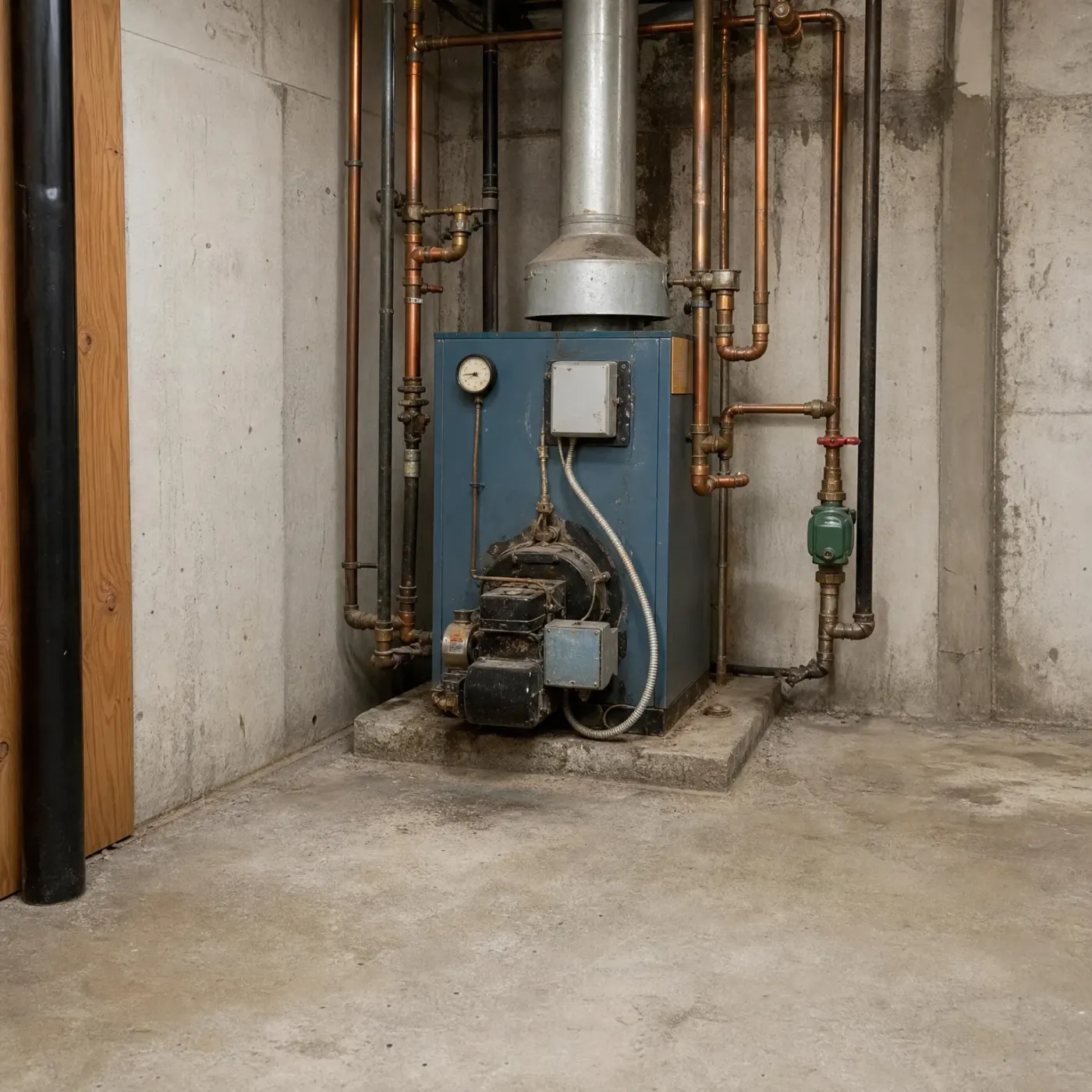
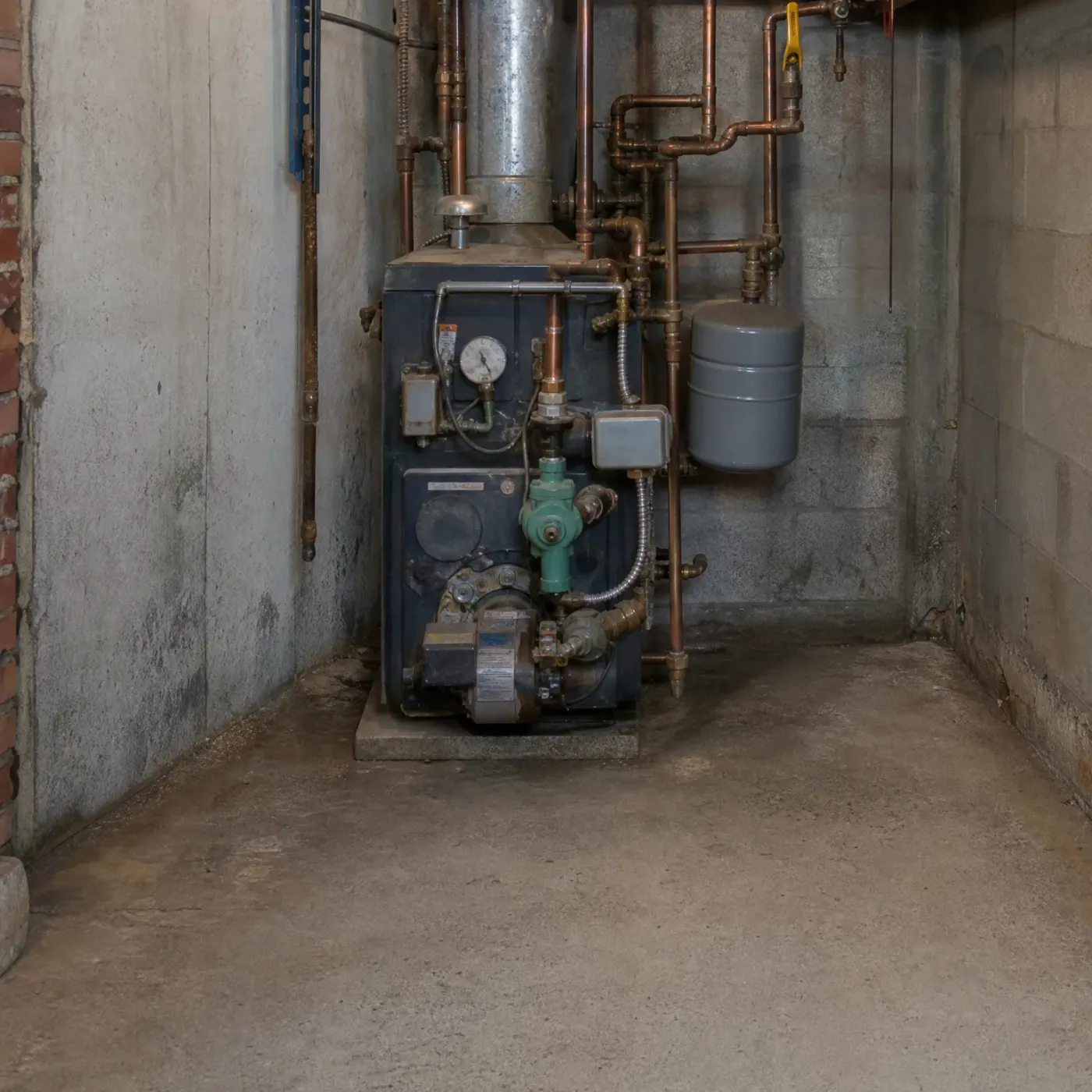
A blue boiler on a raised concrete pad in a basement corner, with copper and steel pipes, a gauge cluster, an expansion tank, and a metal flue running up the bare concrete walls.
A boiler skipped since last winter can lose pressure, foul its burner, or crack a heat exchanger without warning.
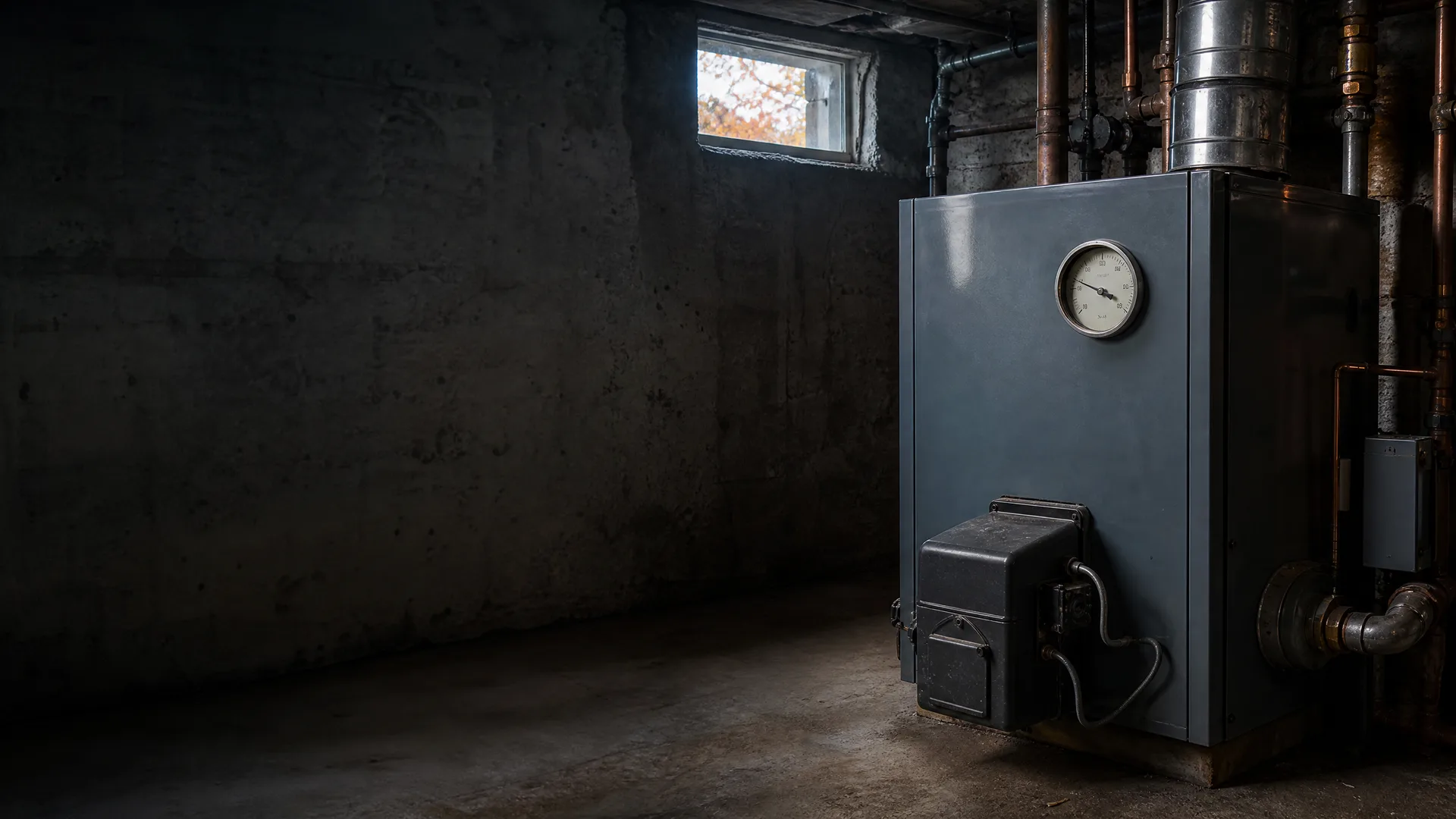
A gray boiler with a round pressure gauge and copper and metal pipes stands in a dim concrete basement lit by a small window.

You go down to the basement on a cool October morning to grab something from the shelves, and the hum from the boiler stops you. It's quieter than it should be. You crouch in front of it and look at the round gauge on the front. The needle sits low, under where it usually rests. You tap the glass with a finger out of habit, the way you've seen done before, but it doesn't move. Outside it's the first real cold snap of the fall, the kind that means the heat will be running daily from here on. You stand there a minute, looking at the pipes, wondering how long the needle's been sitting there like that.
A man seen from behind raises his hand to wave at a woman standing in the open front doorway of a single-story house with gray shingle siding, white columns and a gabled porch entry.

What the technician is actually doing down there

A boiler heats water and pushes it through pipes to radiators or baseboards, then draws the cooled water back to heat again. The technician opens the panel and checks the pilot or ignition module first, since that's what starts the whole cycle each time the thermostat calls. Next comes the burner itself, cleaned of any soot so the flame burns even instead of yellow and starved. Then the pressure gauge and the water feed, because a boiler running low on water will short-cycle or stop calling for heat altogether. Last is the flue, the pipe that carries combustion gas out of the house, checked for a clear path and solid connections.

Each of those gets checked in that order because a problem early in the sequence hides whatever comes after it. A fouled burner can mask a pressure problem until the pressure is already low enough to matter. If your boiler came with the house, nobody living there may know when it last had this done, or what specific setup it needs to run right through a Pennsylvania winter. That's the kind of thing a contractor who already knows the equipment can tell you after a look, instead of you trying to track down a manual or guess at it yourself.

A living room corner with a beige upholstered armchair holding navy and striped cushions, a small round wooden side table with a carved bowl and a potted green plant, a framed landscape picture on a pale wall, built-in shelving, and a curtained window.
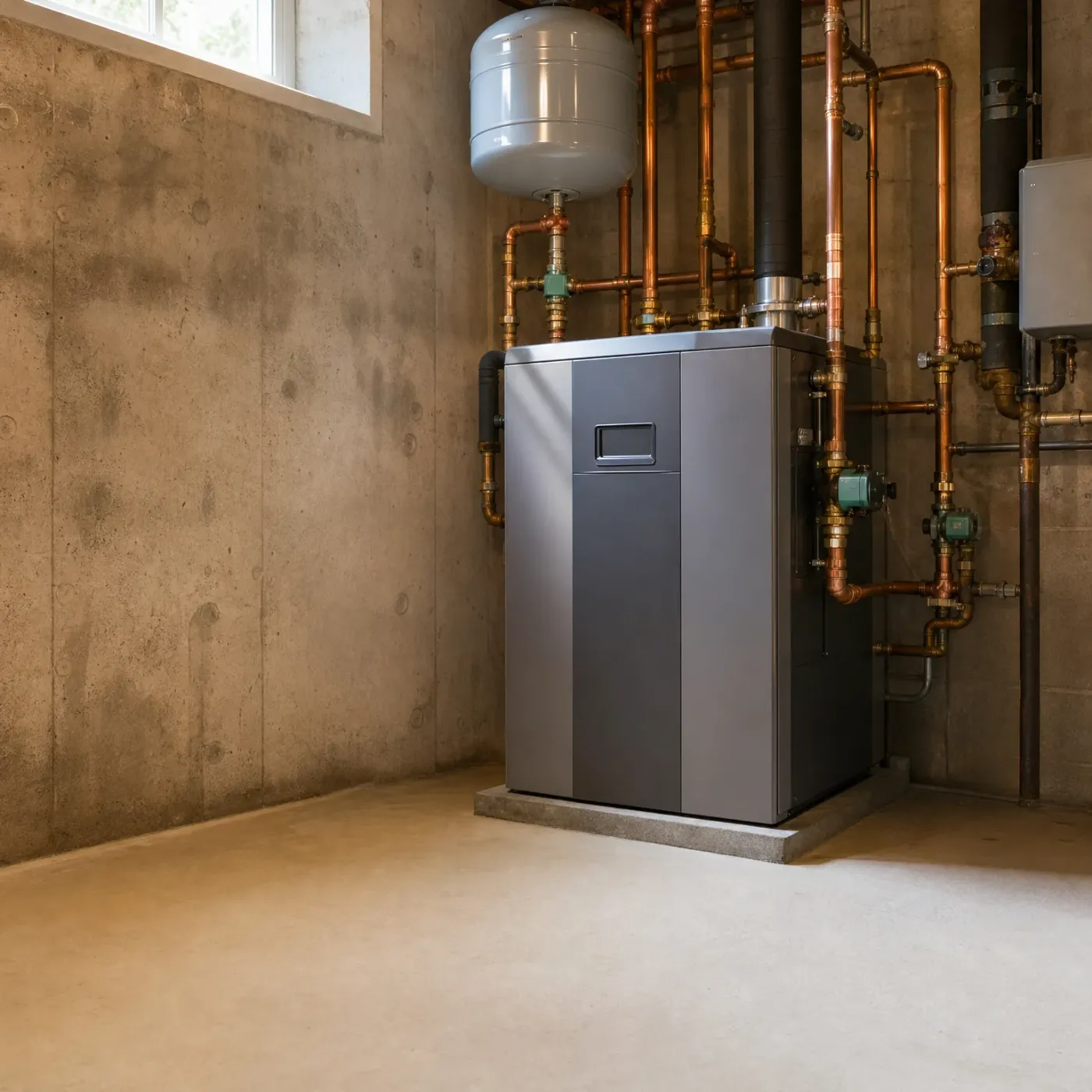
A gray boiler unit on a concrete pad in a basement corner, connected to copper piping, circulator pumps, and a ceiling-mounted expansion tank against bare concrete walls.

Running right

This is a boiler ready for winter. The pumps circulate without noise, the pressure holds where it should, and the expansion tank behind it is doing its job. Pipes and fittings stay dry, no mineral streaks, no rust at the joints. It will keep up through the months you run it every day.

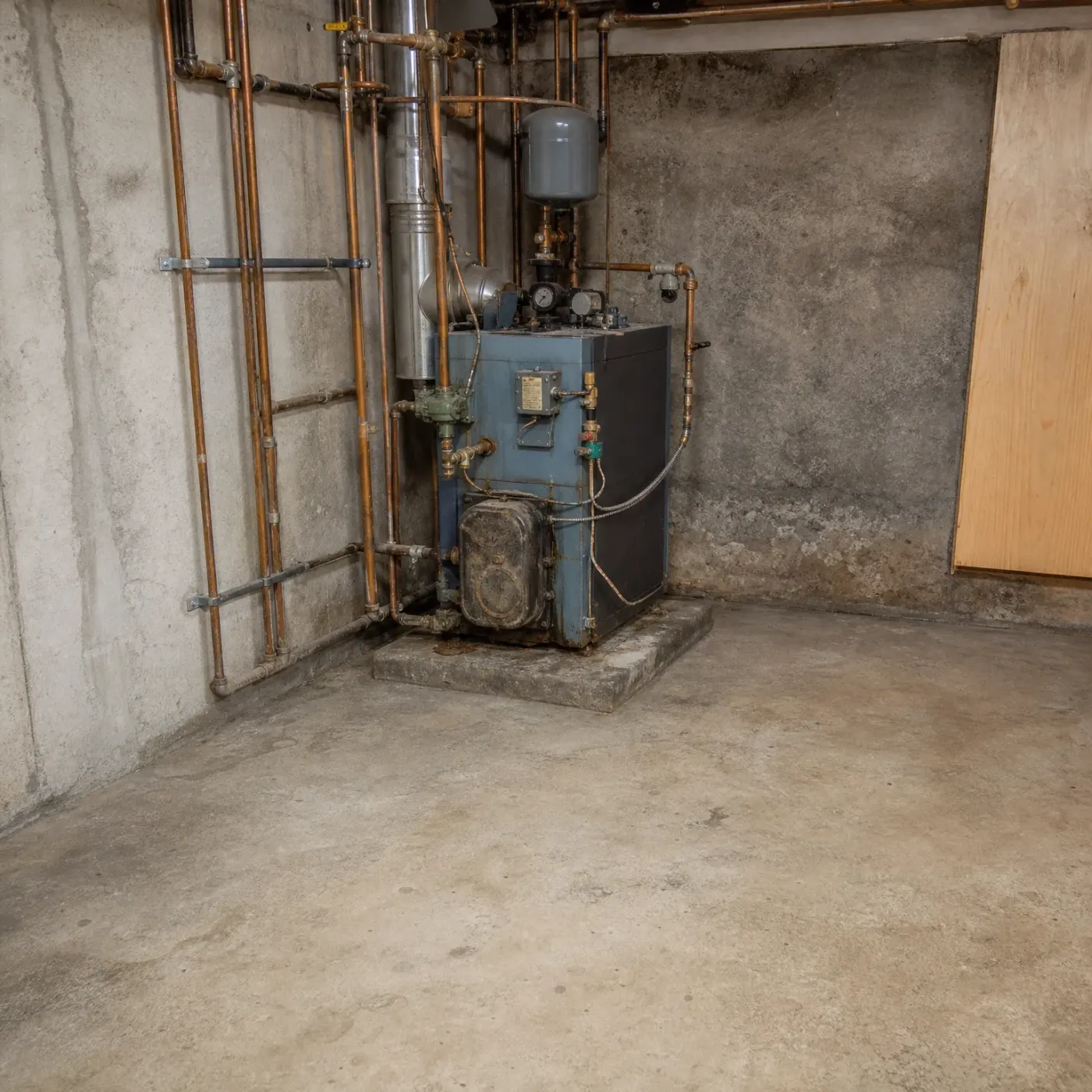
A blue oil-fired boiler with a pressure gauge, burner unit and metal flue sits on a concrete pad in a basement corner, surrounded by copper and black pipes against bare concrete walls.

In trouble

This boiler is further along and nobody has looked at it since spring. The gauge on the front may be reading low or climbing high, and the burner at the base may not be lighting clean. A flue that isn't drafting right, a pump that's seized, or a crack starting in the heat exchanger won't announce itself until the cold snap that needs it most.

What is your boiler telling you right now

Stand near it and listen. A knock or a gurgle from the pipes as the water moves through means air got in somewhere. A kettle-like rumble from inside the boiler itself usually means mineral buildup on the heat exchanger, and that buildup makes it work harder to heat the same water. Check the gauge. If the needle sits below 12 psi, the system is low and a radiator upstairs may stay cold while the others heat fine. Look at the floor around the base for a damp patch or rust streaks on the fittings. None of this stops the boiler from running today. Left alone into January, a leak gets worse and a fouled heat exchanger can crack under the strain of a cold snap.

A gray boiler on a concrete pad in a basement, connected to copper piping, valves, pumps and a gray expansion tank, with a concrete wall on the left and a brick wall on the right.

Running right

This is a boiler set up to get through winter. The pumps move water without knocking, copper lines stay dry at every joint, and the expansion tank sits where it should, doing its job quietly in the corner. Nothing here needs your attention.

A dark cast-iron boiler with copper piping, pressure gauge, and a gray expansion tank sits on a concrete pad in a basement corner with concrete block and brick walls.

Needs a look

This one has been running since last winter with nobody checking on it. The gauge, the circulator, the flue pipe all still work, but age and a long stretch without service catch up to a boiler like this. A technician would check it before the cold settles in for good.

A gray-haired bearded man in a dark coat and scarf dusted with snow stands smiling in a dimly lit entryway with a white front door, a side table with a lit lamp, an oval mirror, and a patterned rug.
An older bearded man in a dark snow-dusted coat and gray scarf stands just inside a dimly lit home entry, with a framed picture, lit table lamp, and an adjoining room with a fireplace behind him, and snow visible through the open door.
A gray-haired, bearded man in a dark snow-dusted coat stands smiling in a dimly lit entry hall with a staircase, a lit table lamp, a framed picture, and a living room visible through a doorway.
An older man with gray hair and a beard, wearing a dark jacket dusted with snow, stands smiling in a dimly lit hallway with lamps and a living room visible behind him.

Get the right pro for your boiler

Explain the job once and skip repeating it on every call.

There's no charge for the request.

Why pressure gets checked first

A boiler runs on water moving through a closed loop, and that loop needs to hold somewhere around 12 to 15 psi when it's cold. Below that, the pump can pull in air instead of water, and a radiator upstairs ends up lukewarm no matter how long the burner runs. Above that range, the pressure relief valve can open and drip, which looks like a leak but isn't one. The gauge on the front tells a technician this in about a second, which is why it's one of the first things checked, before the panel even comes off.

What a dirty burner costs you

Gas burns cleanest with the right mix of air and fuel reaching the flame. Dust and soot on the burner change that mix, so the flame burns yellow or uneven instead of a steady blue. A burner in that state uses more gas to put out the same heat, and it can leave soot on the heat exchanger, which slows down how well the boiler transfers heat to the water at all. Cleaning the burner is a routine part of a tune-up, and it's the difference between a boiler that heats efficiently through a Pennsylvania winter and one that's working harder than it needs to.

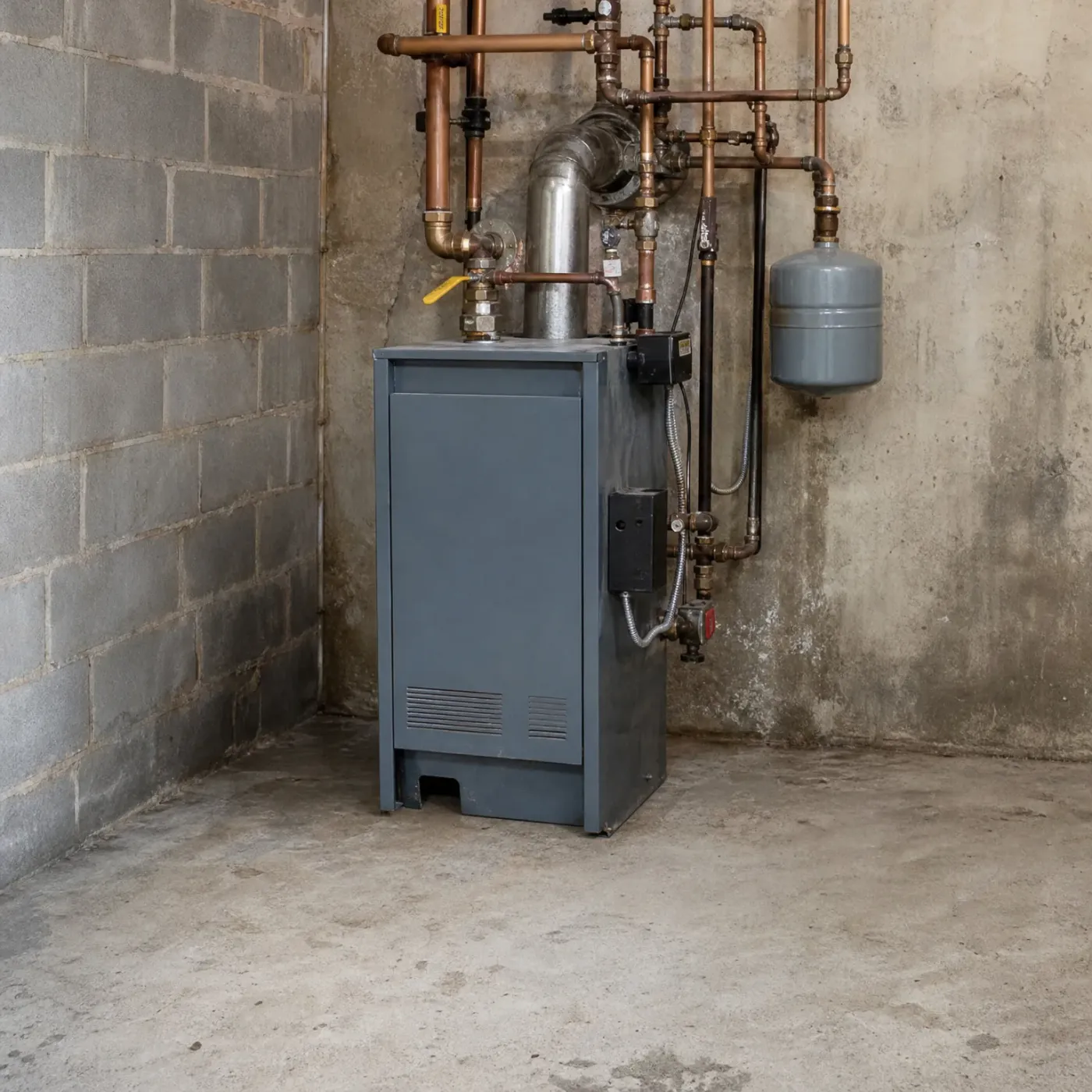
A gray floor-standing boiler in a basement corner with copper and black piping above it, a flue vent, and a gray expansion tank mounted on the concrete wall beside a concrete block wall.
Before you get your boiler maintenance
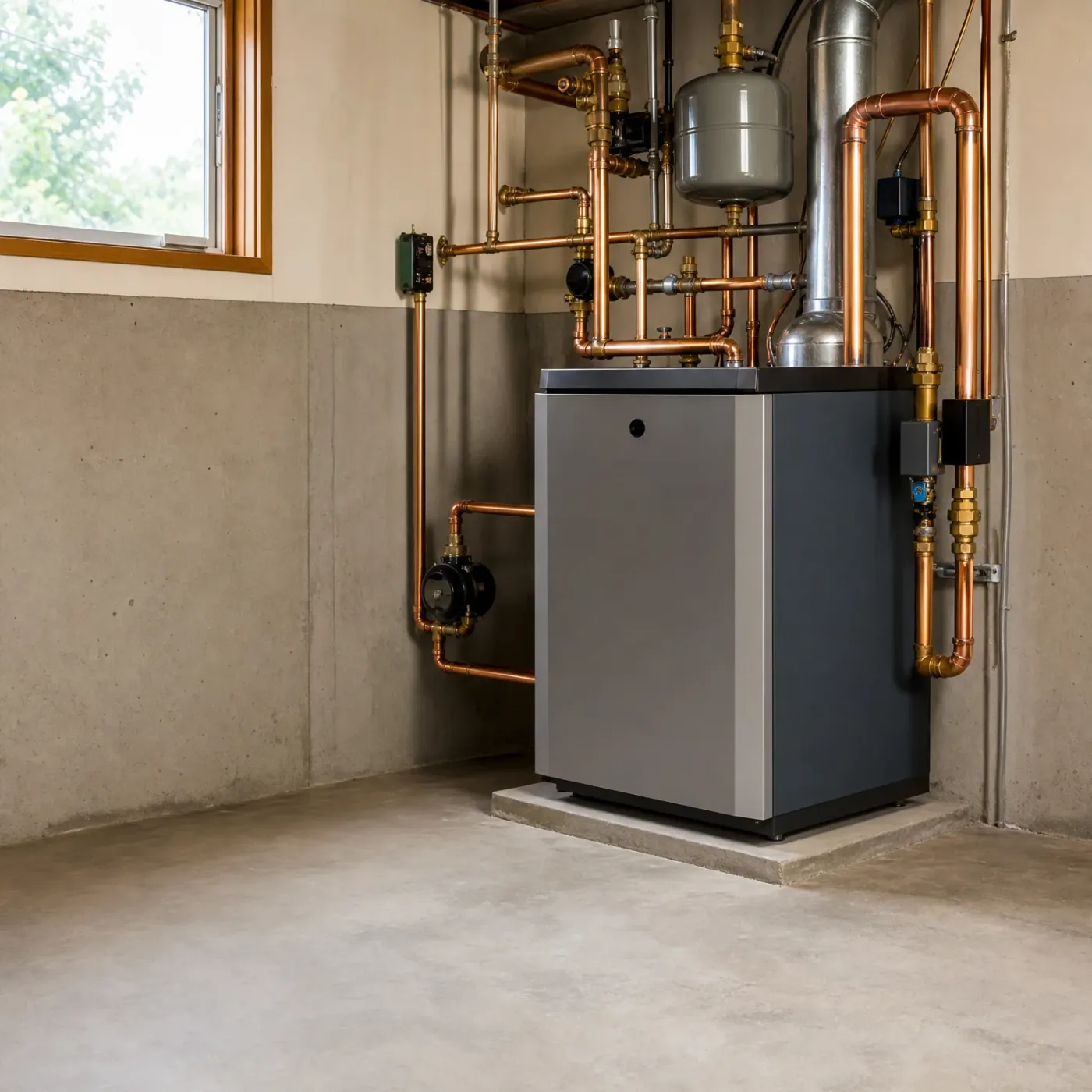
A gray floor-standing boiler on a concrete pad in a basement corner, connected to copper piping, brass valves, a circulator pump, an expansion tank, and a metal flue, with a window at upper left.
After you get your boiler maintenance

Finding someone to look at the boiler yourself means calling around, explaining the same noise or the same low pressure reading to each one, and lining up quotes to compare before anyone sets a date.

Get matched with a contractor who services boilers in your area, and they reach out to you. One call explained once, not five.

Winter nights average 23°F statewide

Those 23°F nights mean your boiler holds steady heat for hours at a stretch once it starts, not short bursts. A unit with low pressure or a dirty burner has a harder time keeping up when it's running that long and that often.

NOAA nClimDiv 1991-2020 county normals weighted by homes

  1. Shuts down the system and checks the thermostat and controls

  2. Opens the burner compartment and inspects the pilot or ignition assembly

  3. Cleans or adjusts the burner to get a clean, steady flame

  4. Checks the flue and vent for a clear path outside

Serviced or left to chance

Tune-up done

  • A technician has already tested the pilot or igniter and watched it light clean on the first try.
  • Pressure sits in the right range, so the pump moves water instead of pulling in air.
  • The burner flame burns steady and blue, not yellow or flickering at the edges.
  • The flue has been checked for a clear path, so exhaust leaves the house instead of backing up.
  • Someone with training has already looked at the heat exchanger and the water feed before the cold set in.
  • You're not the one finding out something's wrong on the first hard freeze.

Skipped this fall

  • Nobody has checked the pilot or igniter since last winter, so you won't know it's failing until the house goes cold.
  • Pressure may have dropped over the summer with nobody around to catch it.
  • A dirty burner can keep running for weeks before you notice the flame looks wrong.
  • If the flue is partly blocked, there's no way to know until the boiler is working hard against it.
  • A small mineral buildup on the heat exchanger goes unnoticed until it's a bigger repair.
  • You're left watching for noises and cold radiators instead of knowing the system was looked at.
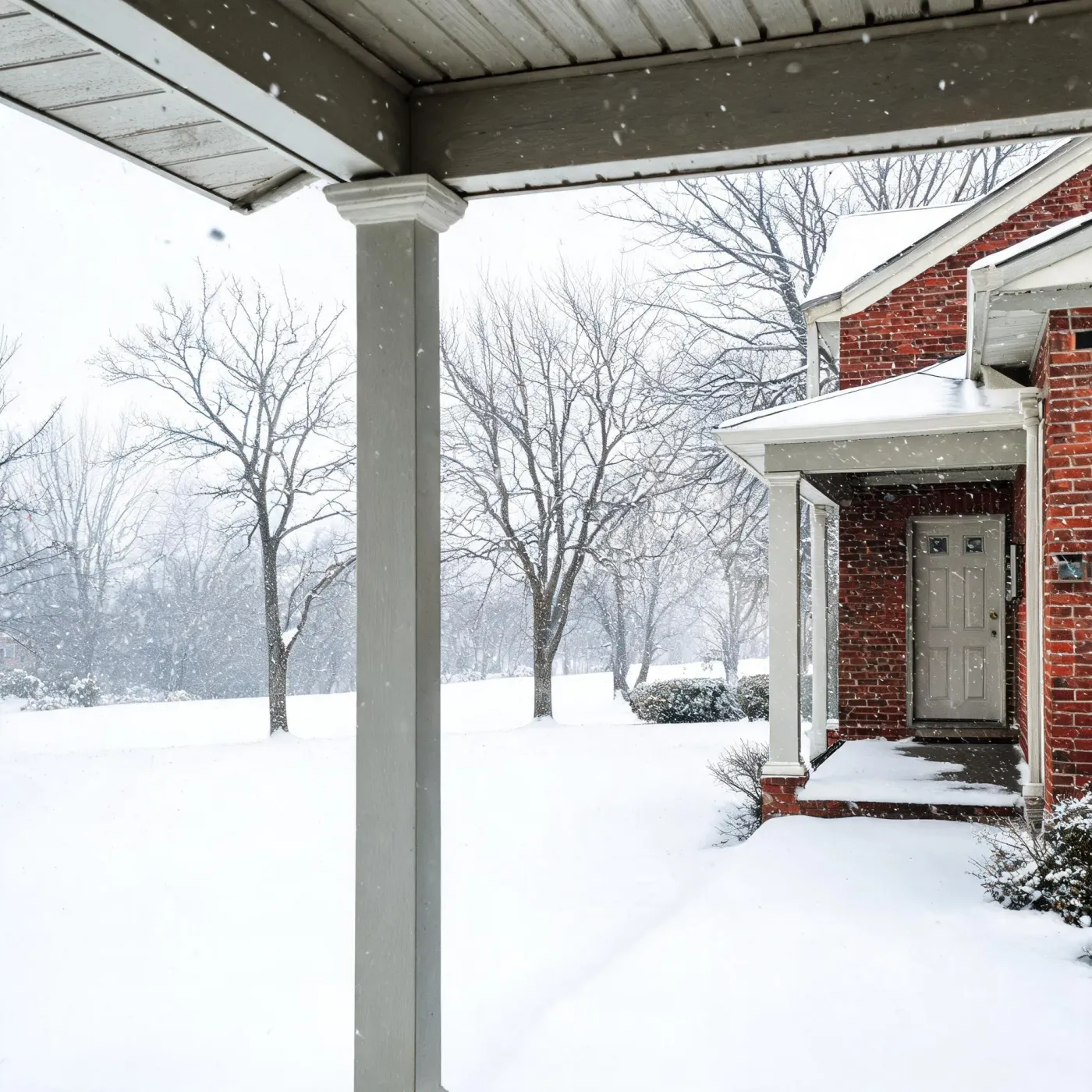
View from under a covered porch with a white column toward a red brick house entrance with a gray door, surrounded by deep snow, bare trees, and falling snowflakes.

Winter nights average 23°F across Pennsylvania, according to NOAA climate data. At that temperature, your boiler isn't cycling on for a few minutes here and there. It's running long stretches to keep radiators or baseboards warm enough to matter, often through the whole night without a break. A unit with good pressure and a clean burner handles that fine. One that's lost pressure since last spring, or has soot built up on the burner, works harder to put out the same heat, and you'll notice it in rooms that stay cooler than they should or a boiler that seems to run constantly without catching up.

NOAA nClimDiv 1991-2020 county normals weighted by homes

A woman wrapped in a thick beige fleece blanket sits on a sofa with an open book on her lap, beside a lit table lamp, with a frost-covered window behind her.
A gray-haired woman in a cream knit sweater stands in a dimly lit kitchen at night, looking to her right, with a round loaf of bread in the foreground and a dark window and potted plant behind her.

Where your boiler stands now

  • A pre-winter tune-up checks the pilot or igniter, the burner flame, the pressure, and the flue in one visit.
  • Pressure in the right range keeps the pump moving water instead of pulling in air.
  • A clean, steady burner flame heats your home through the long overnight runs a Pennsylvania winter asks for.
  • Skipping the check leaves pressure, burner condition, and the heat exchanger as open questions once the cold settles in.
  • Getting matched with a contractor skips the calls, the repeated explanations, and the back and forth of comparing quotes.
  • Once a boiler is checked, you know where it stands instead of guessing at the first knock or gurgle.

A boiler tune-up before winter answers a short list of questions, and once it's done, you have the answers instead of a guess. Does the pilot or igniter light clean. Does the pressure sit where it should, usually 12 to 15 psi cold, so the pump moves water instead of air. Does the burner flame run steady and blue. Does the flue carry exhaust outside the way it's supposed to. Those four things decide whether your boiler keeps up through a Pennsylvania winter or gives out partway through it, usually on one of the nights you need it most.

Finding that out on your own means calling a few contractors, describing the same low pressure reading or the same knock in the pipes to each one, then waiting on quotes to line up before anyone sets a date. Getting matched with a contractor who services boilers in your area skips that part. You explain the situation once, and the contractor who reaches out already knows what you're dealing with.

None of this makes the work itself quick or simple. A boiler is a closed system with a burner, a heat exchanger, pumps, and a vent, and checking all of it takes the time it takes. What changes is whether you're the one chasing that down room by room, or whether someone who does this for a living is already looking at it. Once that visit happens, you know where the boiler stands instead of finding out the hard way in January.

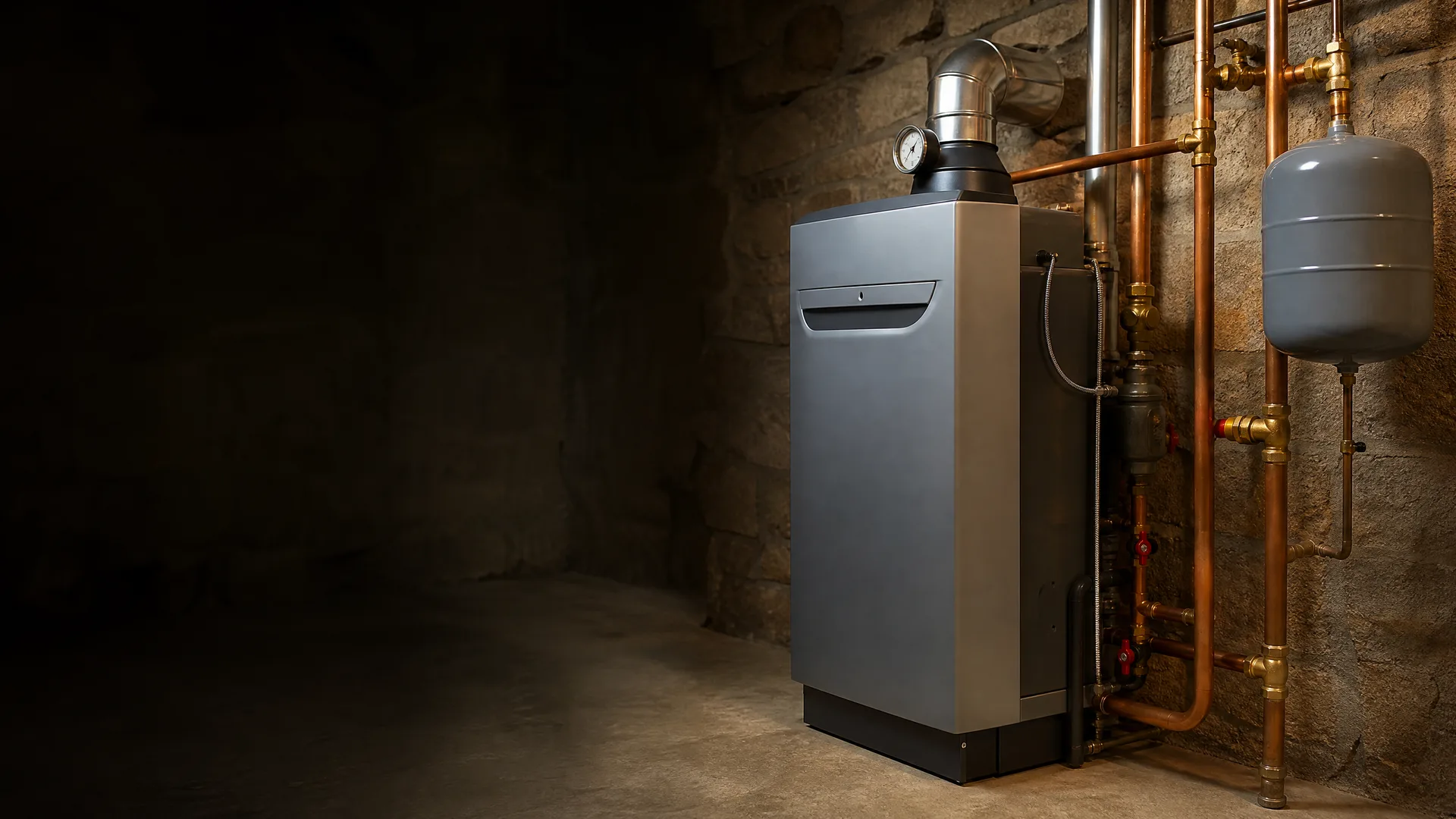
A gray floor-standing boiler with a flue pipe and pressure gauge stands against a stone basement wall, connected to copper and brass piping and a gray expansion tank.

A pro who works on boilers

Step 1 of 3: Equipment