Profile view of a bearded man wearing a dark baseball cap and a dark gray T-shirt against a plain off-white background.

What your boiler pressure should be in Pennsylvania

Step 1 of 3: Equipment

What should my boiler pressure be?

You check the gauge on the front of your boiler and the needle sits somewhere you're not sure about. Maybe it looks low, maybe it looks high, and the manual is long gone. You just want to know if the number you're seeing means the system is fine or means you need to do something about it before the house gets cold.

It should read between 12 and 15 PSI when the system is cold

Most residential boilers run correctly between 12 and 15 PSI when the heat hasn't been on for a while. Once the burner fires and the water heats up, the pressure will climb a bit higher, and that's normal too. The number matters because a boiler that's too low can't push hot water through every radiator or baseboard in the house, so you end up with cold spots on the coldest nights. One that's too high puts strain on the relief valve and can cause it to weep water. If your gauge sits well outside 12 to 15 PSI cold, that's worth a closer look before winter settles in for good.

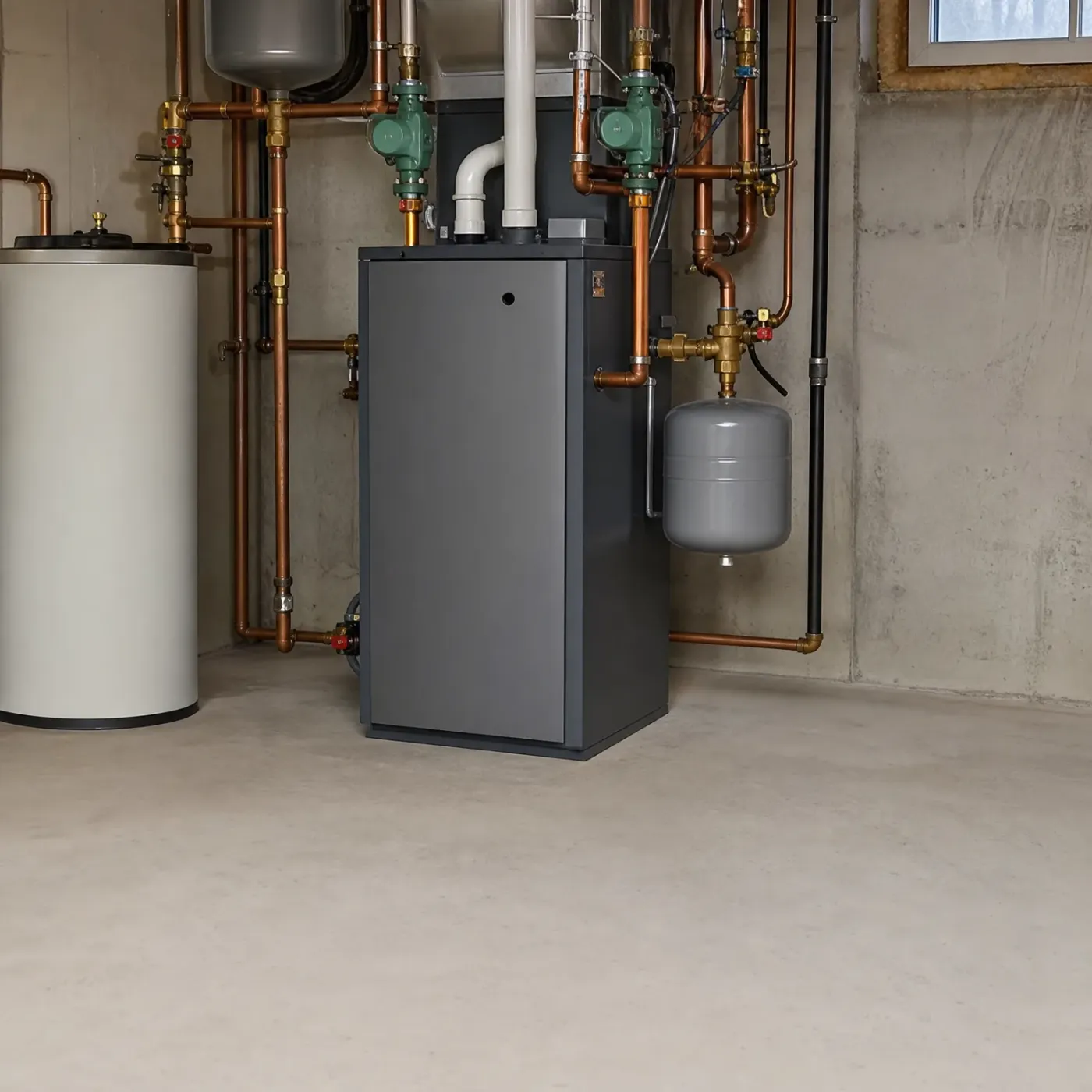
A dark gray floor-standing boiler in a concrete-walled basement, connected to copper piping, circulator pumps, a gray expansion tank, and a cream-colored storage tank to the left.

Running right

A boiler holding steady pressure keeps every loop in that copper network fed, from the circulation pumps to the expansion tank. The needle sits where it should and stays there between heating cycles. No knocking in the pipes, no pools near the base.
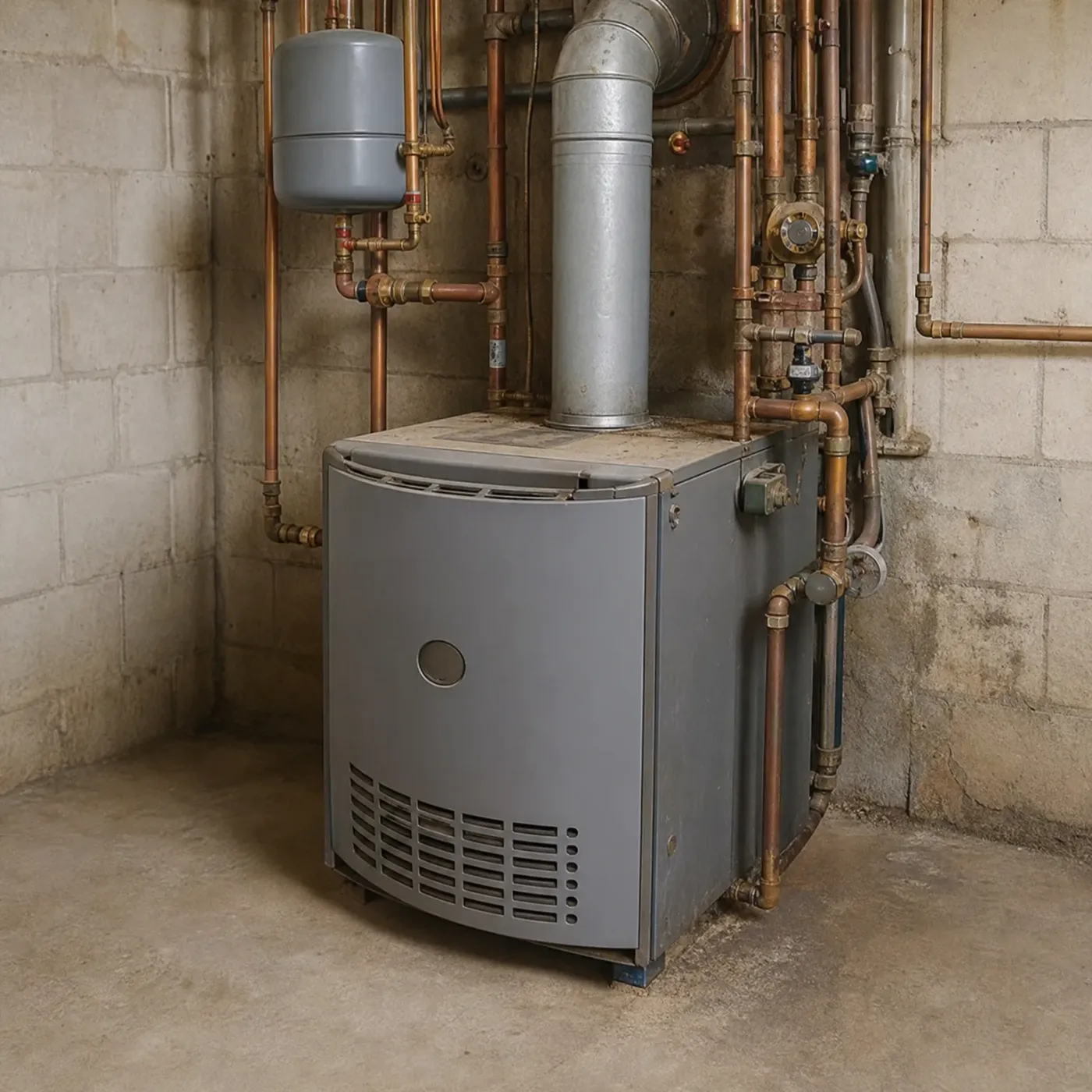

A gray residential boiler with a metal flue pipe stands in a concrete-block basement corner, surrounded by copper piping, valves and a gray expansion tank.

Something's off

A boiler that keeps losing pressure is feeding water somewhere it shouldn't, through a seam, a valve, or the expansion tank on the wall. If the gauge creeps down every few days and you keep topping it off, that pattern is worth having a contractor look at before the flue and the rest of the unit take the strain.

An older man with gray hair and a beard, wearing a dark coat dusted with snow, stands smiling in a doorway of a warmly lit home with a sofa, lamp and window visible behind him.
An older man with grey hair and a beard, wearing a dark coat dusted with snow, stands in a dimly lit entryway with a ceiling lamp, a side table with two shaded lamps, and a lit fireplace visible in a room beyond.
A bearded older man in a dark snow-dusted coat and scarf stands just inside a home's front door, with a lamp-lit room and snowy window visible behind him.
An older man with gray hair and a beard stands in a doorway of a home, wearing a dark coat dusted with snow, with a lit fireplace and lamp visible in the blurred room behind him.

Why 12 to 15 PSI cold

A cold boiler should read between 12 and 15 PSI on the gauge. That range keeps enough water in the system to reach every radiator or baseboard loop without pushing so hard that the relief valve opens. Once the burner fires and the water heats up, the needle climbs a bit, usually to somewhere around 18 to 20 PSI, because water expands as it warms. That rise is normal and the pressure should settle back down once the system cools. If the cold reading is already above 15, the system is starting from too high a baseline, and there's less room before it trips the relief valve during a normal heating cycle.

What the relief valve is for

Every boiler has a relief valve set to open around 30 PSI, and it exists for one reason: to let water out before a pipe or fitting fails under pressure. If you find water near that valve, or notice the pressure keeps creeping back up after you've bled it down, something upstream is feeding too much water into the loop. That's usually the automatic feed valve letting in more than it should, or a failing expansion tank that can't absorb the water's expansion anymore. Either way, a valve that's opened once tends to open again, and it's worth having someone look at it before it does.

A woman wrapped in a thick cream knit blanket sits in an armchair beside a lit table lamp, with an open book in the foreground and a frost-covered window behind her.
A woman in a cream knit sweater sits in an armchair with her eyes closed and head tilted back, beside a window showing orange autumn foliage and a wooden side table with a mug.

What low pressure does to your house

When pressure drops below 12 PSI, the loops farthest from the boiler stop getting enough water. You'll notice a radiator upstairs or at the end of the run staying cold while the rest of the house heats fine. Run the boiler like that through a Pennsylvania winter and it has to work harder to push heat where it can't reach easily, which shows up on a gas bill that's already not cheap. Left alone, the burner cycles more to compensate, and that wear adds up over a season of steady use.

What high pressure risks in your system

Pressure creeping past 15 PSI and climbing means the relief valve may open to protect the system, and when it does, you'll find water pooling near the boiler or dripping from a pipe on the floor below. That valve is built to do exactly that, but a boiler that trips it regularly is telling you something in the system isn't holding steady. Ignore it and you're looking at a valve that wears out early or a leak that stains the ceiling in the room underneath.

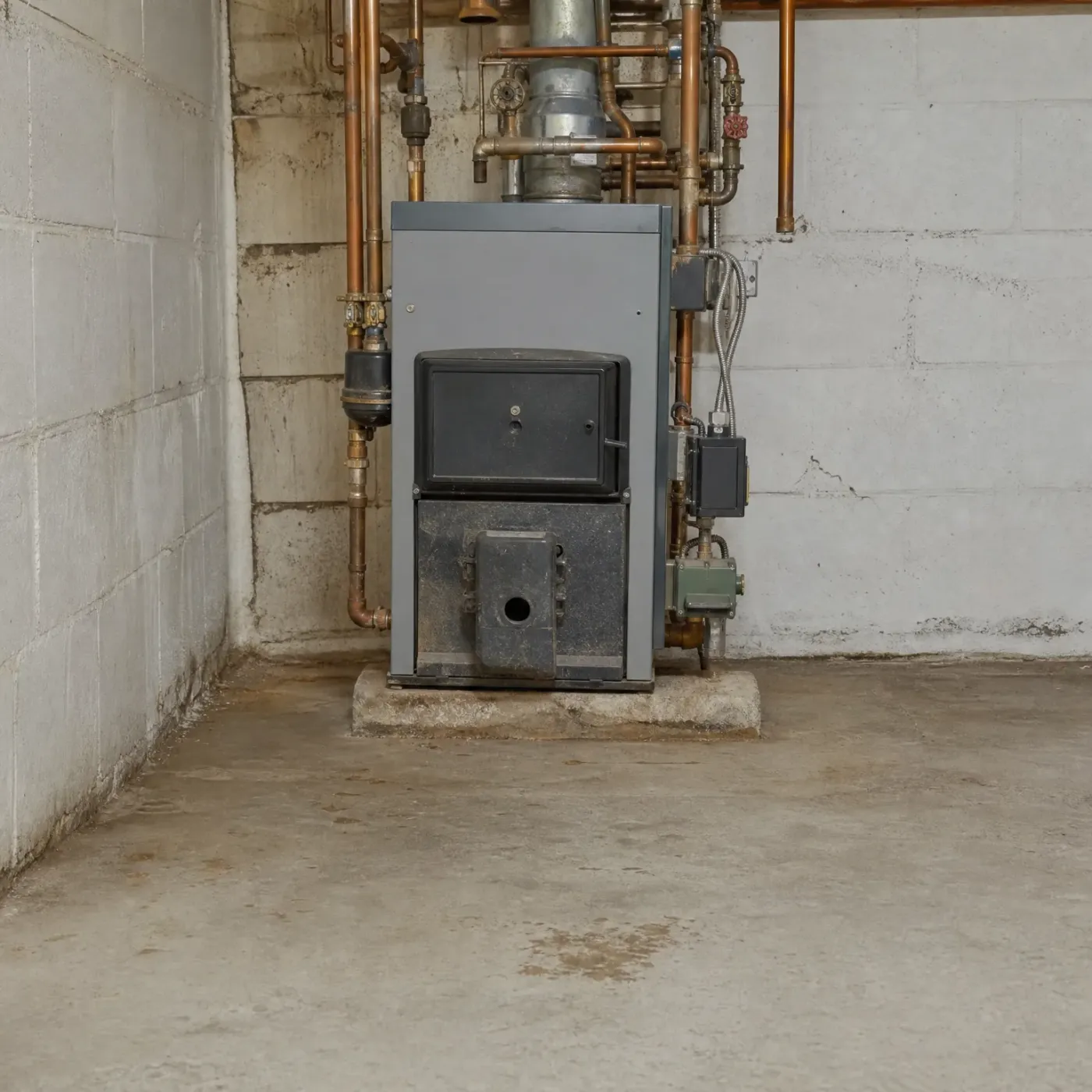
A gray boiler on a concrete pad in a basement with painted concrete block walls, copper piping, a metal flue, and electrical control boxes.
Before you get your boiler maintenance
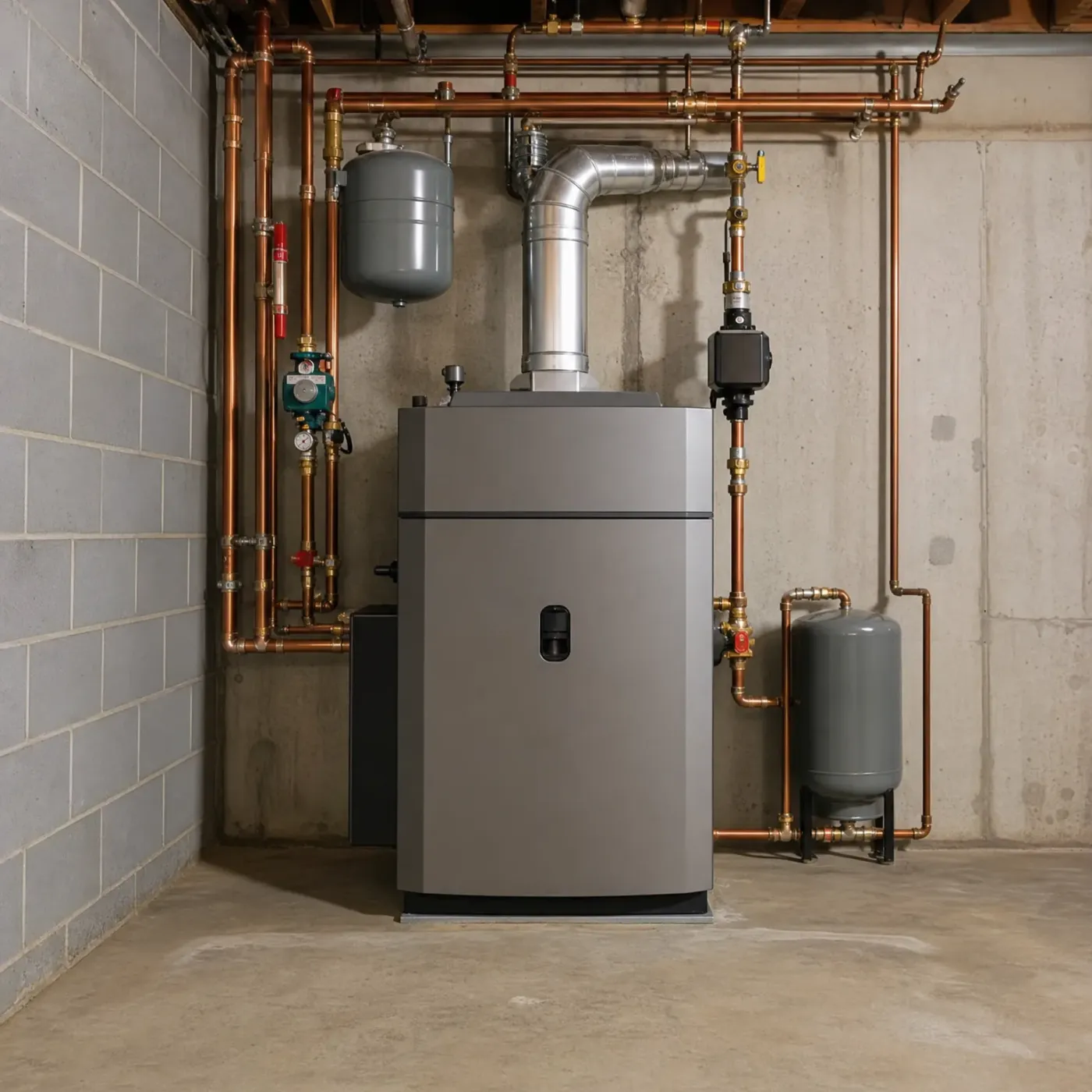
A gray boiler with a metal flue pipe stands in a basement against concrete and concrete-block walls, connected to copper piping, a circulator pump, and two gray expansion tanks.
After you get your boiler maintenance

Matched to your boiler job

A gauge sitting outside 12 to 15 PSI usually means a small problem, a loose bleed valve, a feed valve that needs a nudge, a pinhole leak somewhere in the loop. Left alone over a Pennsylvania winter, that small problem turns into cold radiators, a tripped relief valve, or a boiler that short cycles and runs up a power bill that's already high here. Catching it during maintenance means someone checks the gauge, the expansion tank, and the feed valve together, instead of you guessing from the number alone. That's the part that's hard to do on your own, not because the number is complicated, but because knowing why it moved takes someone who's opened up boilers like yours before. Send the request and a contractor who works on boilers in your area will reach out. You stop tracking down who's available and who actually answers, and let someone else carry that part through the rest of the heating season.

How the feed valve brings pressure back

  • The gauge and the pressure relief valve are two different parts doing two different jobs.
  • The gauge just reports the number, it never adds or removes a single drop of water.
  • The feed valve, usually a small lever or wheel near the bottom, is what brings pressure back up.
  • That valve connects to your home's water supply line and opens a path straight into the boiler.
  • A fast rise after you open the feed valve means the autofeeder, if your boiler has one, isn't the problem.
  • The relief valve is set to open at 30 PSI, well above the 12 to 15 PSI range you want to see cold.

The gauge on your boiler only tells you a number. It has no part in making that number go up or down. Two other parts do that work, and they sit on opposite ends of the job. The feed valve is the one you'll use most. Find it near the bottom of the boiler, usually a small lever or a wheel, connected to the water supply line that feeds your house. Open it and water moves straight into the boiler, raising the pressure as it goes in. If your boiler has an autofeeder, that same job happens without you touching anything, the autofeeder senses low pressure and opens the path itself. Either way, watch the gauge while the water goes in. It should climb steadily toward 12 to 15 PSI, not creep up slowly or stall partway. A fast, steady rise tells you the valve and the water line behind it are doing their job. If the needle barely moves after you've had the feed valve open a while, the problem isn't the valve, it's somewhere else in the loop. The relief valve sits at the other end of this. It's not for adding pressure, it's for dumping it. That valve stays shut until pressure hits 30 PSI, double what you want to see on a cold boiler, and once it opens, it's letting water out, not in. Knowing which valve does which job tells you which one to reach for when the needle isn't where it should be.

Winter nights average 23°F statewide

At 23°F overnight, your boiler is running long stretches to keep up, and that means more cycles where pressure gets tested. A system sitting low won't push hot water to every radiator when it's working hardest. Check the gauge on a cold morning, before the burner has fired.

NOAA nClimDiv 1991-2020 county normals weighted by homes

A boiler that holds 12 to 15 PSI cold keeps doing its job through a Pennsylvania winter without you thinking about it again. A boiler that doesn't will tell you, a cold radiator upstairs, knocking in the pipes, a puddle near the relief valve. You know the number now and what it means when the needle sits somewhere else. What you don't have to do is track down who fixes it. Send the form and that search is off your plate, someone who works on boilers in your area gets your information and reaches out to you. You won't be the one calling around or waiting on hold to describe a gauge reading to someone who might not even cover your town. That part is handled. What's left for you is answering the phone when it rings and getting a straight answer about why your pressure isn't where it should be.

A wooden front door with six small glass panes and a narrow sidelight, set in a shingled house entry with white trim, reached by stone steps flanked by a planted urn with purple flowers and leafy branches in the foreground.
Exterior corner of a house with beige horizontal lap siding and a black-framed window, with white hydrangeas, ornamental grasses and low plantings along a flagstone patio.
Corner of a house with tan lap siding and a window, a brick step edge, flowering white hydrangeas and green shrubs beside a flagstone walkway leading to a white picket fence and a tree in backlit sunlight.
House exterior with cream horizontal lap siding, a dark-framed window, a black wall lantern beside a wood door, potted shrubs on stone steps, and white and pink hydrangeas in the foreground garden.
Corner of a cream lap-sided house with a white-framed window and dark shingled roof, beside a white-flowering hydrangea shrub, a clipped hedge, mulched bed and lawn.

A boiler pro near you

One request and finding someone for the tune-up is handled.

Find a boiler pro

Asking costs nothing, and the choice to hire stays yours.