Why your boiler is kettling in Pennsylvania

Step 1 of 3: Equipment

Why is my boiler making a kettle noise?

That rumbling, popping sound coming from your boiler can sound alarming, almost like a kettle left on the stove too long. It usually gets louder the longer the boiler runs, and it's easy to wonder if something is about to fail. Before you shut it off and start searching for a new boiler, it helps to know what actually causes that noise and whether it means trouble.

It means scale or sludge has built up on the heat exchanger

The kettling noise comes from water trying to move past a layer of mineral scale or sludge stuck to the heat exchanger. That buildup traps pockets of water against the hot metal, and those pockets boil and collapse fast, which is what makes the rattling, popping sound. It gets worse the longer you run the boiler, since the trapped water keeps heating past where it should. Left alone, the heat exchanger has to work harder to heat the same amount of water, and the extra strain can crack it over time. With gas prices what they are in Pennsylvania, a boiler fighting through scale buildup all winter is also pulling more gas than it needs to.

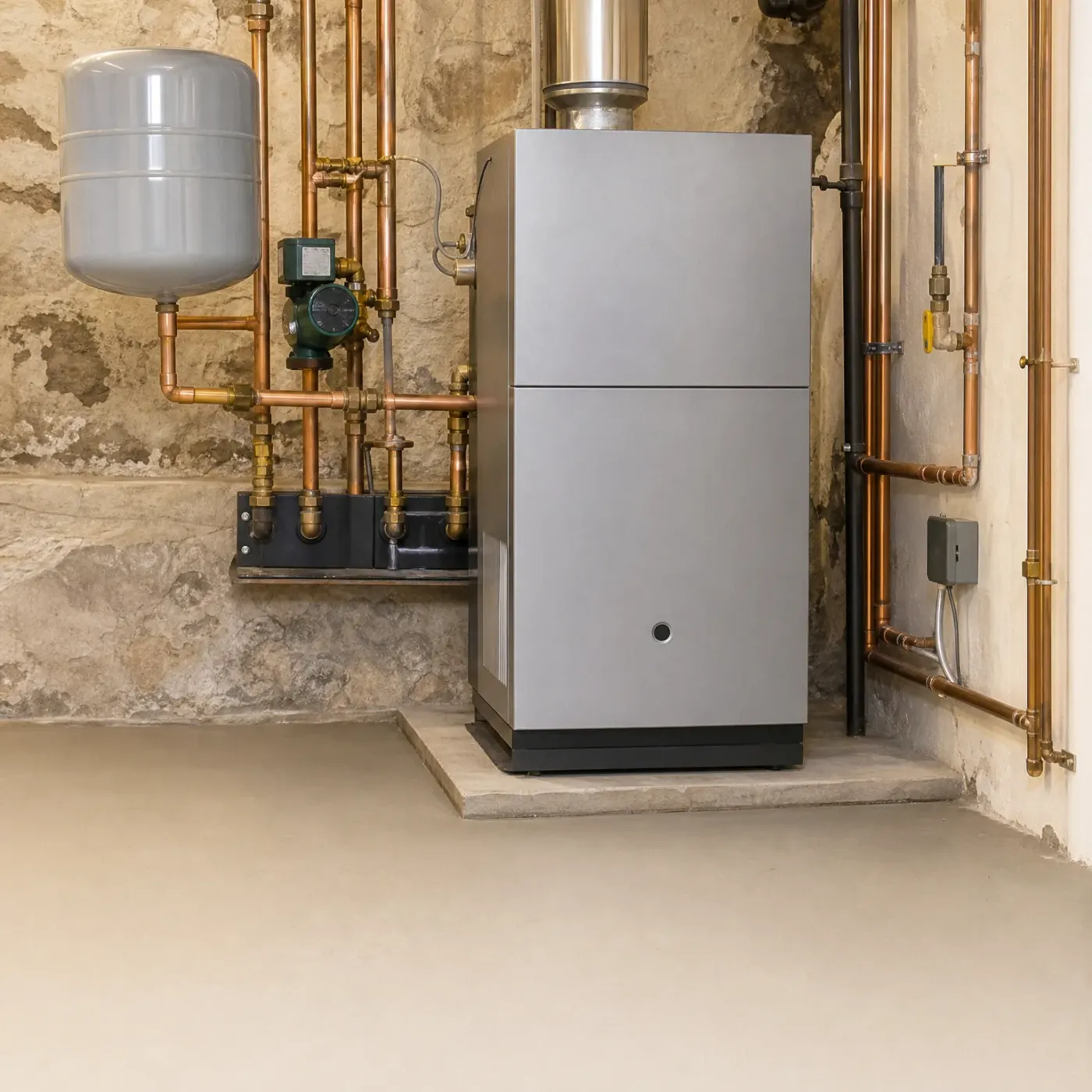
A gray boiler unit with a flue pipe stands on a concrete pad in a basement, surrounded by copper piping, a circulator pump, an expansion tank mounted on a stone wall, and an electrical outlet.

Running quiet

A boiler heating water the way it should sounds like water moving: a low hum, maybe a soft tick from the pump. No popping, no rumble. Heat reaches the radiators evenly and the burner shuts off without a fight. That's a heat exchanger with nothing baked onto it.

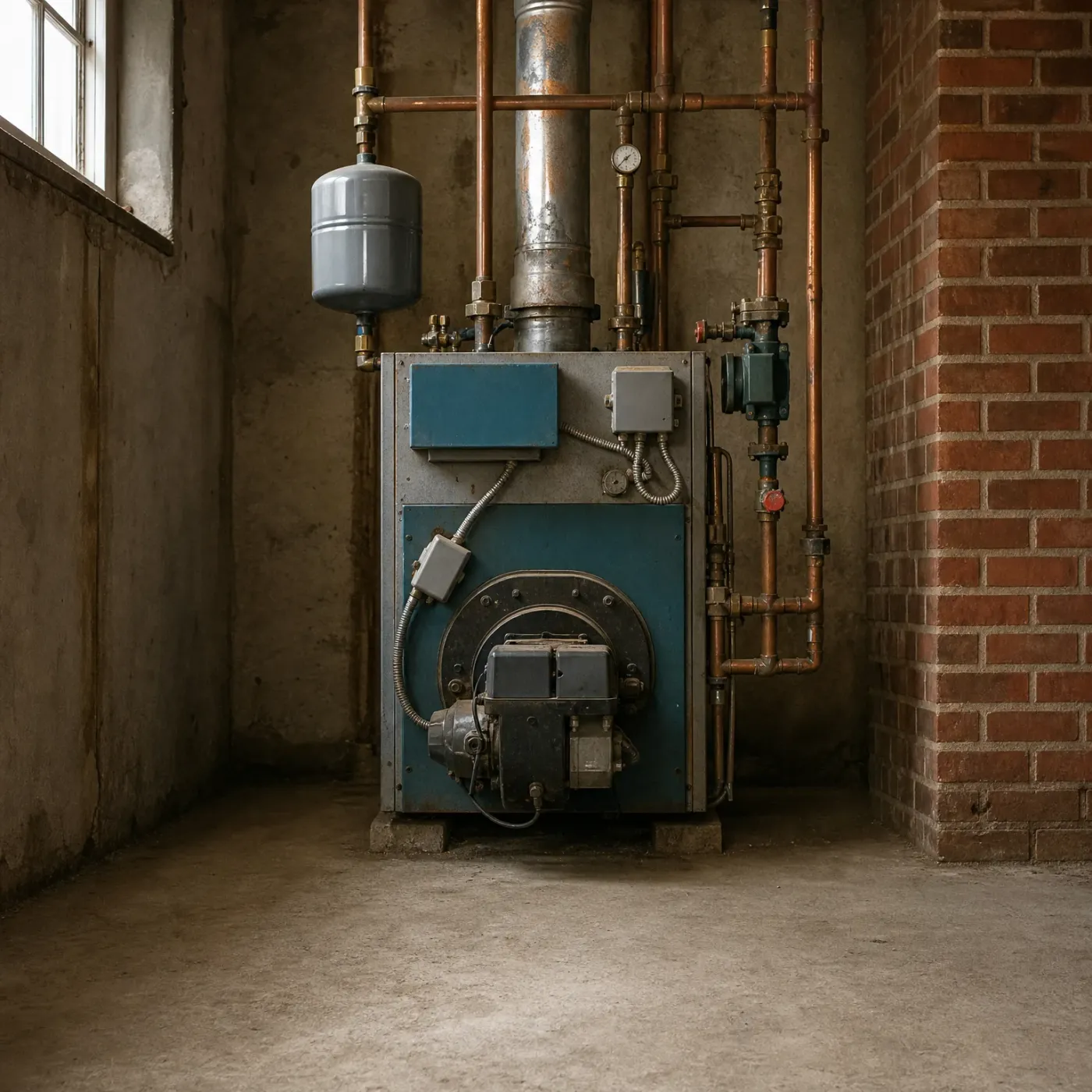
A blue cast-iron boiler with a burner unit, gauges and copper piping stands in a concrete-floored basement room beside a red brick pillar and a window.

Kettling in progress

Scale has built up inside the heat exchanger, and steam pockets are forming under it before the water around them boils. That's the popping you hear. Left alone, the boiler works harder to push heat through, and the metal underneath is taking the hit each time it fires.

A woman in a cream sweater and jeans stands in the open doorway of a white stucco house, holding the dark door, while a man in a dark quilted jacket seen from behind walks toward the entry past potted plants.

What kettling costs you this winter

That noise means part of your heat exchanger is already coated in scale, and the boiler has to work harder to push heat through it. You'll notice rooms taking longer to warm up, or the burner cycling on and off more than it used to. With gas prices what they are in Pennsylvania, that extra run time shows up on your bill before it shows up anywhere else.

Left alone, the scale builds until the heat exchanger cracks under the strain, and a crack means replacing it instead of repairing it. A local contractor who services boilers all winter has seen this exact pattern before and knows which models in this area tend to scale up fastest. Getting matched with one who already works on your type of system means someone shows up who's dealt with this noise many times, not someone guessing at it for the first time.

Interior corner of a living room with a beige upholstered sofa and dark cushion in the foreground, a ceramic vase of leafy branches on a dark side table by a curtained window, a framed picture on the wall, and a wood-surround fireplace at right.
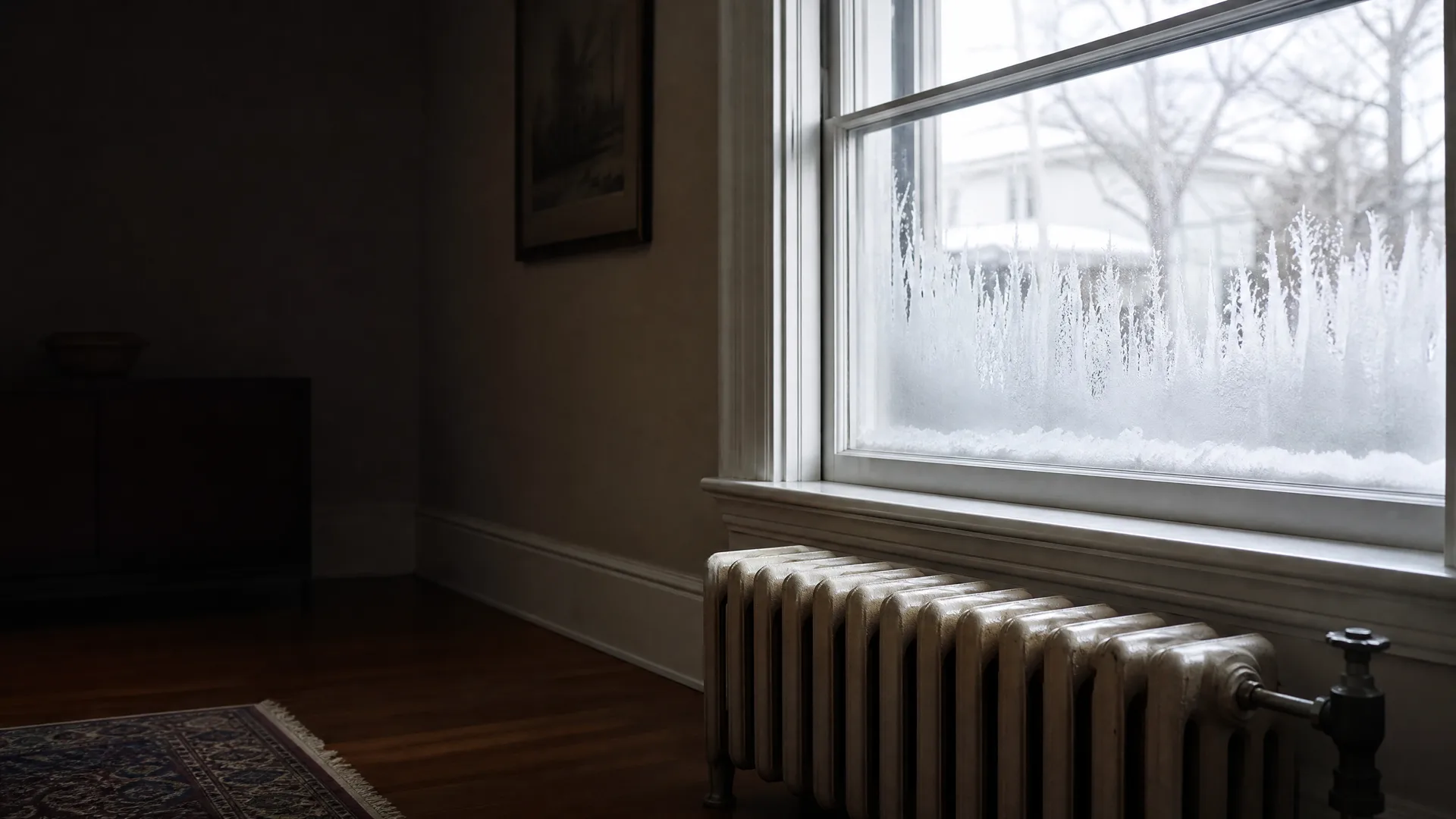
A cast-iron radiator with a valve sits beneath a frost-covered window in a dim room with dark wood floor, a patterned rug, a framed picture, and a low cabinet.

You're up before the rest of the house, and the living room is cold enough that you can see your breath near the window. The cast-iron radiator under it is ticking, then it starts that rumble, low at first, building into something closer to a boil. Ice has formed on the inside of the glass overhead. You stand there with your coffee waiting for the room to warm the way it always has, but the radiator stays cool at the bottom even as the noise gets worse. Outside, a Pennsylvania January morning, gray and still. You've heard this sound before, a few mornings now, and you're done waiting to see if it goes away on its own.

Get your boiler to the right pro

That scale buildup inside your heat exchanger doesn't clear on its own, and running the boiler through another cold stretch only bakes it on harder. Left alone, it's the kind of thing that ends a heat exchanger early, and with gas prices what they are in Pennsylvania, a boiler fighting through scale to heat your radiators is burning more gas to do it every week it keeps running. A boiler tech who works on these systems all winter knows what kettling usually means once they hear it and look at your unit, and can tell you whether it's a descale or something further along. Getting a local, licensed contractor out to look at it now, before the next cold snap puts more hours on a system already struggling, is worth doing while that rumble is still just a noise and not a cracked exchanger or a boiler that won't fire at all.

Why scale forms in the first place

Pennsylvania water runs hard in a lot of towns, and hard water carries dissolved minerals that don't stay dissolved once they hit a hot surface. Every time the boiler fires, a thin layer of those minerals bakes onto the heat exchanger, the same way they'd bake onto the inside of a kettle. One cycle doesn't do much. A full winter of cycles, running most days from October through March, adds layer on layer until that coating is thick enough to trap steam pockets and make noise.

Why a repair catches it now

A boiler tech who works on these systems every winter knows that kettling almost always traces back to scale on the heat exchanger or a flow restriction nearby, not a dozen possible causes. Flushing the exchanger and checking the water side for buildup is routine work for someone who sees it on calls across the area all season. Catching it while it's just noisy is a smaller job than catching it after the metal has been stressed by trapped steam for another few months of cold weather.

A gray-haired man in a dark sweater sits on a light gray sofa in a living room, looking toward a sunlit window with trees outside.
A gray-haired man in a dark blue sweater sits on a light gray sofa in a sunlit living room, looking off to the side, with a potted plant, shelving unit, and large glass doors behind him.
A bearded man with graying hair in a dark green sweater sits on a sofa in a living room, looking off to the side, with a sliding glass door and a dim kitchen doorway behind him.
A gray-haired man in a dark knit sweater sits on a light gray sofa in a living room, looking toward a sunlit window, with houseplants, a lamp, and framed art in the background.
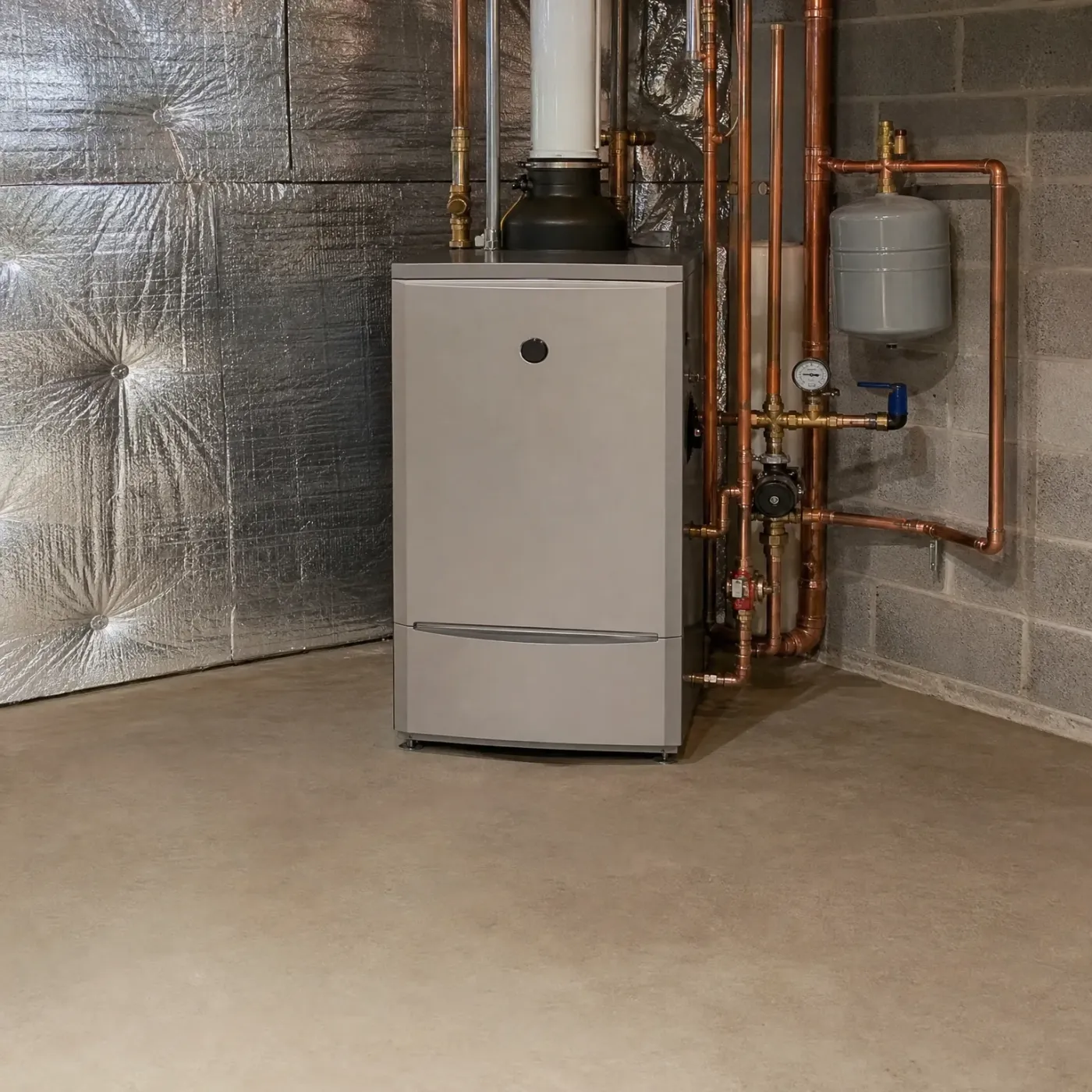
A gray residential boiler in a basement corner with copper piping, a circulator pump, pressure gauge, blue-handled valve and gray expansion tank against a concrete block wall, next to a foil-insulated wall.

What a clear heat exchanger looks like

The copper piping runs clean from the boiler to the circulator pump, and the pressure gauge holds steady. A boiler set up like this moves heat through water without a fight. The brass fittings and blue shutoff valve are there for service access, not because anything is wrong.

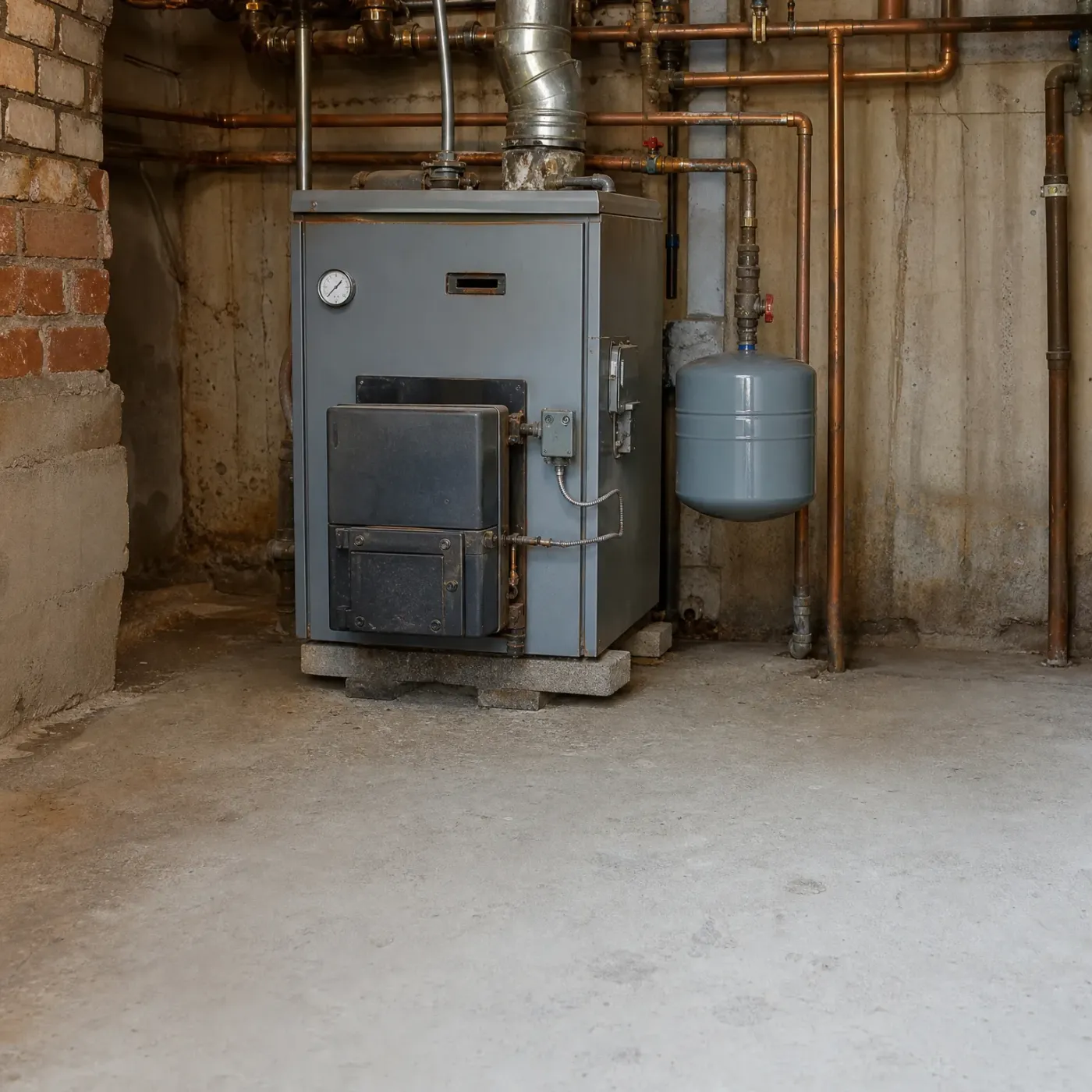
A gray boiler on a concrete block base in a basement, with copper piping, a metal flue, and a gray expansion tank mounted beside it against a concrete wall.

What's behind that gray casing

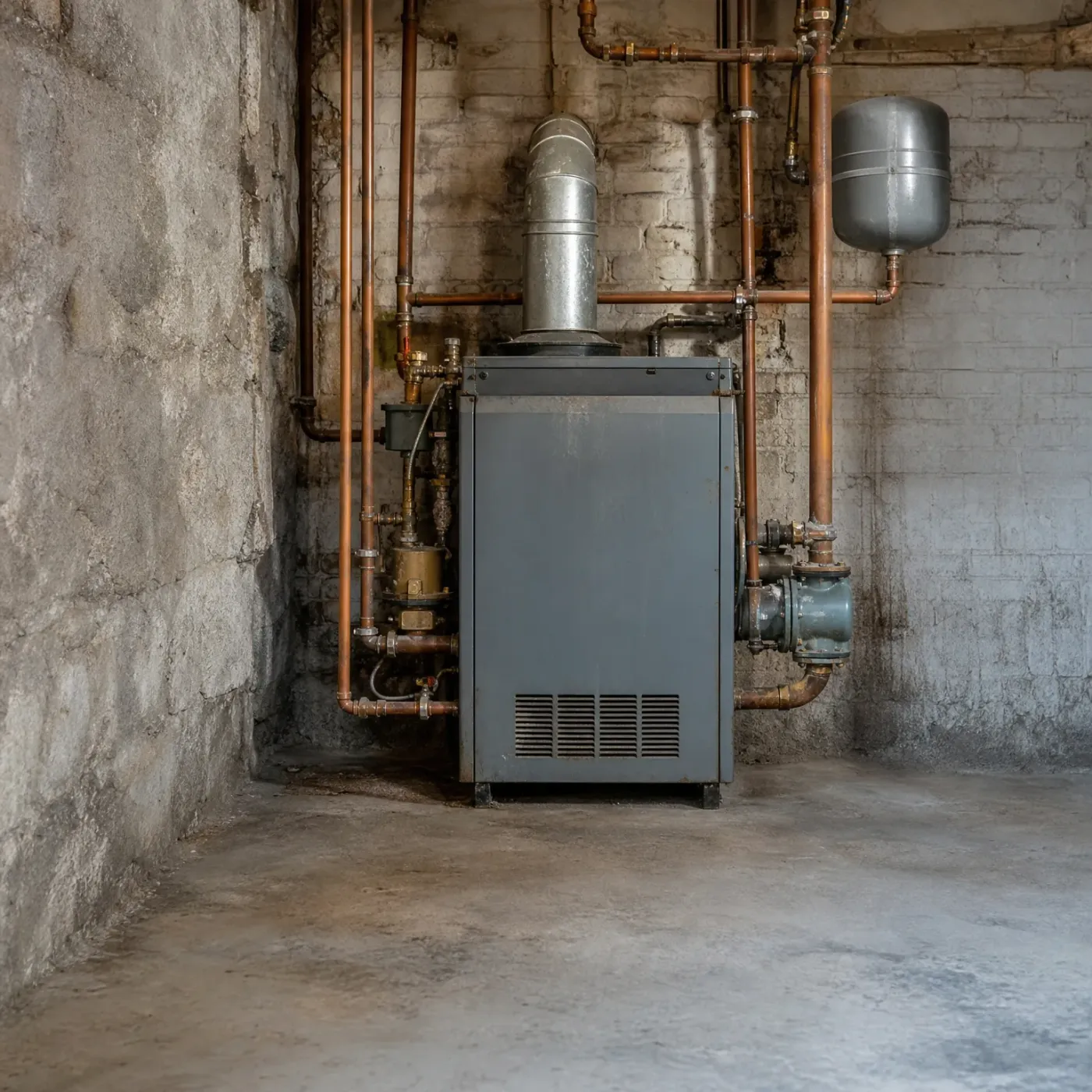
This is an older steel boiler, and the sound you're hearing is coming from inside that casing, not the piping around it. Scale builds unevenly on the metal of a heat exchanger this age, which is why the kettling gets worse instead of staying the same.

A gray boiler with a metal flue pipe and copper piping stands against a weathered painted brick basement wall, with an expansion tank mounted overhead and a bare concrete floor in front.
Before you get your boiler repair
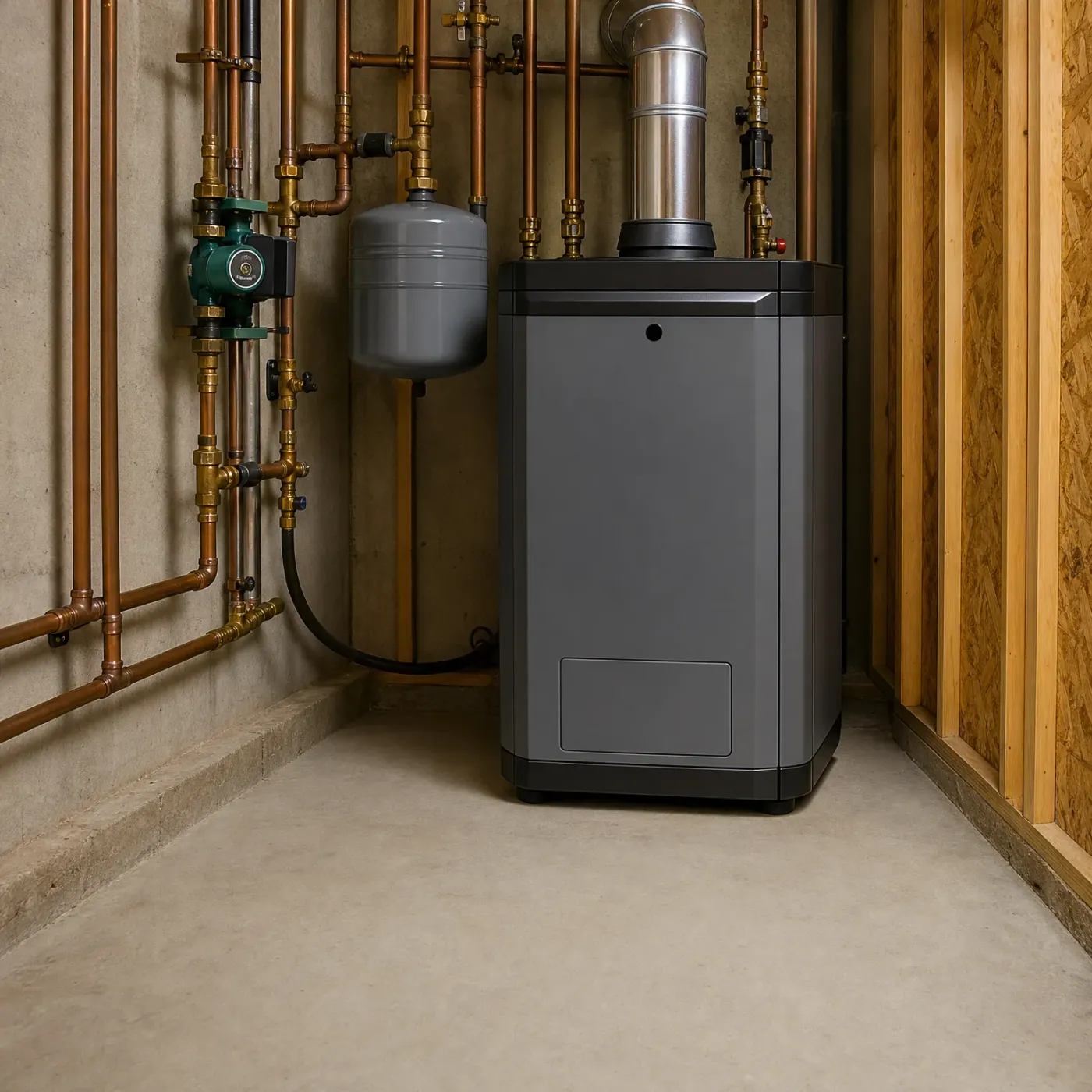
A gray floor-standing boiler with a metal flue pipe stands in a basement corner beside copper piping, brass valves, a green circulator pump, and a gray expansion tank on a concrete wall, with exposed wood framing and sheathing at right.
After you get your boiler repair
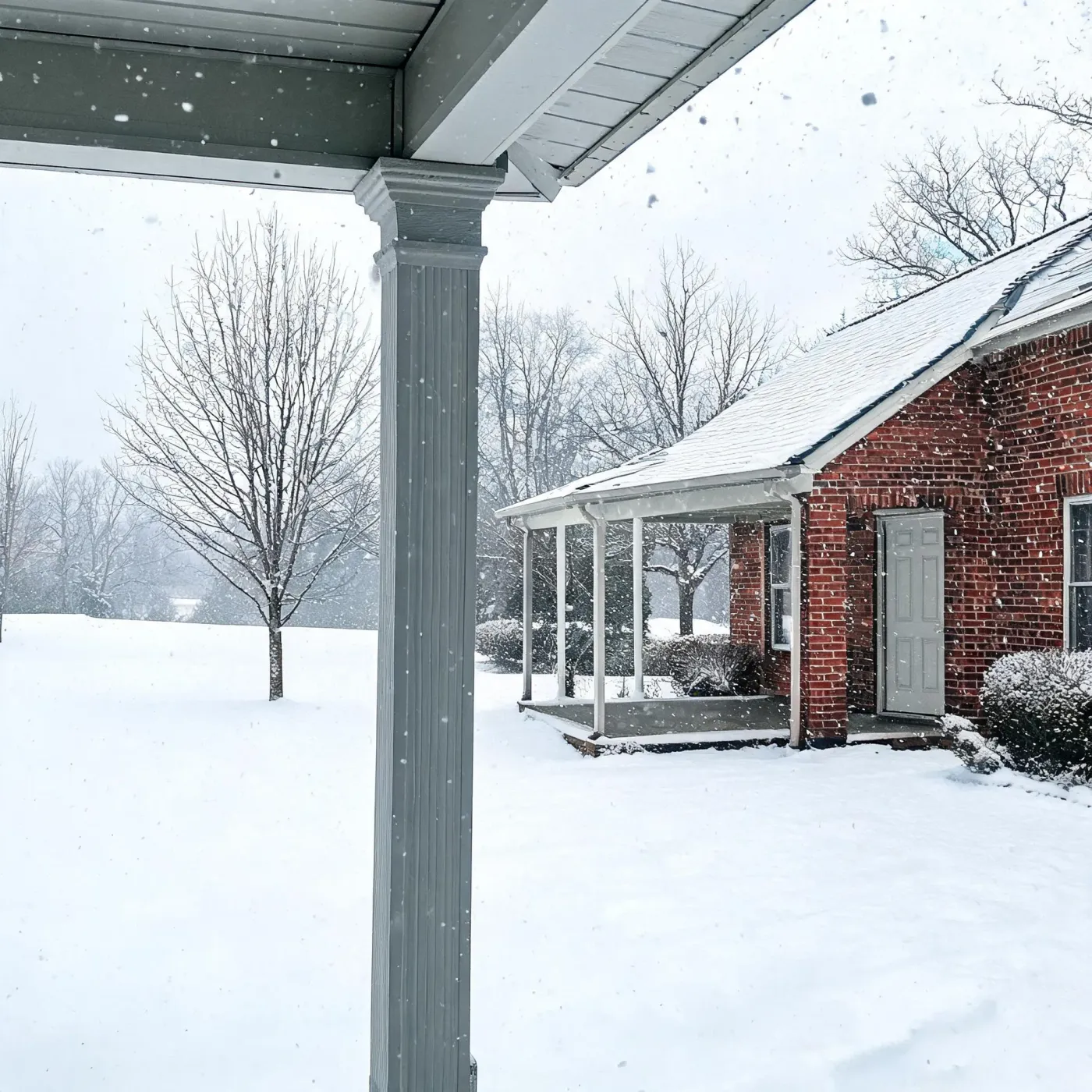
View from under a covered porch with a gray square column toward a red brick house with a white-columned porch and gray door, with falling snow covering the yard, roof, and bare trees.

Winter nights average 23°F statewide, and that's the stretch where kettling gets worse. Colder water coming back from the radiators means the burner fires longer and more often to catch up, and that extra firing hits the scale-coated spots on your heat exchanger harder. You'll likely notice the rumble starting earlier in the evening and lasting longer before the house finally warms up. Some homeowners also see the pressure gauge creep up during these cold snaps, since a struggling heat exchanger makes the whole system work harder to keep rooms at temperature.

NOAA nClimDiv 1991-2020 county normals weighted by homes

That kettling noise is scale built up inside the heat exchanger, and it doesn't go away by itself. A boiler technician can descale it, check the pressure and flow, and tell you whether the exchanger still has life in it or needs to come out. Pennsylvania winters don't let up once they start, so the sooner that scale is dealt with, the less strain your boiler carries through the cold months ahead. When you put in a request, you'll be matched with one licensed contractor local to you, not a handful of companies competing for your callback. Someone who works on boilers all winter in this area has seen this exact noise plenty of times and knows where to look first. You get one call, from someone who already knows what hard Pennsylvania water does to a heat exchanger, and can tell you straight what your boiler needs.

Kitchen corner with cream upper cabinets, oak lower cabinets, white marble-look countertop, beige tile backsplash, a ceramic vase of greenery, a wooden cutting board and bowl, and a black-framed window at right.
Interior corner of a room with a white-framed window and wide sill, beige walls with panel molding, a wooden cabinet holding a ceramic vase with a green leafy plant, and blurred shrubs and trees outside.
A wood-framed armchair with beige cushions and a woven lumbar pillow sits in a corner beside a large window overlooking green trees, with a tall ceramic vase holding leafy branches on the left and plaster walls and wood flooring.
Interior corner with a white-framed window above a sill, beige walls with baseboard molding, a greige shaker-style cabinet with brass knobs and a potted plant on top, light wood flooring and a woven jute rug.
A dark-framed six-pane window with white trim and sill set in gray horizontal lap siding, with hydrangea shrubs below and a white column and shingled roof section at left.

The right pro for this job

Your request stays with one local pro.

Match me with a pro

Sending the form costs nothing.