
Why your boiler is losing pressure in Pennsylvania
Why does my boiler keep losing pressure?
A boiler that loses pressure once in a while is normal. One that needs water added every week or two, with the gauge dropping back down to zero on the regular, means something is letting water or pressure out of the system faster than it should. With gas prices what they are in Pennsylvania, a boiler that keeps cutting out or running poorly because of low pressure isn't just annoying, it's wasted money on top of the problem itself.
A leak somewhere in the system, or a failing part, is letting water out faster than the system can hold it
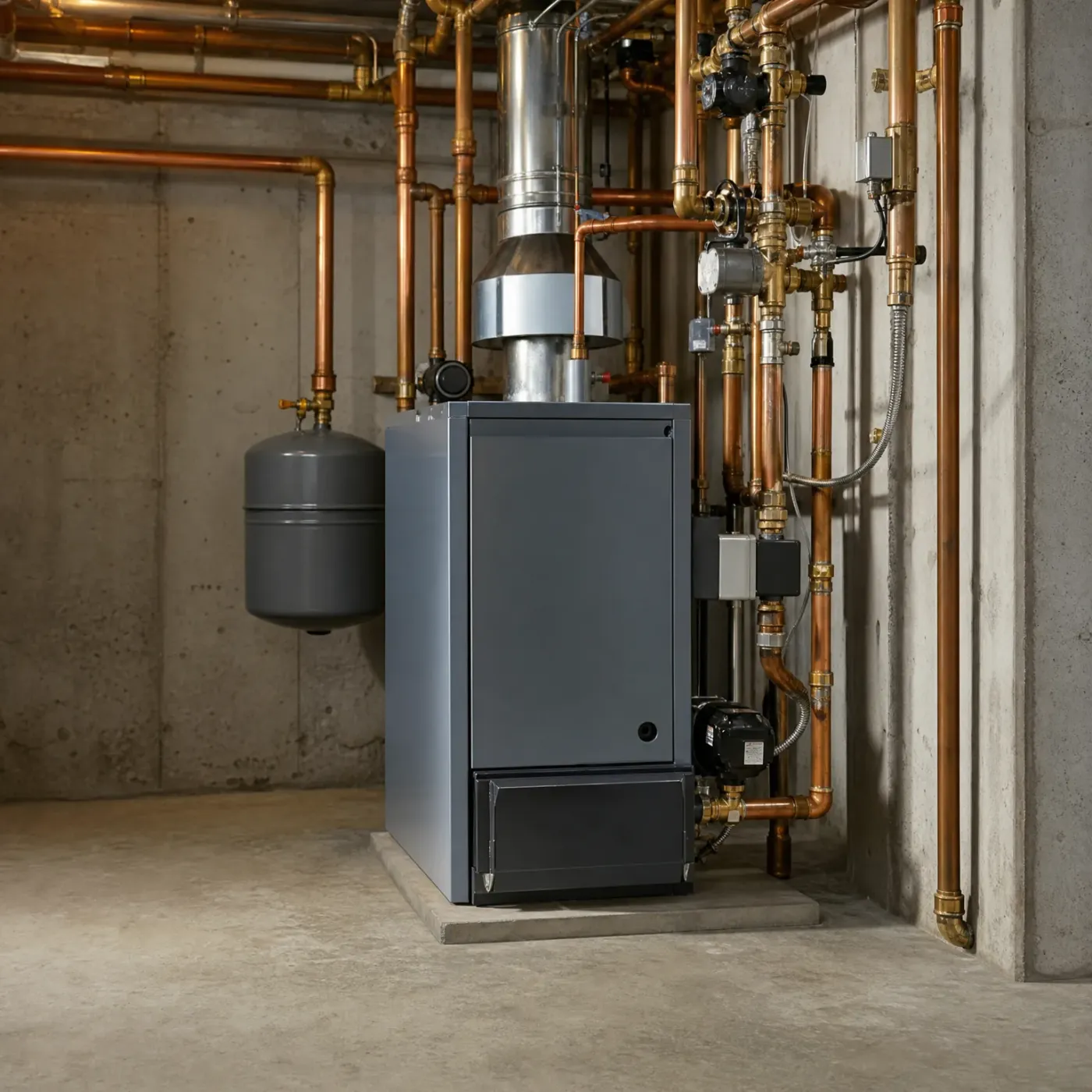
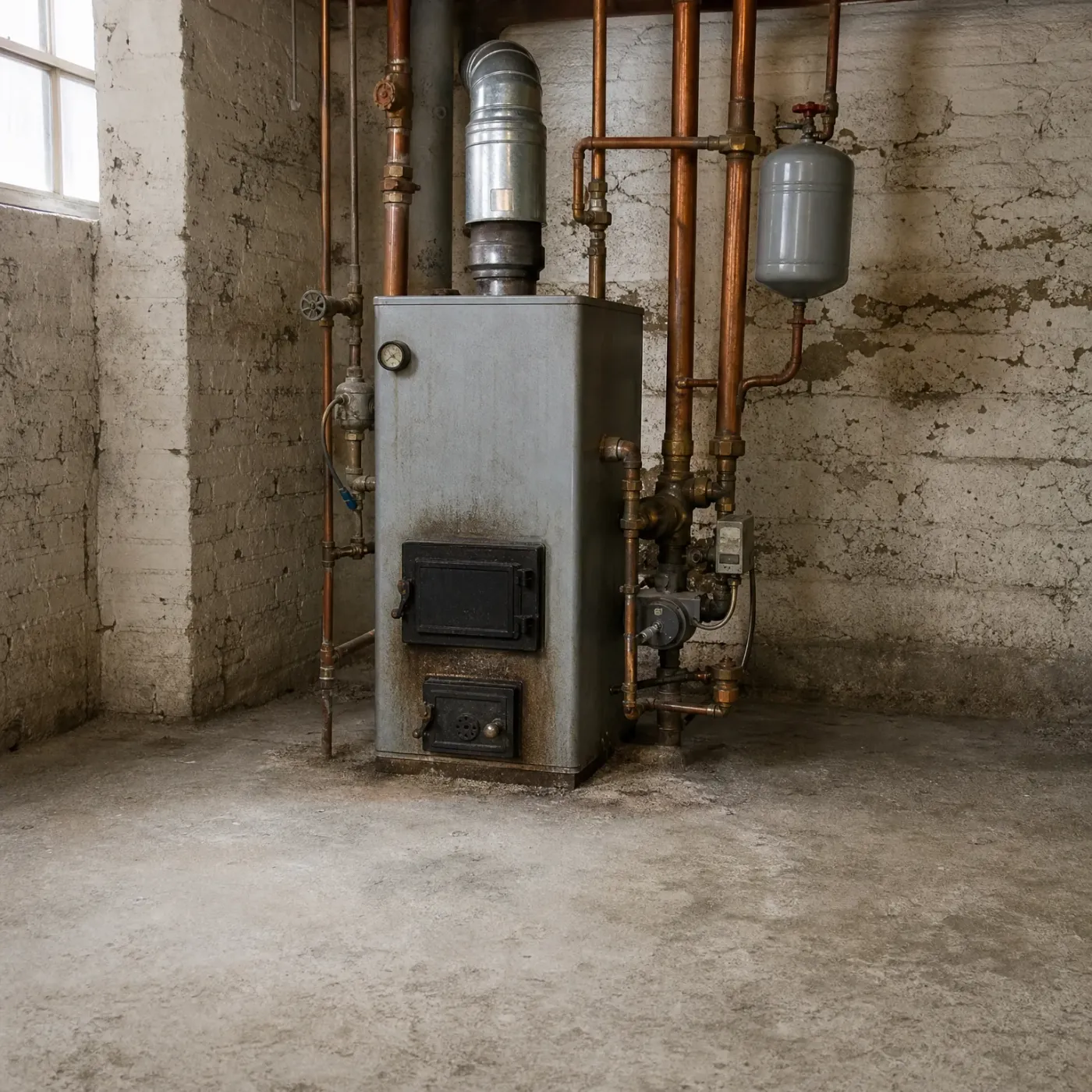
Boilers are sealed systems. Water inside stays at a set pressure, usually around 12 to 15 psi when the system is cold, and that number shouldn't change much on its own. When it keeps dropping, water is getting out somewhere. That can be a pinhole leak in a pipe, a fitting that's worked loose, a failing pressure relief valve letting water escape when it shouldn't, or an expansion tank that's lost its air cushion and is letting the system overfill and vent water off. Some leaks show up as a damp spot on the floor or a pipe. Others don't, especially if the water is dripping into a wall or finding its way to a floor drain. Either way, a boiler that keeps needing refills has a specific part failing or a specific leak somewhere, not a pressure problem on its own.
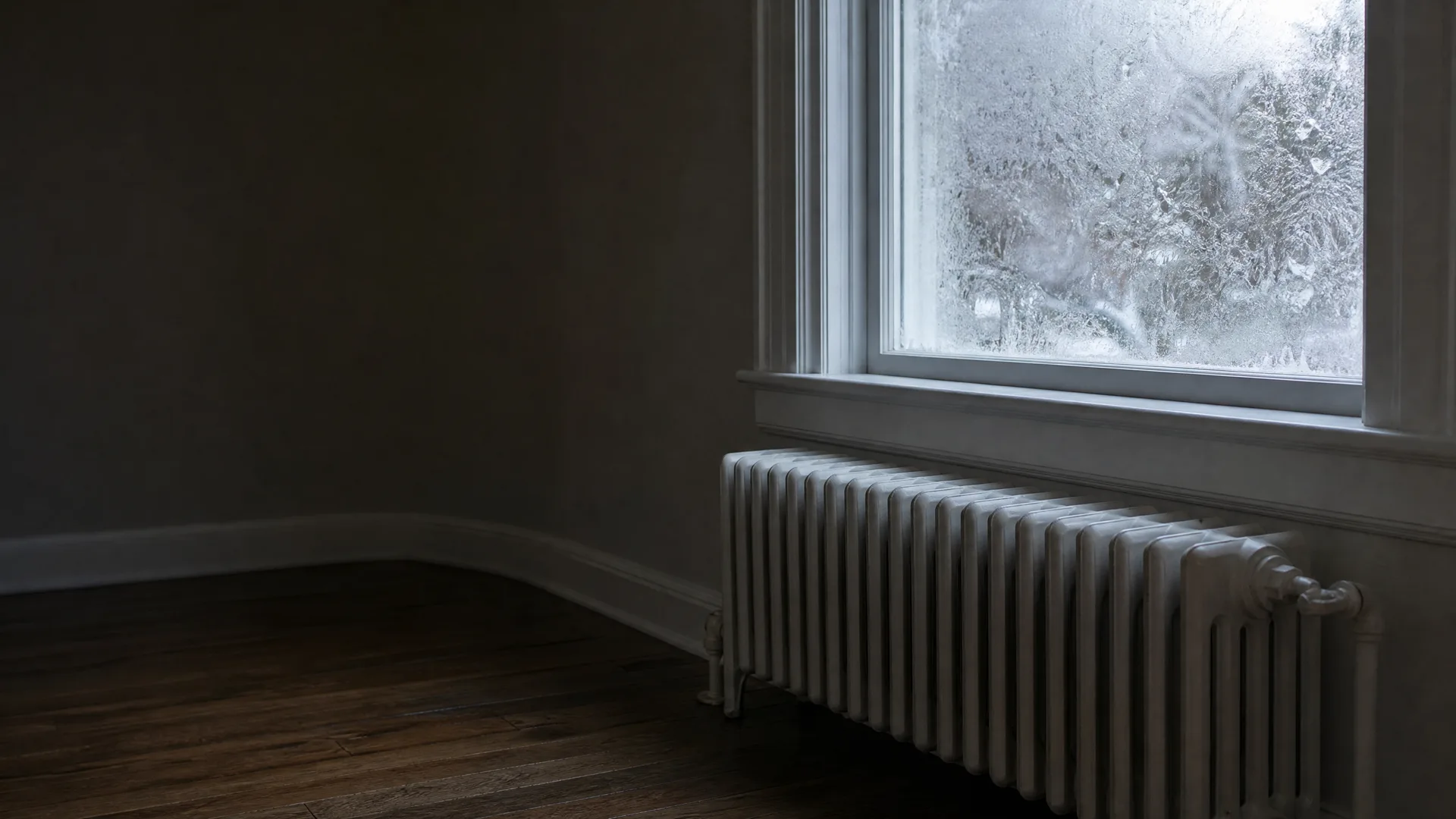
You come down before the thermostat has caught up and the living room still holds the night's cold. The radiator under the window sits quiet, no tick of heat moving through it. The glass above it has iced over on the inside, a thin white film across the lower pane. You crouch down to the boiler in the basement later and find the pressure gauge sitting on zero, the needle all the way back past where it should rest. Outside, Pennsylvania is deep into January, the kind of morning that stays below freezing until noon. You add water to bring the gauge back up, the way you did two weeks ago, and the radiator starts to click and warm within the hour.
What's Actually Happening Inside
- The expansion tank holds a cushion of air that absorbs the water's expansion as the boiler heats up.
- A waterlogged expansion tank forces the relief valve to open and dump water just to keep pressure from climbing too high.
- A pinhole leak in a baseboard or radiator line can bleed pressure for months before it shows as a wet spot.
- The automatic feeder is supposed to add small amounts of water, not run constantly to replace what's leaking out.
- Air trapped in a radiator reads on the gauge as a pressure problem even when the system is sealed tight.
- Pressure that drops only when the boiler is running, then recovers once it cools, points to a developing leak in the heat exchanger.
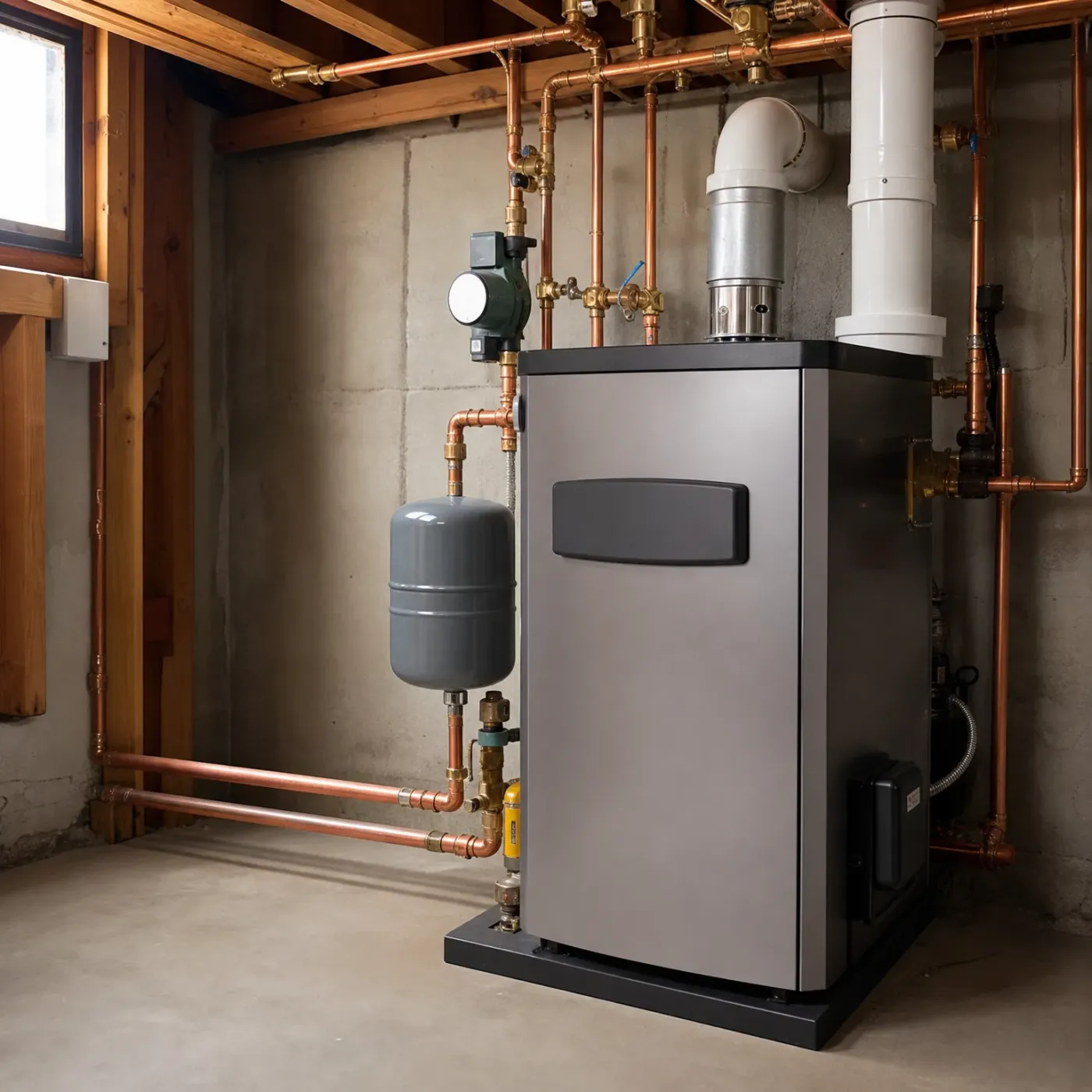
A sealed boiler system holds a fixed amount of water, and that water expands as it heats. The expansion tank is where that extra volume goes, a rubber bladder with a cushion of air on the other side of it. When that bladder fails or the tank loses its air charge, the water has nowhere to expand into, so pressure climbs until the relief valve opens and dumps it onto the floor or down a drain pipe. That's one path down. The other is a leak somewhere in the loop, and it doesn't have to be dramatic to matter. A pinhole in a baseboard line or a radiator fitting can weep slowly, enough to drop the gauge over weeks without ever leaving a puddle you'd notice. The automatic feeder valve is built to top off small losses like that, a little water now and then. If it's cycling often or running steadily, it's compensating for a leak, not doing its job. Air in a radiator complicates the read too. Trapped air takes up space water should fill, and the gauge reflects that as a pressure problem even though the seal is fine. The one pattern worth paying attention to on your own is timing. If the pressure only drops while the boiler is firing and comes back once it cools, that's different from a slow leak. That points toward the heat exchanger itself, and it's worth having someone look at before it gets worse.




Get your boiler to the right pro
Send the request today and stop worrying about who to call.
Describe your boiler job, and a local pro who handles it gets in touch.
Asking costs nothing, and the choice to hire stays yours.

What a slow leak costs you in a Pennsylvania winter
You top off the pressure, it holds for a few days, then drops again. Each time you add cold water, the boiler has to heat that water from scratch, and gas here isn't cheap. A system fighting a slow leak all January runs longer than it should, and the bill shows it.
There's a worse version of this. If the leak gets ahead of you and the pressure drops too far, the boiler locks out and you've got no heat on a cold night, the kind Pennsylvania gets plenty of. Finding where the water is going usually takes someone who can pressure test the system and check the places you can't, the valves, the fittings behind the boiler, the line running to the expansion tank. Once you send in what's going on, a contractor who handles this reaches out to you, and the guessing is over.

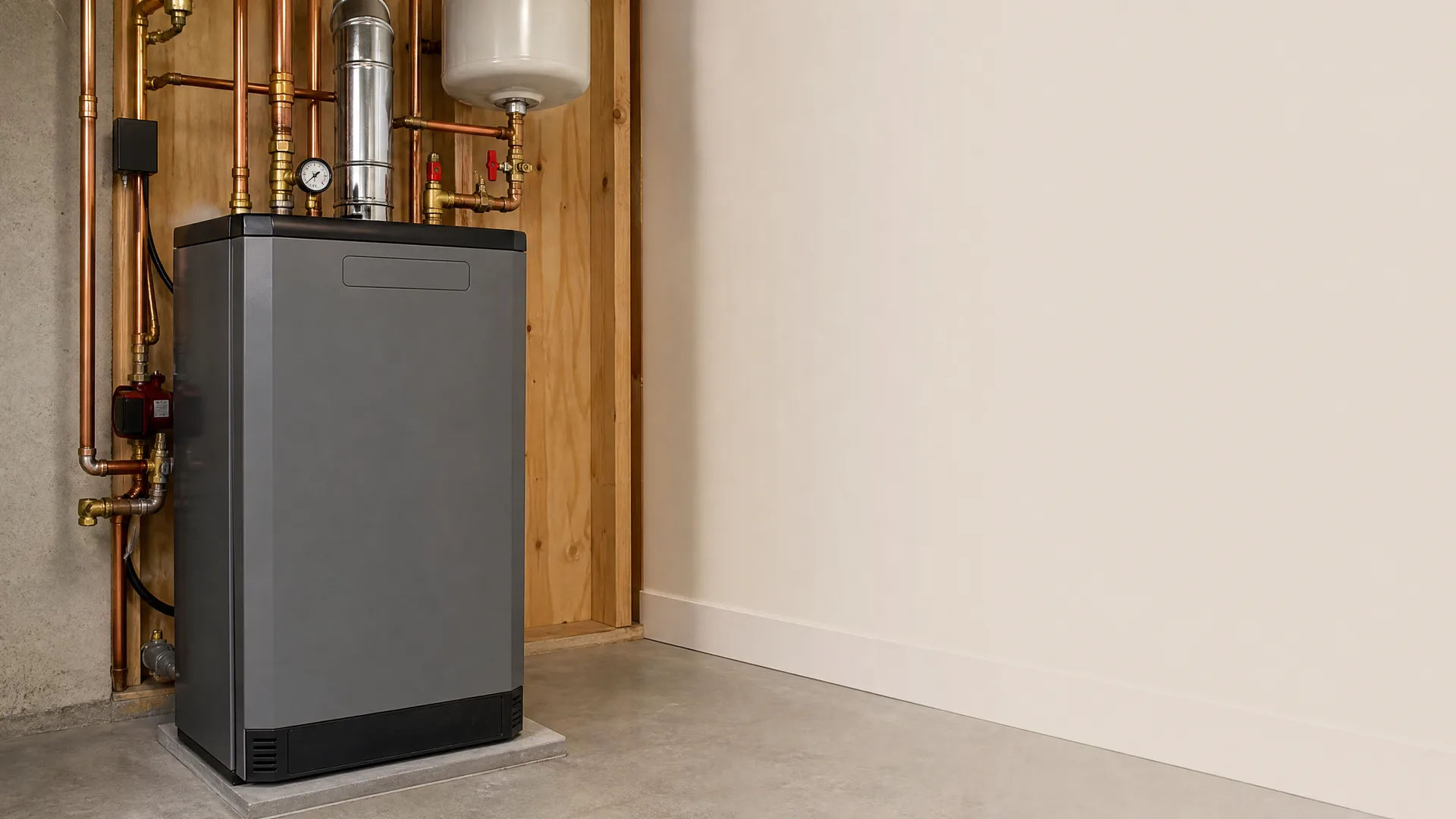
Where the water actually goes
Most leaks don't puddle on the floor where you'd spot them. A pinhole in a baseboard line can weep into a joist bay. A circulator pump seal can seep behind the housing and dry before you check it. The pressure relief valve can crack open under heat, let a cup of water out, and close again with no trace but a faint mineral ring. The gauge tells you water is leaving. It doesn't tell you where.
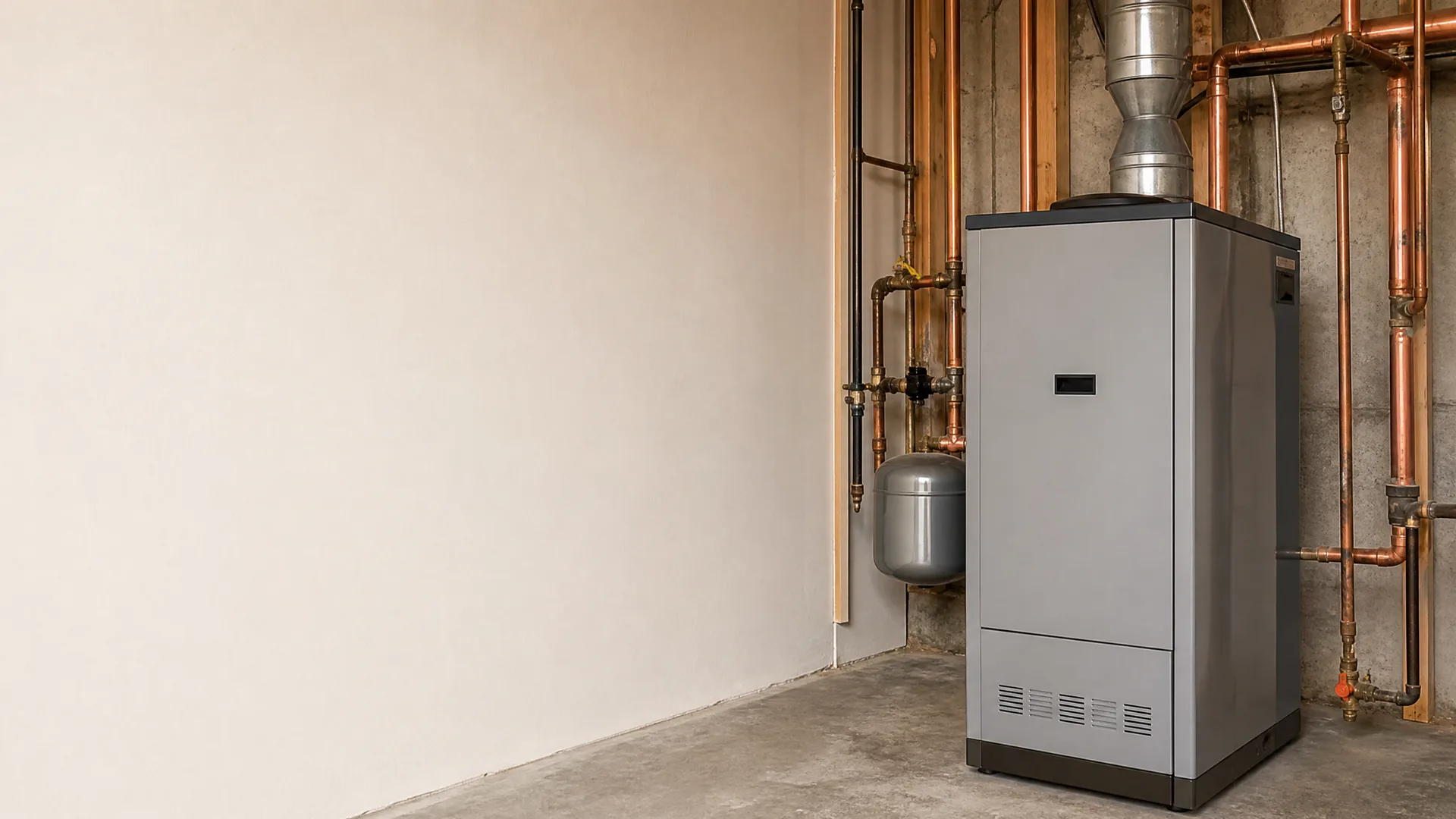
Why the drop speeds up
A small leak at 15 psi stays small for a while. As it wears the same spot, metal thins and the opening grows, so the same crack loses more water this month than last. A system that needed topping off every few weeks in November can need it every few days by February. The cold snaps that follow push boiler pressure higher to start with, which only adds strain to a spot that was already failing.
What's actually going on with your boiler
You'll notice the boiler kicks on more than it used to, running longer to get the same heat out of the radiators. The pilot light or ignition cycles more often than it should. You might hear a faint hiss near a fitting or see a damp patch on a baseboard cover you never gave a second look. Mineral residue, white or rust colored, can build up around a valve or joint where water has been slipping out and drying. Left alone, a slow leak doesn't just mean lower pressure. It means the boiler works harder on every cycle, and parts that depend on steady water, the pump, the heat exchanger, wear faster than they should.


Winter nights average 23°F statewide
With nights averaging 23°F across the state, your boiler is running long stretches just to hold the house steady. A system already losing pressure has less water moving through it to carry that heat, so the same cold snap that pushes your boiler harder is also the one that exposes a leak fastest.
NOAA nClimDiv 1991-2020 county normals weighted by homes
A boiler that loses pressure has a reason, and that reason is almost always a leak, somewhere in the system or at a fitting that's given up over time. Letting it ride through another cold snap only asks more of a system that's already losing water it needs to move heat through the radiators. Once a contractor finds the leak, whether it's a pinhole in a baseboard line, a worn pump seal, or a relief valve that won't seat, the fix is usually straightforward. You don't have to track down who handles this kind of repair or figure out the right questions to ask. Send the form and that search is off your plate. A contractor who works on boilers in Pennsylvania takes it from there, and the only thing left for you to do is wait for the call.
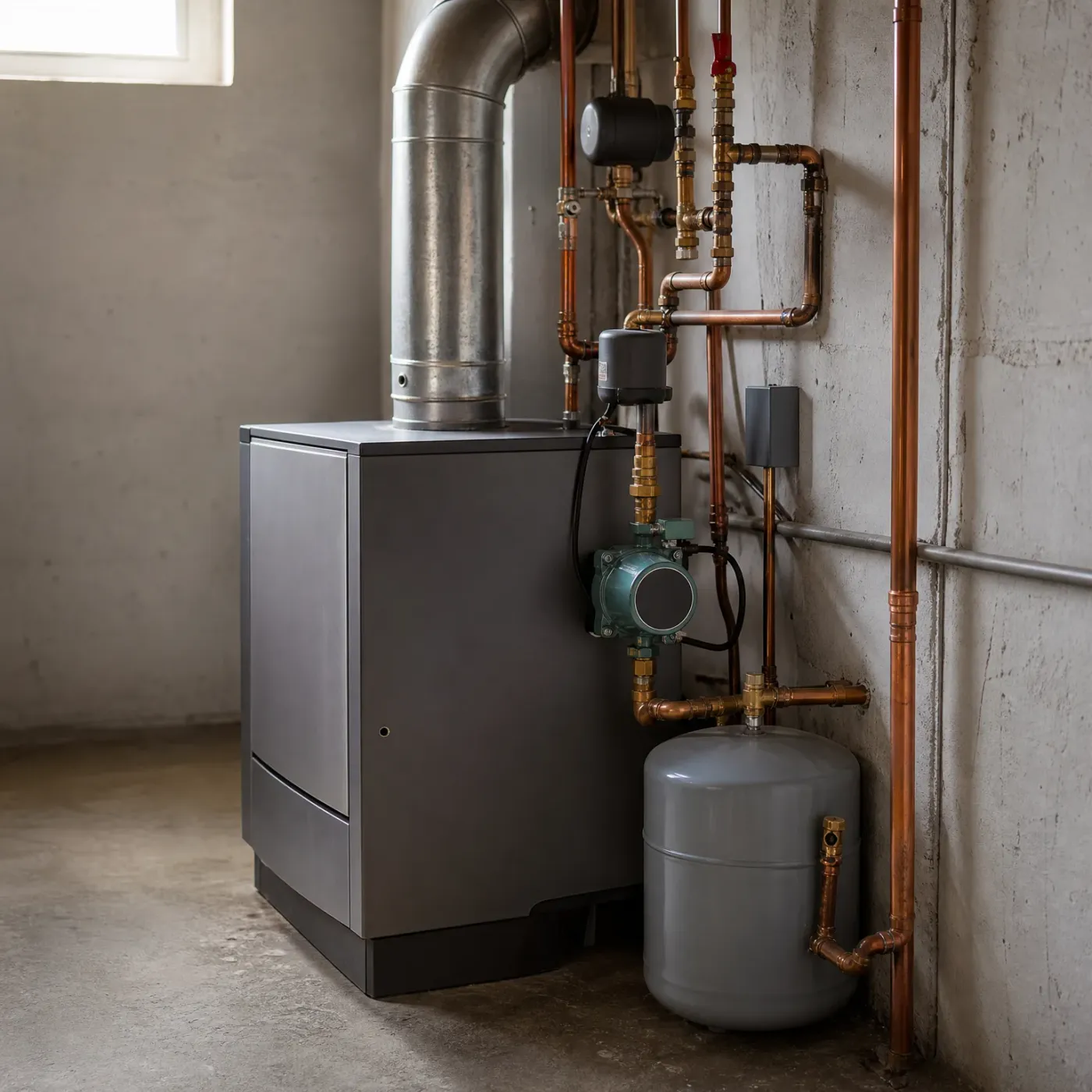
The right pro for this job
Send the request today and let a boiler pro reach out to you.
No fee to send it, and nothing to sign.