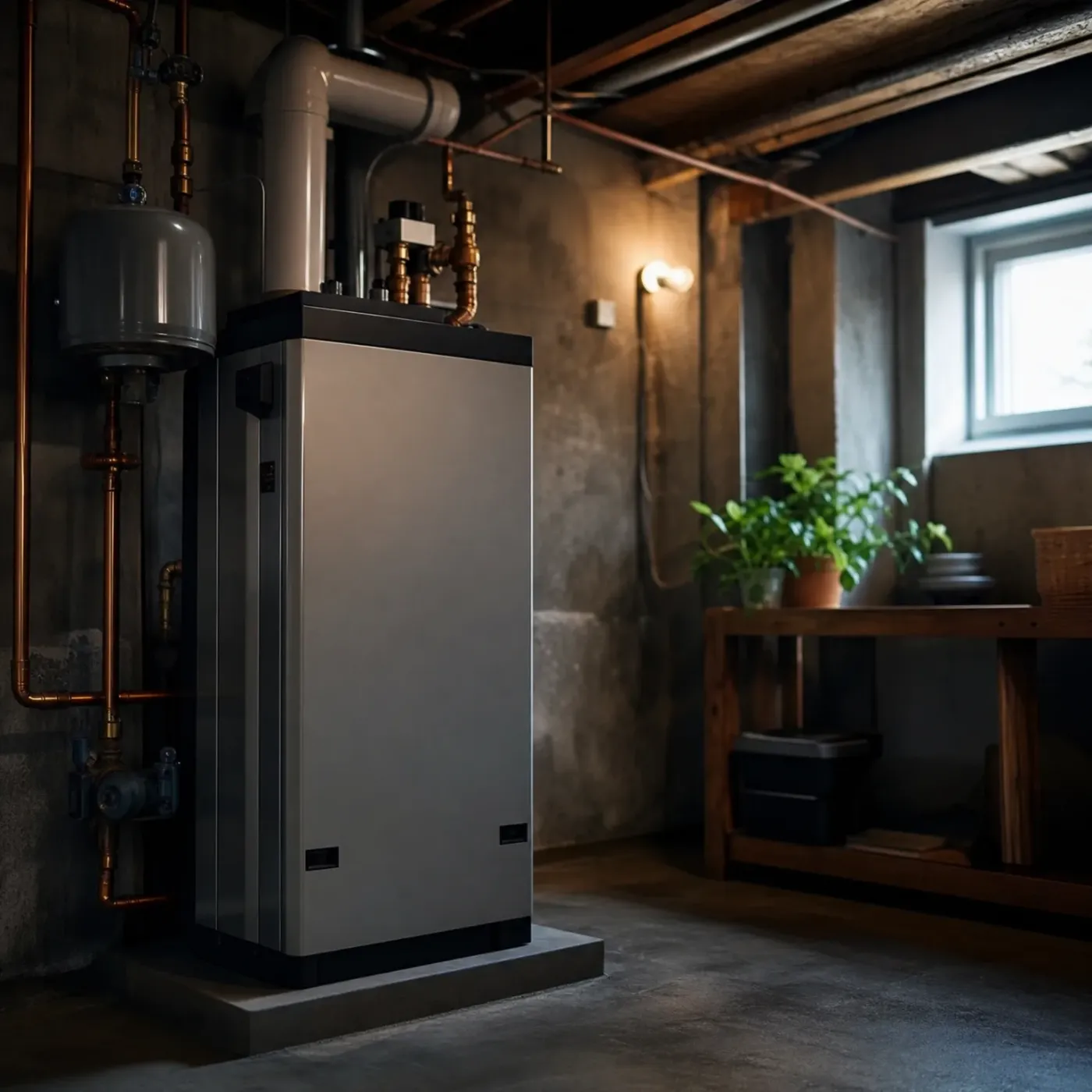
A floor-standing gray boiler unit on a concrete plinth in a basement, with copper pipes, an expansion tank, and a flue pipe above, a wall light, a small potted plant on a wooden shelf, and a window in the background.

Matched to your boiler job

Why your boiler makes a banging noise in Pennsylvania

That banging in your boiler usually means trapped air or mineral buildup knocking against the heat exchanger, and the noise tends to get worse the longer it's ignored. This page gets into what's causing it and why a Pennsylvania heating season isn't the time to let it sit. Answer a few questions and a contractor who handles boiler repair will reach out.

Find my pro

That banging is usually water hitting steam or trapped air inside the boiler. In a steam boiler, water collects in low spots in the pipes and the boiler slams it with a burst of steam, which makes the bang. In a hot water boiler, air pockets trapped in the lines or sediment settled on the heat exchanger cause the same kind of noise as water or steam pushes past them. Low water level can do it too, letting the burner heat a part of the boiler that should be covered. None of these fix themselves, and the banging usually gets louder over weeks, not quieter. With gas heat running most of the winter in Pennsylvania, a boiler that's already straining to push past a blockage or an air pocket is working harder than it should every time it fires. Left alone, that strain tends to show up later as a bigger repair.

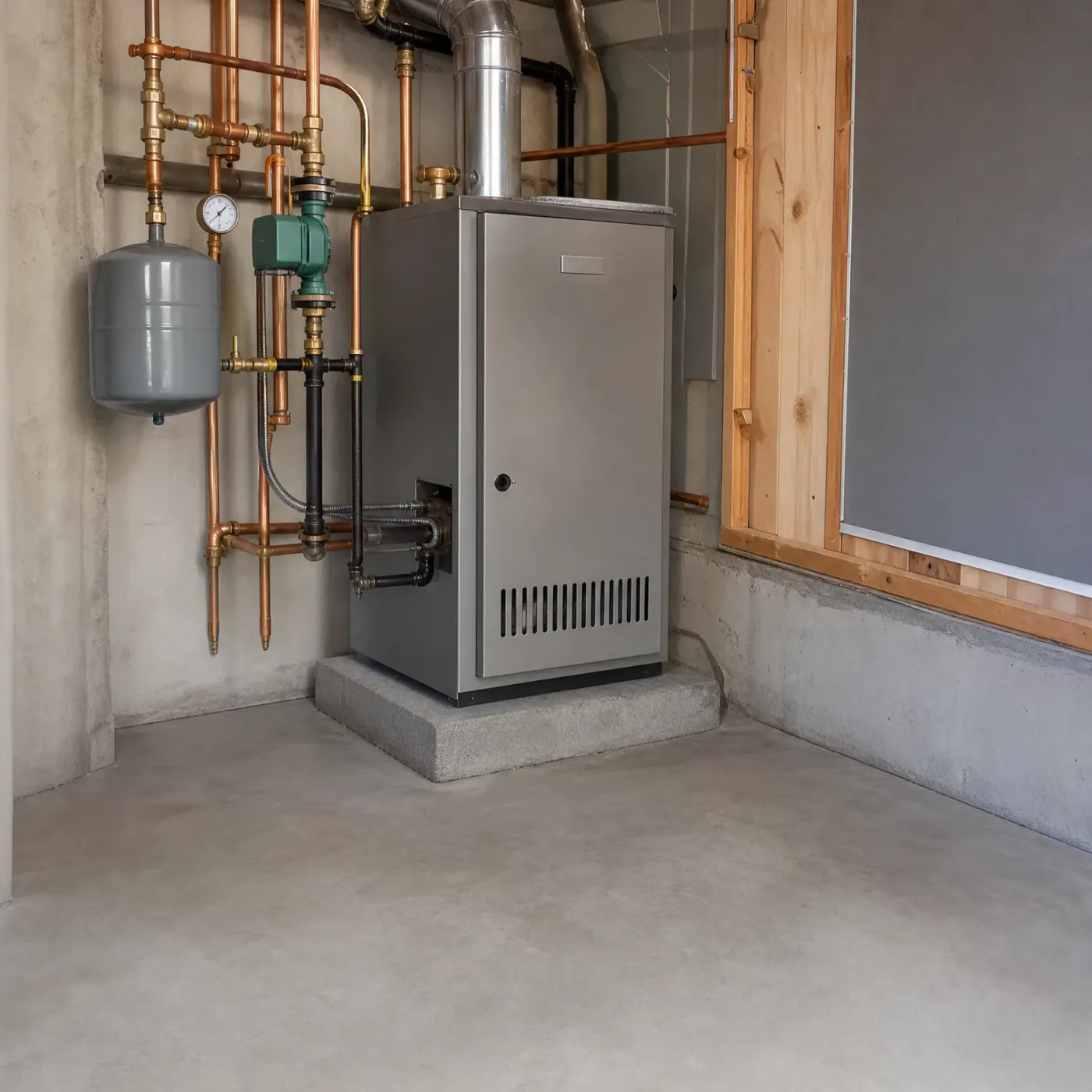
A gray boiler on a concrete pad in a basement corner, connected to copper and black pipes with a gauge, circulator pump, and gray expansion tank, beside a wood-framed wall.

Quiet operation, proper water level

A boiler running right fires up with a low rumble and settles into a steady hum. Water sits at the level marked on the gauge glass, and the pipes stay quiet as heat moves through them. No knocking, no banging, just the burner cycling on and off.
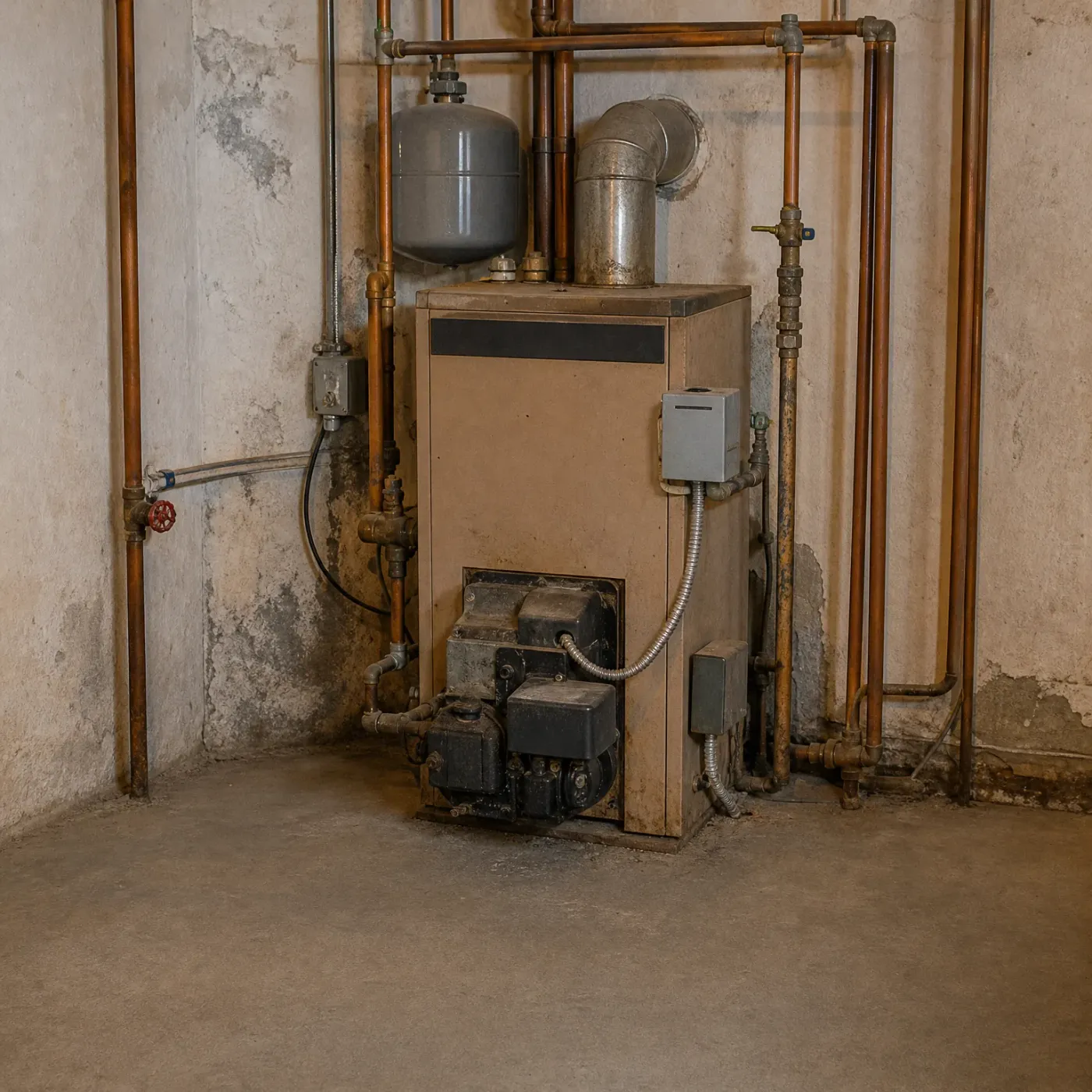
An older oil-fired boiler with a burner unit, flue pipe, expansion tank and copper piping stands in the corner of a concrete-floored basement with weathered plaster walls.

Old pipework, years of buildup

Decades of copper piping and an aging burner assembly give mineral scale and sediment plenty of places to settle. Low spots in the pipes collect water that the system has to push past, and that's where the banging starts. The longer it sits, the louder it gets.

Why does my boiler bang louder at night when the heat kicks on?

The house is quiet at night, so the banging seems louder than it did during the day. You hear the system kick on and then the knocking starts, and it's enough to wake you up or keep you from falling asleep. You're wondering if the cold overnight temperatures in Pennsylvania are making the problem worse, or if it's just that nothing else is competing with the noise.

It's the same problem, just easier to hear

The boiler isn't doing anything different at night. Trapped air or mineral buildup knocking against the heat exchanger makes the same noise at 2pm that it makes at 2am. What changes is how much runs the system has to fight through to reach you. During the day, a TV, traffic outside, people talking, all of that covers up a low bang. At night none of that is there, so a noise that was always happening finally gets your attention. On a cold Pennsylvania night the boiler also runs longer to keep up, which means more cycles, and more chances for that banging to happen while you're trying to sleep.

A gray floor-standing boiler with a black flue pipe stands on concrete blocks in a corner, connected to copper pipes, a green circulation pump, and a gray expansion tank on the wall.

How kettling builds inside the exchanger

Scale lines the heat exchanger where water sits closest to the flame. Water trapped under that layer turns to steam before the water around it does, and the bubbles collapse fast against the metal. That collapsing is the bang. The harder the water feeding your boiler, the faster that layer builds back after a cleaning, which is why the noise can return on a schedule instead of once and done.

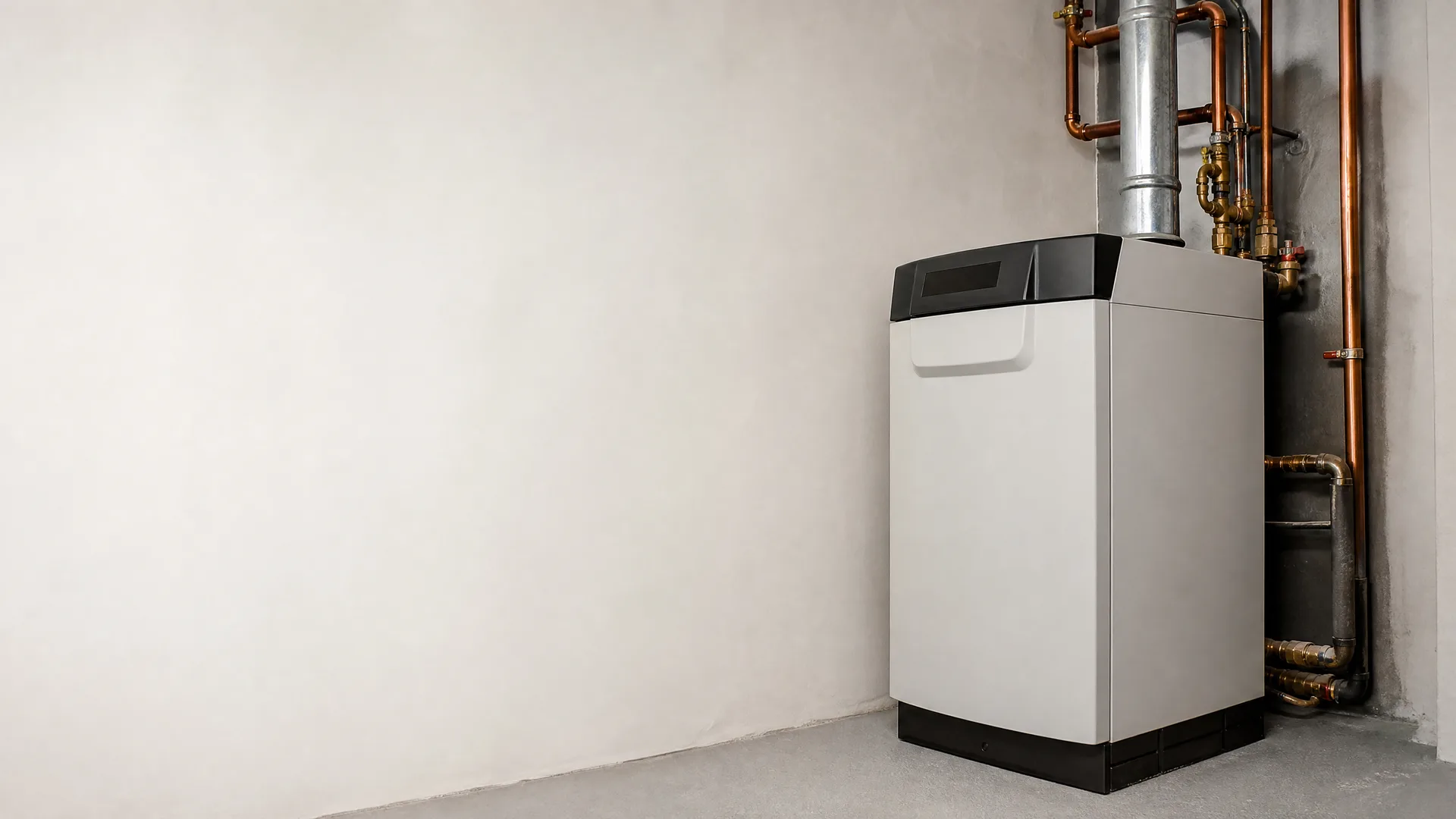
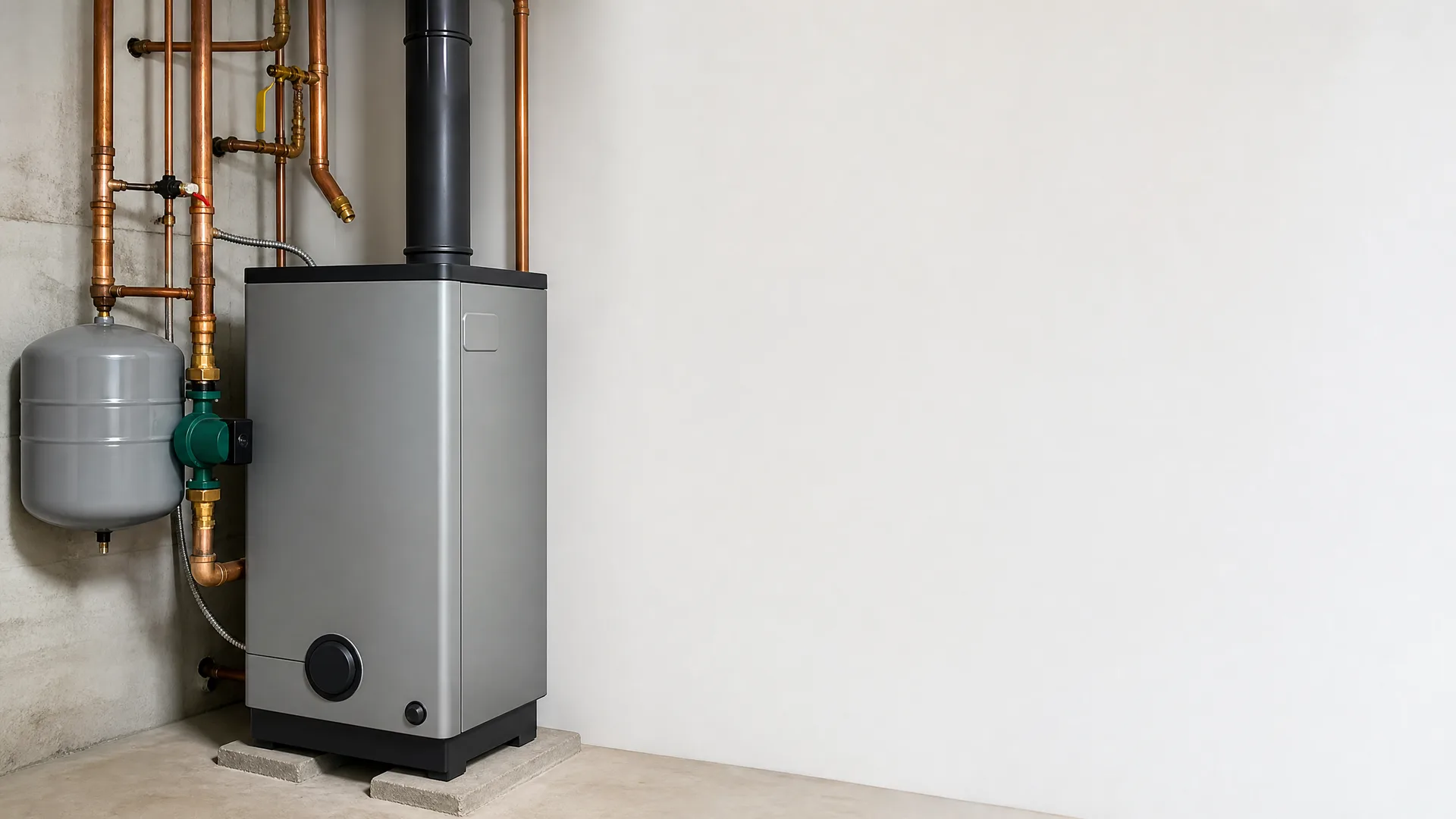
A white and black floor-standing boiler in the corner of a bare plastered room, with copper and metal pipes running up the wall behind it.

Why steam pipes need the right pitch

A steam boiler relies on its return pipes sloping back down toward the boiler so condensed water drains out on its own. If a pipe sags or was hung level, water sits in that low spot and waits there. The next burst of steam coming up the pipe hits that puddle head on, and the collision is what you hear as a bang. The pitch doesn't fix itself over time.

Winter nights average 23°F statewide

Nights here drop to 23°F on average in December, January and February, so your boiler is firing most of the night to hold the house steady. That's a long stretch for trapped air or scale to keep knocking against the heat exchanger. Left alone through a cold winter, the banging usually gets worse, not better.

NOAA nClimDiv 1991-2020 county normals weighted by homes

What that banging costs you overnight

A boiler banging at 2 a.m. in a Pennsylvania January is firing on and off for hours before morning. Every cycle with trapped air or scale between the flame and the water is heat that isn't reaching your radiators or baseboards the way it should. You end up running the system longer to get the same warmth, and with what power costs here, that shows up on the bill. The noise is the part you notice. The part you don't notice is the heat exchanger working harder than it needs to, cycle after cycle, to push heat through whatever is blocking it.

What keeps banging turns into

Scale against a heat exchanger doesn't go away on its own, and neither does a low water line in a steam system. Left through a full Pennsylvania winter, the spot where steam pockets or mineral buildup keeps hitting metal is the spot that wears first. That's where a crack or a leak eventually starts. A boiler that's banging now and gets fixed is a repair. A boiler that keeps banging through December, January and February on a system already working to hold your house at temperature is further down the road toward a bigger one.

A smiling bearded man in a dark green hooded jacket and blue t-shirt sits on a couch in a living room with shelves, a potted plant, and a bowl of popcorn on a wooden table.
A smiling man in a green long-sleeved shirt sits on a beige sofa in a living room, with a bowl of popcorn in the foreground, a large potted plant and shelving behind him.
A smiling man in a dark blue T-shirt sits on a couch in a dimly lit living room with a bowl of popcorn and a remote on a wooden table, a lit floor lamp and bookshelves behind him, and windows showing greenery.
A smiling bearded man in a dark green long-sleeved shirt sits on a leather couch in a living room, with a bowl of popcorn and a remote control on a wooden table in the foreground.

A boiler pro near you

A banging boiler doesn't fix itself over a Pennsylvania winter. The noise points to trapped air, a low water level, or scale built up on the heat exchanger, and all three get worse with every cold night the system keeps firing. Most homes here run on gas, so a boiler working harder than it should to push past that noise is burning more of it, and power here isn't cheap to lean on as a backup either. Someone has to bleed the lines, check the water level, or get at the scale before the banging turns into a cracked exchanger or a boiler that won't hold heat at all. That's a job for a licensed contractor who can see what's actually happening inside the system, not a guess from across the room. You've got the reason now. What's left is getting someone out to look at it before another cold night does more damage than the last one.

Letting it bang through the winter: the noise comes back every time the burner fires, and each cycle means another round of water or steam hitting metal that's already lined with scale. By the time the heat exchanger shows real damage, the repair is bigger than the one you put off.

Getting it looked at now: a contractor can bleed the air, check the water level, or flush out the scale before it cracks anything. The banging stops, the boiler runs quiet, and you're not listening for it every time the heat kicks on at night.

A woman in a dark gray sweater reclines on a couch with her eyes closed and a knit blanket over her lap, an open book resting face-down in front of her, with a lit table lamp and shelving blurred in the background.
A bearded man in a dark navy sweater over a collared shirt smiles and looks off to the side while seated at a dinner table with a glass of red wine, a lit candle, and a plate of food in the foreground of a dimly lit room.

Bleeding the system clears trapped air

Air pockets in the lines get released through the bleed valve, and the knocking from air moving through the pipes stops. It won't touch scale sitting on the heat exchanger.

Send my request

Descaling clears the heat exchanger

Scale built up where the water meets the flame gets removed, which stops the kettling sound. A contractor can check which one is behind your boiler's noise.

Send my request

What are you noticing in your own house right now

You probably first caught it in a quiet room. A knock or a bang from the basement right as the burner kicks on, maybe a few minutes after. Some nights it's one loud bang. Other nights it's a string of smaller knocks that taper off once the house warms up. You might also notice the radiators take longer to get hot, or one room stays cooler than the rest while the boiler keeps firing. If the water level in the gauge glass looks low or needs topping off more than it used to, that's worth noting too. Left alone, the banging doesn't go away on its own, and the heat exchanger underneath it keeps taking the hit.

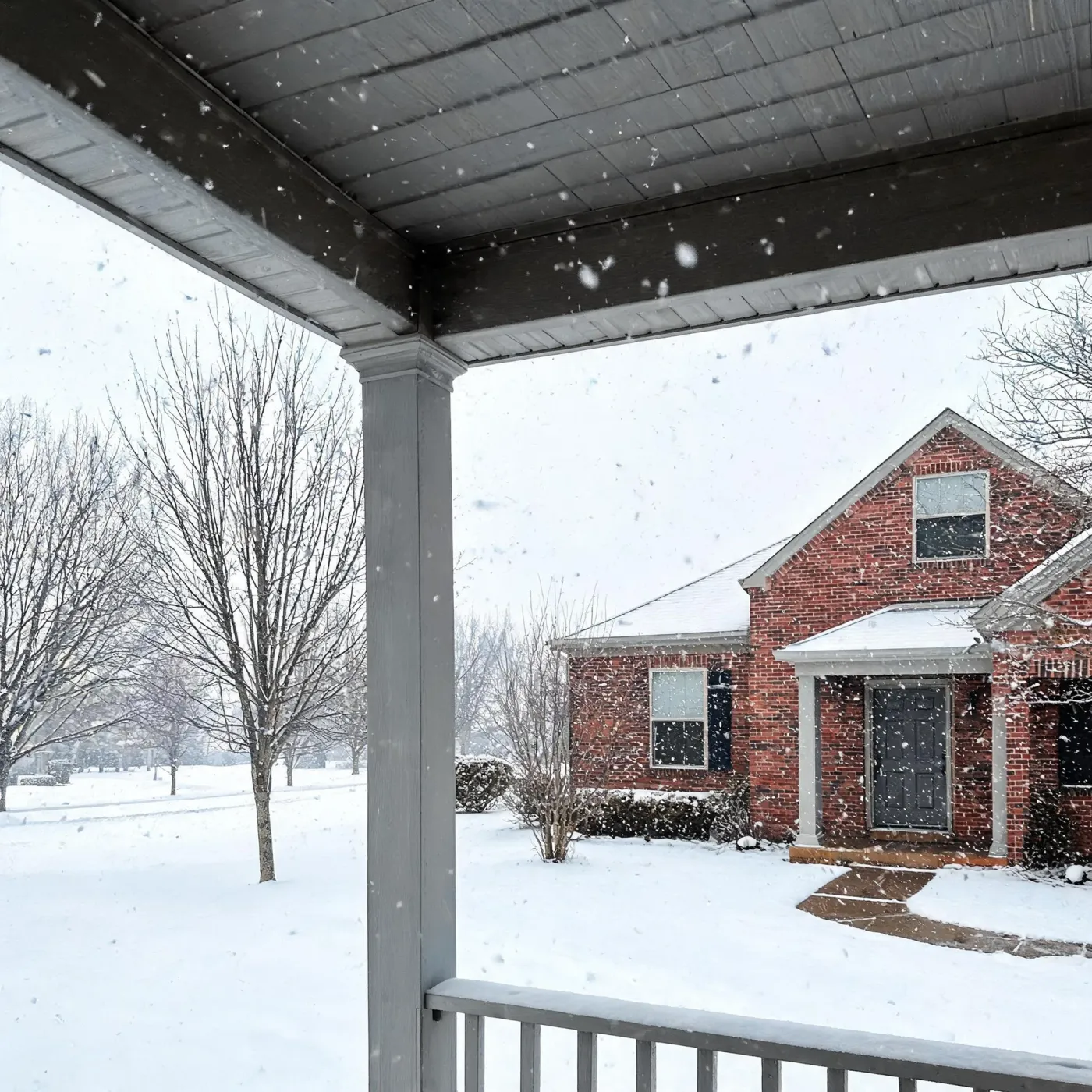
View from a covered porch with a white post and railing toward a red brick house across a snow-covered yard, with falling snow and bare trees.

Statewide, winter nights average 23°F, and that's the stretch where your boiler barely gets a break. Every time it fires to chase the chill out of the house, trapped air or scale on the heat exchanger has another chance to knock. A furnace cycling on and off a few times a night is one thing. A boiler doing it for hours straight, night after night, is a lot more wear on a part that's already struggling to heat water evenly. If the banging started mild back in November, three straight months of nights this cold is usually why it's louder now. (Source: NOAA)

NOAA nClimDiv 1991-2020 county normals weighted by homes

A man in a dark blue shirt stands in an open front doorway of a stucco and wood-clad house, facing a blond woman seen from behind in the foreground on a stone walkway.

The bang tells you something's wrong. It won't tell you what to do about it.

A boiler bangs for one of a few reasons, and you've now got a sense of which one fits what you're hearing. Trapped air sounds different from water slamming against a scaled heat exchanger, and the timing of the noise, right at burner start or a few minutes in, points to which one is happening in your basement. None of that goes away on its own, and a Pennsylvania winter doesn't give the system a break long enough to matter.

Knowing what's wrong is one thing. Getting it fixed is another, and that part doesn't have to sit on your list for weeks. Send in what you're seeing and hearing, and a licensed contractor who works on boilers like yours gets matched to your situation and reaches out. The work of finding the right person stops being something you have to handle tonight.

Interior corner of a dining room with a round wooden table, a ceramic vase holding olive branches, a dark spindle-back chair near a curtained window, and a sideboard with a lamp against beige walls.
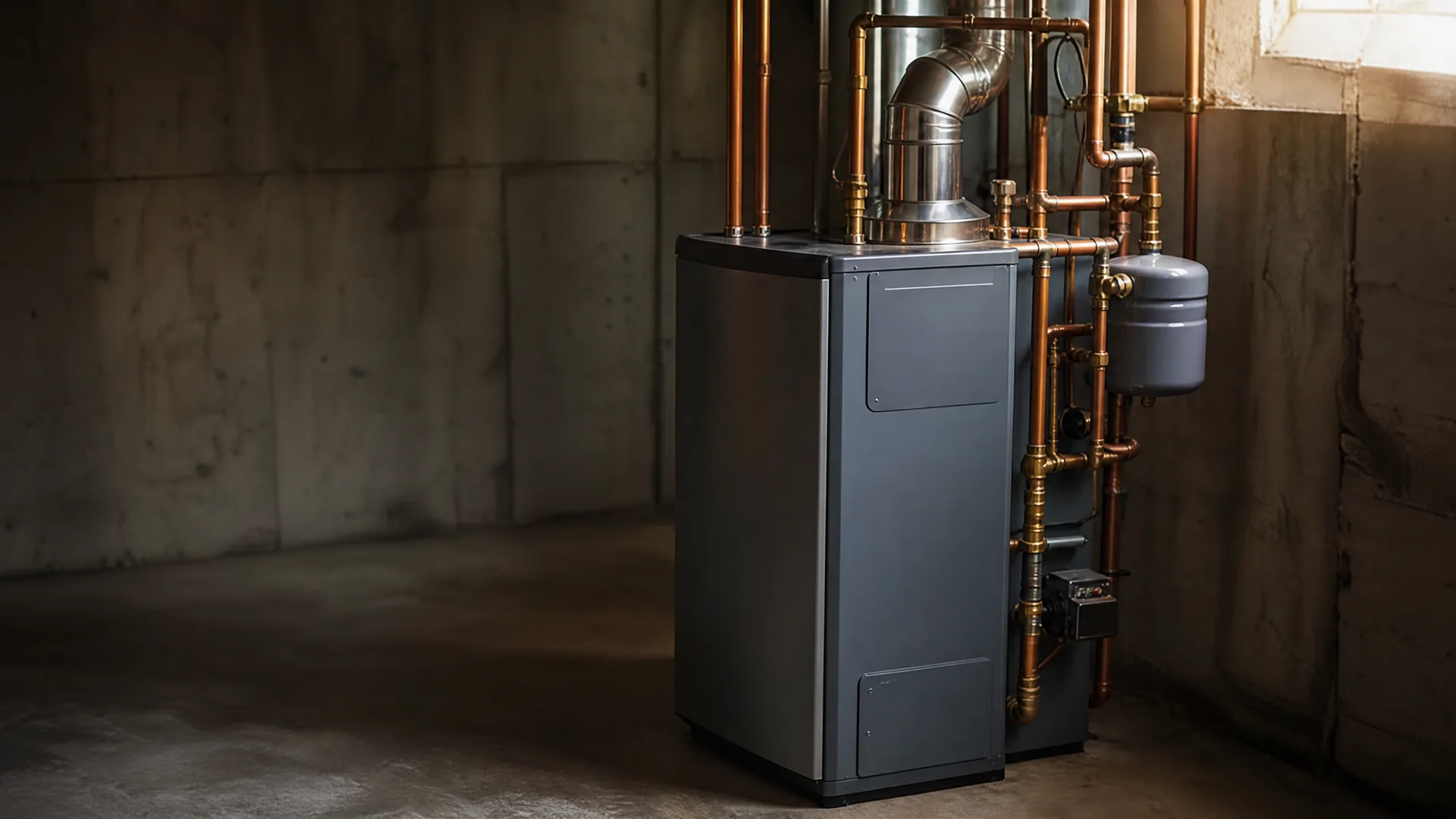
A gray boiler unit in a concrete-walled basement, connected to copper piping, a metal flue duct, and a wall-mounted expansion tank.

Get the right pro for your boiler

Step 1 of 3: Equipment